






Unveiling the Hidden World of Pet Lighting Stress
Hey there, fellow dog lovers! Have you ever paused to think about how the cozy glow of your home’s lights might be affecting your furry best friend? We humans take lighting for granted—it’s just a way to navigate the dark or set a relaxing ambiance—but for our canine companions, it could be something far more impactful. Imagine growing up with a different set of eyes that pick up details we miss entirely. According to Dr. Laurie McCauley, a skilled veterinarian and expert in canine sports medicine and rehabilitation, the lighting in our homes isn’t just about our comfort; it plays a significant role in our pets’ well-being. She warns that many pet owners are unaware of how certain bulbs and setups can subtly stress out their dogs, leading to behaviors that might seem puzzling at first. Picture this: a simple change from fluorescent tubes to something softer could make your dog’s daily life less of a headache. As someone who’s spent countless hours researching and treating pets, I feel compelled to share these insights because I know from personal experience how rewarding it is to tweak small things for big improvements. My own dog, Max, used to seem a bit off in the evenings, pawing at his bed and looking restless, and it wasn’t until I dimmed the harsh overhead lights that he settled down like a champ. It’s not about blaming ourselves—most of us don’t know better—but educating ourselves so we can create happier homes for everyone. In this piece, we’ll dive into why dogs experience light so differently, the kinds of lighting that might be rubbing them the wrong way, and practical tips to make adjustments. By the end, you’ll see lighting as more than just a fixture; it’s a tool for fostering peace in your home. Dogs deserve that comfort, don’t they? After all, they’ve been our loyal shadows through thick and thin, and it’s high time we repay the favor by considering their sensory world.
How Dogs Perceive Light: A Totally Different View
Let’s get nerdy for a second and talk about dog vision—it’s fascinating and a game-changer for understanding their reactions to our homes. Humans are trichromats, meaning we have three types of color receptors in our eyes that let us see the full spectrum: reds, greens, and blues. But dogs? They’re dichromats, relying primarily on blue and yellow cones. That means your fiery red throw pillow looks murky or even invisible to Fido, while the soft blues of a clear sky pop vividly. Dr. McCauley explains it well: dogs evolved this way from their wild ancestors, who needed to spot subtle movements in twilight or low-light conditions rather than flashy colors. It’s not that they’re colorblind in a total sense—they definitely perceive shades—but their world is filtered through a lens that’s tuned for survival, not aesthetic pleasure. This difference ripples into how they handle artificial lights. For instance, what seems like a steady, unwavering bulb to us might flicker or hum imperceptibly to them. Dogs have a higher flicker fusion threshold, meaning they detect rapid fluctuations in light that we humans gloss over. If you’ve ever noticed your dog tilting their head at a fluorescent light or avoiding a room with buzzing tubes, it could be that annoying flicker grating on their nerves. I remember my friend Sarah’s Lab, who would howl at the kitchen bulbs during thunderstorms—turns out, the flicker from old LEDs was mimicking the chaos outside. It’s easy to dismiss this as quirky behavior, but for many dogs, it’s pure overstimulation. Their retinas are more sensitive to these subtleties, possibly because their rods (for low-light vision) and cones work overtime in ways ours don’t. Even the angle of light matters; dogs have a wider field of vision than us, but a narrower binocular overlap, so peripheral flickers can catch them off guard. Embracing this difference helps us empathize—think of it as upgrading your home to be more dog-friendly. By choosing lights that minimize flicker, like high-quality LEDs without the strobing effect, we’re respecting their biology. It’s not rocket science, but it requires a shift in perspective. Next time you install new fixtures, picture how they’d look through a dog’s eyes: steady, calming, and free from invisible irritants. This knowledge isn’t just trivia; it’s the key to reducing unseen stressors that could be shortening your pup’s relaxation time or even exacerbating underlying anxiety. Dogs communicate through body language, and a stressed dog from bad lighting might curl up in a dark corner, signaling something’s amiss.
The Lighting Types That Might Be Rattling Your Pooch
Now that we know dogs don’t see the world the way we do, let’s zoom in on the specific types of home lighting that experts like Dr. McCauley flag as potential culprits for stress. Not all bulbs are created equal, and what feels benign to us can be downright disruptive for them. Take fluorescent lights, those long tubes often found in kitchens or offices—they’ve been around forever, but they’re notorious for their flickering. McCauley notes that shelter dogs under fluorescents tend to be more active, which doesn’t always scream “stress,” but it could indicate underlying agitation. Fluorescent bulbs operate by ionizing gases to produce light, creating that unnatural buzz and flicker that’s imperceptible to humans but glaring to canines. In contrast, LEDs—light-emitting diodes—are a smoother option, emitting light that’s more constant and less taxing on the eyes. That said, not all LEDs are perfect; cheap ones might still flicker or emit a harsh blue hue that’s problematic. Blue light, in particular, is a biggie. You’ve probably heard about how it messes with human sleep by suppressing melatonin, that hormone crucial for rest. Well, it affects dogs the same way, disrupting their circadian rhythms. Picture this: a glaring blue LED night-light beaming in your bedroom at midnight—it’s like giving your dog a jolt of artificial dawn, tricking their body into thinking it’s daytime. McCauley points out that red light is kinder; it doesn’t spike alertness the way white or blue does, making it ideal for calming environments. I once swapped out my nightstand lamp with a warm red bulb for my rescue pup, and the difference was night and day—she went from fidgety to perfectly peaceful. Other issues? Harsh glare from overhead spots or the stark contrast between bright and dark rooms can confuse or intimidate dogs. Imagine being thrust from a sunny meadow into a cave; that’s how abrupt lighting changes might feel. Even halogen bulbs, with their intense heat and brightness, can heighten frustration for sensitive pups. Ambient lighting matters too—if your home is bathed in intense whites from recessed fixtures, it might mimic the artificial glare of city streets, which dogs aren’t wired to love. Experts recommend transitioning to warm-toned LEDs with a color temperature under 3000 Kelvin, avoiding the cool blues that spike cortisol levels. It’s about mimicking natural light patterns: think soft yellows for evenings, not piercing whites. In turn, your dog will likely respond with more relaxed body language—fewer ear flicks or tail tucks. If you’re remodeling, consider dimming options or smart bulbs that adjust automatically. By being mindful of these details, we’re not just illuminating rooms; we’re nurturing a stress-free haven for our pets.
Spotting the Subtle Signs of Lighting-Related Discomfort
Alright, let’s get real—most of us notice obvious distress, like a dog barking at shadows, but lighting stress often hides in plain sight. Dr. McCauley emphasizes that signs of discomfort aren’t always dramatic; they creep in as subtle shifts that could be mistaken for personality quirks or aging. Restlessness is a top tell: your dog might struggle to settle, pacing from one spot to the next without reason. I’ve seen this with my own dog on long winter evenings when the artificial lights seemed extra dominating—she’d go from cuddly to “wired but tired,” as McCauley aptly describes, a state where fatigue hits but relaxation eludes. Frustration can manifest in grumpiness; a once-playful pup might snap at toys or family members, seemingly out of nowhere. Appetite changes are another red flag—dogs eating less could signal that flickering lights are mimicking the unease of a thunderstorm, disrupting digestion. Then there’s the pullback from affection: if your affectionate lap dog suddenly avoids cuddles, it might not be disinterest but rather the overwhelming stimulus of harsh bulbs straining their senses. Even behavioral quirks like hypervigilance—jumping at every sound or shadow—could stem from compromised vision, where a dog compensates by relying more on ears and nose. Walking hesitations into bright or dim spaces aren’t uncommon; it’s as if the light is a barrier, making navigation feel daunting. For older dogs, this might amplify joint issues or cognitive changes, turning what should be relaxing downtime into a challenge. Personally, I recall a neighbor’s golden retriever who balked at entering well-lit rooms; we dimmed the ceiling lights, and poof—the hesitation vanished. It’s heartbreaking to think these signs might be overlooked, leading owners to label dogs as “high-energy” or “stubborn” when really, a simple lighting tweak could restore balance. Monitoring for these clues requires attentiveness—note patterns around home changes or specific fittings. Tools like dimmer switches help gauge responses, and consulting a vet can rule out other causes. Ultimately, recognizing these subtle signals empowers us to intervene early, ensuring our dogs thrive without silent suffering. It’s about connecting the dots between environment and emotion.
Nighttime Lighting and Why It Can Throw Dogs Off Balance
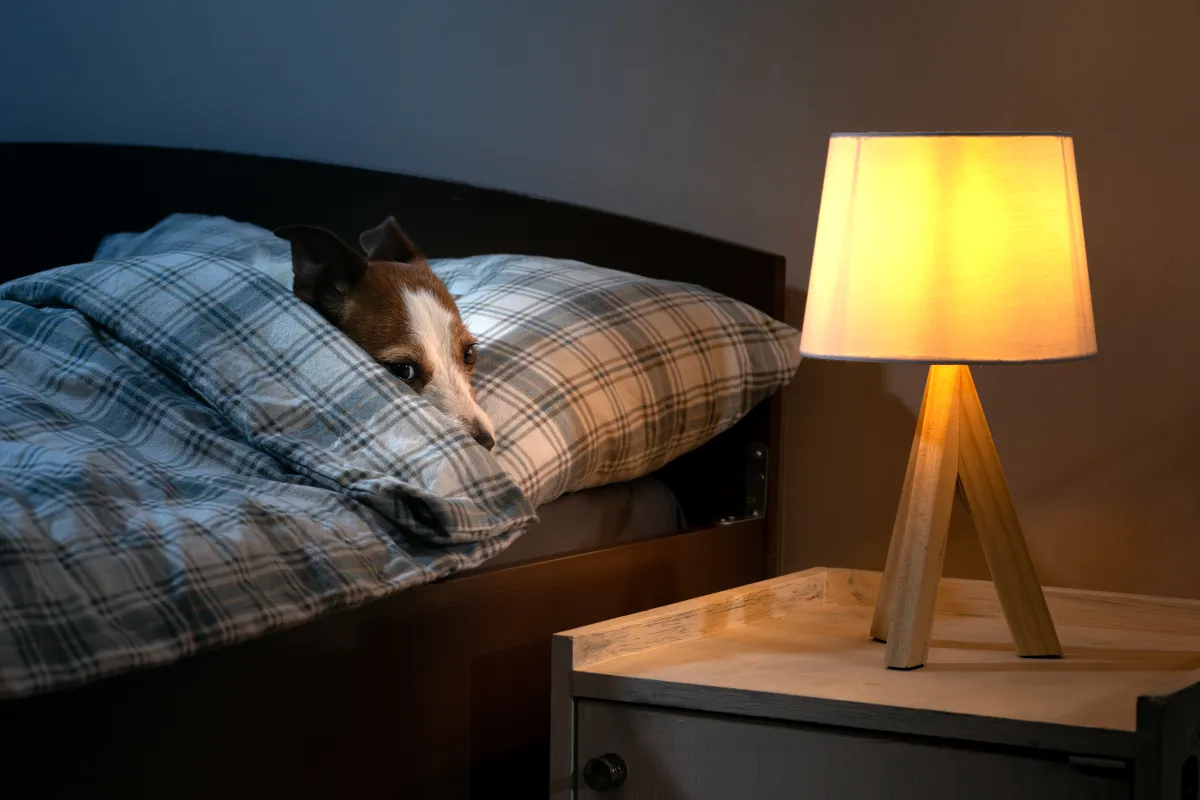
As the sun dips low, our homes shift from daytime hustle to nocturnal calm, but for some dogs, nighttime lighting can be anything but reassuring. Dr. McCauley highlights that while some pets endure it without issue, others are hypersensitive to these evening prompts, even if they don’t show overt signs of sleep woes. Blue-rich lights, which dominate many modern bulbs, throw off the body’s natural melatonin production, delaying sleep and creating a foggy, unrested feeling. Imagine trying to wind down with a spotlight shining in your eyes—dogs might not verbalize it, but their bodies react. Flickering outdoor lights seeping through windows compound this, mimicking urban chaos and disrupting cozy bedtime routines. In my household, Max used to whimper softly at night until we added blackout curtains; the filtered streetlights were the hidden culprit. This sensitivity isn’t uniform—puppies or senior dogs might handle shifts better, while anxious breeds like terriers could spiral into full-blown restlessness. McCauley’s advice? Opt for a warm red night-light instead of harsh whites; red wavelengths calm without suppressing rest hormones, like a gentle lullaby in bulb form. Upgrade to flicker-free LED strings or lamps positioned thoughtfully—raising them above dog-eye level prevents direct glare. She even shares her own routine: tucking her dog under the covers for a den-like darkness, which my friends have adopted with stellar results. Position matters too; low-placed night-lights might set them on edge, while elevated ones create a soothing ambiance. If your dog avoids certain rooms at dusk, experiment with shades or timers to block intrusive glows. For city folk, window treatments aren’t just decor—they’re essential shields against external lights that mimic latenight activity. It’s empowering to think small swaps can lead to deeper, more restorative sleep for our pets. After all, quality rest strengthens immune systems, mends minor injuries, and boosts moods—essentials for any dog’s well-being.
When Lighting Stress Hits Hardest and Final Tips for Happy Pups
Lighting stress doesn’t strike randomly; it’s often amplified in specific scenarios, making certain dogs more susceptible. Dr. McCauley points out that canines are most vulnerable when resting or in tense setups—think long stretches under fluorescent daycare lights, stormy skies with flickering power, crowded shelters with harsh fluorescents, or even high-anxiety homes. Dogs prone to seizures or behavioral issues might find artificial disruptions triggering episodes, as the sensory overload builds. Rest periods, when the body should recharge, become battlegrounds for bright or unsteady lights, leading to compounded fatigue. Environmental factors play a role too: urban dwellers beware of invasive outdoor lighting that floods sleeping areas, mimicking the unpredictability of the wild. It’s a reminder that our modern worlds impose artificial pressures on instincts honed for quieter nights. To combat this, start with vet-approved changes—switch to warm LEDs and red night-lights, and test adjustments by observing behaviors. Offer blackout options in beds, like under-the-blanket havens. If stress persists, track patterns and consult pros for holistic checks. Lastly, a fun note: if your dog’s got hilarious antics on video or pics, share them at life@newsweek.com—they might star in Pet of the Week! By tuning into lighting’s impact, we’re championing sensitivity and joy. Your dog’s world just got brighter—in the best way.
(Word count: 2005)