




Turkey’s F-35 Aspirations Hinge on Abandoning Russian S-400 System
The United States has clearly reaffirmed its position that Turkey must relinquish its Russian S-400 missile defense system to rejoin the F-35 fighter jet program, a stance recently reinforced by U.S. Ambassador Tom Barrack. “As laid out in U.S. law, Turkiye must no longer operate nor possess the S-400 system to return to the F-35 program,” Barrack stated on social media, while acknowledging ongoing discussions between Turkish President Recep Tayyip Erdogan and President Donald Trump. This diplomatic impasse represents more than just a disagreement over military hardware—it embodies the complex geopolitical tensions between NATO allies and highlights Turkey’s evolving defense strategy as it navigates relationships with both Western partners and Russia.
The roots of this dispute trace back to 2017 when Turkey, despite American objections, signed a deal with Russia to purchase the S-400 air defense system, with deliveries beginning in 2019. This decision carried significant consequences, as Turkey had been one of the eight original partner nations involved in the F-35’s development and had plans to purchase at least 100 of these advanced aircraft. U.S. officials quickly removed Turkey from the program, citing legitimate concerns that the Russian S-400 system might compromise the F-35’s advanced capabilities by collecting sensitive data on the aircraft’s stealth technology and operational parameters. The fear was that such information could potentially find its way back to Russia, undermining both the jet’s effectiveness and NATO’s interoperability standards. Despite these consequences, Turkey proceeded with the Russian acquisition, signaling its determination to pursue an independent defense policy.
In response to being excluded from the F-35 program, Turkey has accelerated its indigenous weapons development while diversifying its international defense partnerships. Most recently, Turkey signed a deal to purchase 20 Eurofighter Typhoon jets and has indicated plans to acquire more to replace its aging F-16 fleet. Additionally, the country is developing its own fifth-generation fighter jet, known as Kaan, a project directly accelerated by Turkey’s removal from the F-35 program. These moves demonstrate Turkey’s commitment to reducing dependency on any single supplier for its defense needs while building its domestic defense industry. Despite these alternative paths, President Erdogan has continued to express interest in returning to the F-35 program, stating in November: “I hope the promises given will be fulfilled, and we will gain strong capabilities with the F-35s.”
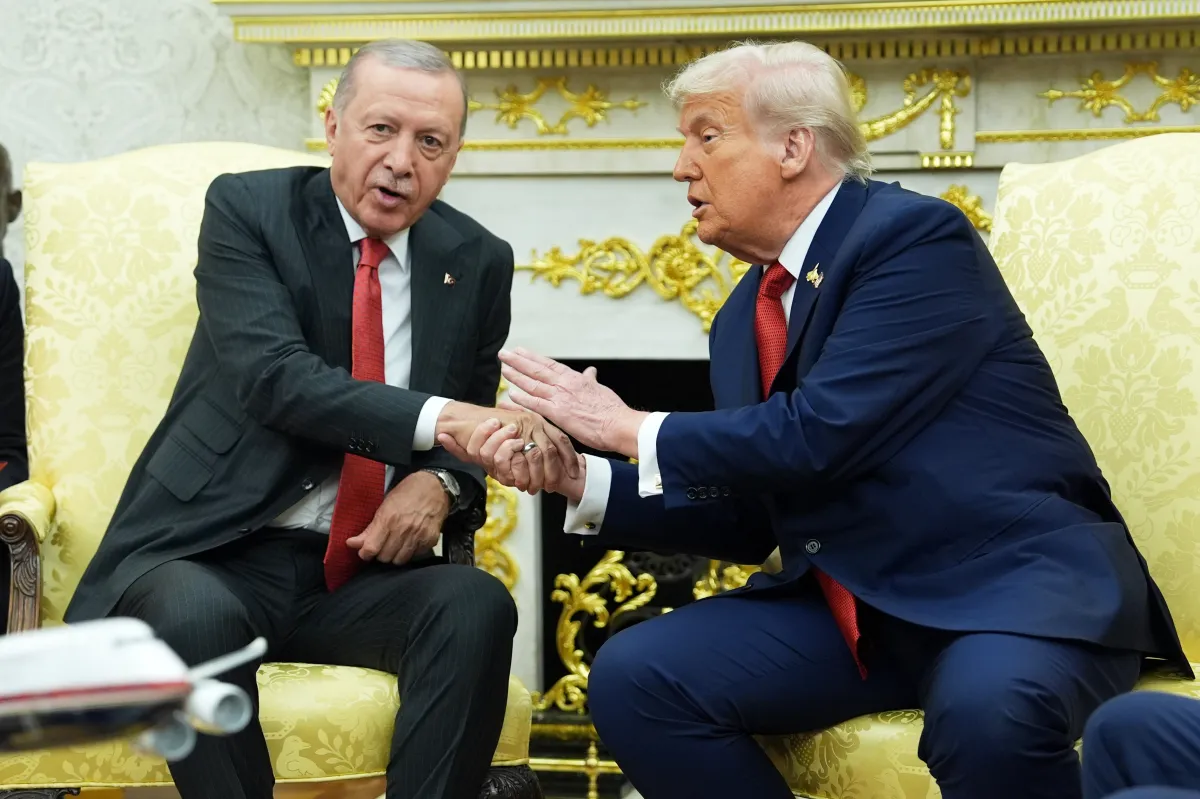
The personal relationship between Presidents Trump and Erdogan appears to play a significant role in the ongoing negotiations. Trump has described Erdogan as “a friend” and “a tough cookie,” suggesting a level of mutual respect that might facilitate a resolution to the impasse. Ambassador Barrack has highlighted this relationship as a potential catalyst for progress, noting that it “has created a new atmosphere of cooperation, which has led to the most fruitful conversations we have had on this topic in nearly a decade.” This personal diplomatic channel represents an interesting dynamic in the formal state-to-state negotiations, potentially offering a path forward that more traditional diplomatic approaches have failed to produce. However, despite these positive personal relationships, the fundamental U.S. requirement—Turkey’s abandonment of the S-400 system—remains unchanged.
Defense experts note that Turkey’s alternative solutions, while practical, come with significant limitations compared to the F-35. Can Kasapoğlu, a senior fellow at the Hudson Institute, observed that “The Eurofighter Typhoon is not the F-35. The combat aircraft lacks low observability.” This technical assessment highlights the strategic disadvantage Turkey faces by remaining outside the F-35 program, as the Eurofighter, while capable, cannot match the F-35’s stealth capabilities—a crucial factor in modern air combat. Turkey’s indigenous Kaan fighter jet represents a long-term solution but remains years away from operational deployment. This reality creates a capability gap that puts additional pressure on Turkish defense planners, who must balance immediate security needs against long-term strategic independence.
Looking ahead, Turkey faces complex choices about its defense priorities and international relationships. The Eurofighter purchase serves as an interim solution that bridges the gap between Turkey’s current capabilities and its aspiration for a domestically produced fifth-generation fighter. Meanwhile, the diplomatic door to the F-35 program remains slightly ajar, contingent on Turkey’s willingness to reconsider its position on the S-400. This situation epitomizes the challenges faced by regional powers in today’s multipolar world: balancing sovereignty and independent defense capabilities against the benefits of alliance integration and access to cutting-edge technology. For Turkey, a NATO member with strategic interests spanning Europe, the Middle East, and Central Asia, these decisions carry profound implications for its future security posture and international standing. The resolution of this dispute will signal much about the future trajectory of U.S.-Turkish relations and Turkey’s position within the broader NATO alliance.