






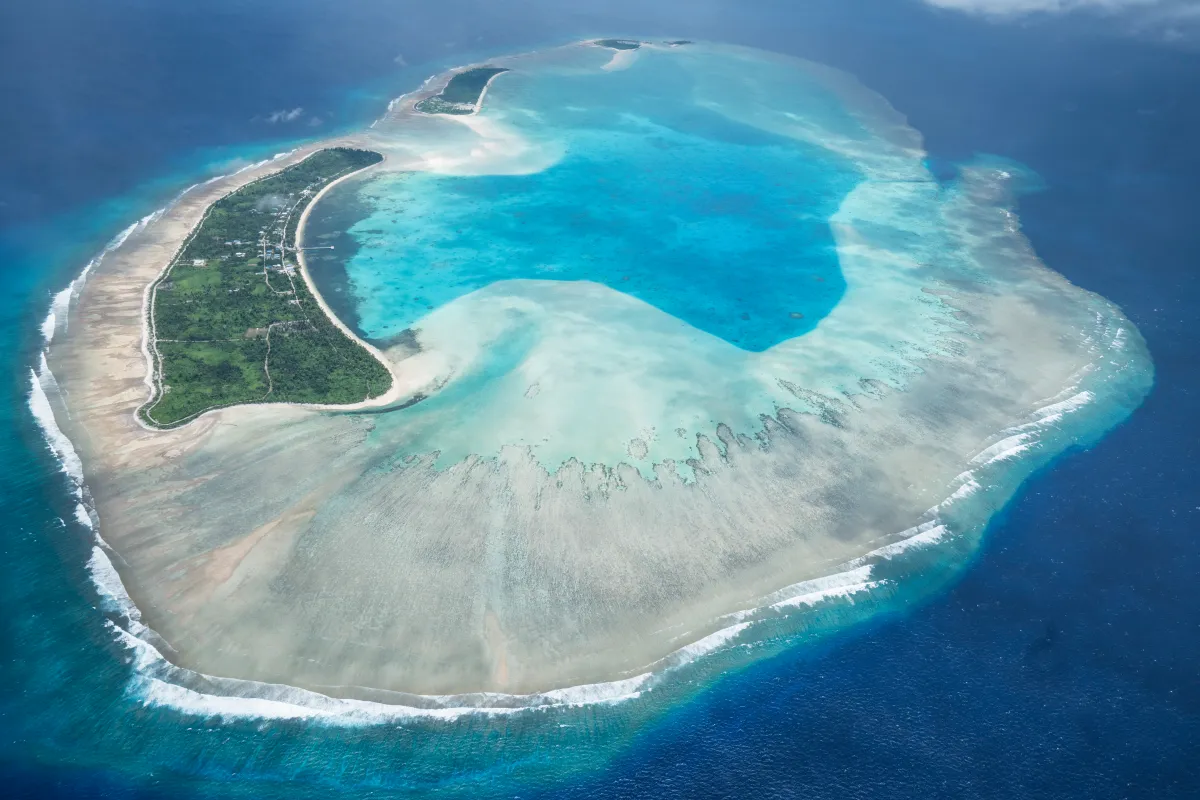
In the vast, turquoise expanse of the Pacific Ocean, where islands rise like emerald jewels from the waves, a quiet geopolitical storm has been brewing. The U.S. State Department has just dropped a heavy hammer, sanctioning high-profile officials from two tiny nations—Palau and the Marshall Islands—for what it calls rampant corruption tied to China’s growing shadow. These aren’t just bureaucratic slaps on the wrist; they’re personal bans that cut deep, barring the implicated individuals and their families from setting foot in America. But let’s step back for a moment and imagine the human faces behind this drama: ordinary families navigating the fragile balance of island life, where loyalty to tradition clashes with the allure of foreign influence. Hokkons Baules, the powerful president of Palau’s Senate, once a beacon of public service, now finds his name etched in infamy. And Anderson Jibas, a former local mayor in the Marshall Islands, whose story echoes the painful legacy of U.S. nuclear tests that scarred his people decades ago. This isn’t just about politics; it’s about how global powers like China are weaving into the lives of everyday islanders, offering shiny promises that could erode generations of trust. The Freely Associated States—Palau, the Marshall Islands, and the Federated States of Micronesia—rely on American military protection and aid, trading access to their shores for stability. Yet, as Chinese infrastructure deals flood the region, Americans fret that these alliances might crumble, turning strategic outposts into gateways for Beijing’s ambitions. Picture a fisherman in Palau gazing at a new harbor built with foreign funds, wondering if it’s a gift or a trap. Or in the Marshall Islands, descendants of nuclear evacuees watching their resettlement funds dwindle, only to see officials cozying up to outsider interests. The sanctions come at a pivotal time, when the Pentagon views these islands as part of the “second island chain”—a vital line to counter any Chinese push in a potential conflict. Officially, the U.S. is pledging more support, like millions for Palau’s hospitals and security, but these moves signal a tougher stance against corruption that could let menacing actors like China exploit vulnerabilities. It’s a reminder that in this interconnected world, one person’s bribe can ripple through entire communities, fraying the social fabric and inviting external meddling. As we delve into the details, it’s hard not to feel the weight of human ambition and betrayal that fuels these international tensions.
Hokkons Baules’s story reads like a classic island saga of ambition and downfall, where power and personal gain collide in the sun-drenched corridors of Palau’s government. As president of the Senate, Baules was a key figure in a nation where politics often feels like a family affair—everyone knows everyone, and loyalty is currency. The U.S. State Department accuses him of abusing his office spectacularly, accepting bribes from “China-based actors” in exchange for championing their interests, from shady business deals to outright criminal liaisons. It’s painted as a betrayal that not only lined his pockets but also chipped away at American strategic footing in Palau. Imagine Baules, perhaps starting as an idealistic leader fighting for his people’s sovereignty, now entangled in allegations that could have funded luxuries far beyond the modest lifestyle of a Pacific islander—maybe a fancy car, a bigger home, or trips abroad that whisper of hidden agendas. The statement from the State Department spells it out: these actions “constituted significant corruption and adversely affected U.S. interests in Palau.” But Baules fights back vehemently, denying everything in a fiery interview with the Australian Broadcasting Corporation. “The United States should be ashamed of themselves,” he retorted, portraying himself as a steadfast ally of Washington. “If I have committed a crime, show the evidence to Palau.” His words carry the sting of indignation, evoking images of a man cornered but unbowed, perhaps surrounded by supportive family or political allies who share his outrage. This isn’t just a legal spat; it’s a personal reckoning. Banished from the U.S., along with his immediate family, Baules now faces isolation from a superpower that once underwrote his nation’s dreams. For many in Palau, this feels like an affront—a local hero vilified without proof, raising questions about American overreach in island affairs. Yet, for others, it highlights the creeping influence of China, whose investments in ports and projects might bind these leaders in invisible strings. In human terms, Baules’s case underscores the vulnerability of small nations, where one man’s choices can sway the fate of islands dependent on global goodwill. As embassies buzz with diplomatic cables and islanders whisper about the fallout, the Baules saga becomes a cautionary tale of how corruption, often starting small, can entwine personal fortunes with shadowy international interests.
Across the waters in the Marshall Islands, Anderson Jibas’s tale unfolds with even deeper echoes of history’s pain, blending Cold War legacies with modern graft. As a former mayor of the Kili/Bikini/Ejit community, Jibas was entrusted with stewarding funds from the Bikini Resettlement Trust—a pool of money meant for the scars of displacement. Back in the 1940s and ’50s, the U.S. conducted nuclear tests on Bikini Atoll, forcing thousands from their ancestral homes and scattering them across the islands. The trust was supposed to provide ongoing support for survivors and their descendants, a lifeline for rebuilding lives torn apart by fallout and sorrow. But according to the U.S. State Department, Jibas allegedly diverted these funds into personal schemes, stealing and misusing what was meant to heal generations of trauma. It’s a heartache layered on heartbreak: not just corruption, but a betrayal of those who still carry the memories of radioactive silence and empty lagoons. Picture the descendants—families piecing together livelihoods on resettlement lands, perhaps a young mother wondering if her children’s health funds vanished into someone’s hidden accounts. The allegations paint a picture of eroded trust, where government accountability crumbles, opening doors for “malign foreign influence from China and others.” Jibas, described as having “benefited from schemes to steal and misuse funds,” is now barred from the U.S. along with his family, a punishment that cuts off ties to a country closely linked to his nation’s past. As of now, he hasn’t spoken publicly, leaving a void filled by rumors and reflections on justice. For islanders, this isn’t abstract politics; it’s personal. Many in the Marshall Islands view the U.S. as both protector and perpetrator—defenders against nuclear threats but also the source of them. Corruption like this festers in the backdrop of vulnerability, where economic aid from afar might be the only game in town, but foreign players like China offer alternatives with conditions. Jibas’s story humanizes the geopolitics, showing how one official’s greed can amplify national wounds, inviting exploitative forces that threaten to rewrite a culture’s future. In interviews or community gatherings, you can almost hear the sighs of resignation mixed with calls for transparency, as people grapple with losses that extend beyond dollars to the soul of their resilient community.
The broader implications of these sanctions ripple outward like waves from a storm, highlighting America’s growing alarm over Chinese expansion in the South Pacific. These tiny island nations, dwellers of the “second island chain,” aren’t just dots on a map; they’re strategic chess pieces in a larger game to hem in China’s naval ambitions. Worry abounds that Beijing’s investments—think roads, ports, and telecom infrastructure—could morph into Trojan horses, funneling influence through corruption-prone leaders. It’s a human drama unfolding against the backdrop of global power shifts, where everyday islanders must navigate shifting loyalties. For families in Palau or the Marshall Islands, this means choosing between staunch American support and China’s seductive offers of development. Dive into the details, and you see a pattern: Chinese “Belt and Road” initiatives promising prosperity but often laced with strings that entangle local governance. U.S. fears aren’t unfounded; reports show China gaining ground through opaque deals, potentially turning these allies into neutralizing outposts. The sanctions aim to disrupt this, imposing real consequences like travel bans that hit families hard—kids unable to pursue American education, spouses separated from opportunities. But it’s not all black and white; corruption thrives in impoverished settings, where officials face immense pressures, and foreign money can feel like salvation. Consider a young Palauan engineer excited about a Chinese-funded project that could modernize his village, only to learn of hidden backchannels. Or in the Marshall Islands, elders reflecting on past betrayals, wondering if new alliances will honor their nuclear legacy or exploit it. This clash of influences risks destabilizing the region, eroding the U.S.-built alliances that ensured peace for decades. As climate change threatens to swallow atolls and maritime disputes intensify, these sanctions underscore a pivotal moment. They’re a statement that America won’t cede ground without a fight, protecting not just military access but the very fabric of island societies.
Amid the geopolitical rumble, voices from experts and observers add layers of insight, humanizing the narrative with calls for vigilance and support. Cleo Paskal, a non-resident senior fellow at the Foundation for Defense of Democracies, captured the essence in a statement to Newsweek: “This is the sort of low-cost, highly effective action that helps allies defend against the corrosive and destabilizing effects of Chinese corruption.” Her words resonate because they speak to the human toll—corruption as a poison that sells out people for personal gain, undermining security in a vital part of the world. It’s like a wake-up call for islanders and global watchers alike, reminding us that these sanctions aren’t just policy; they’re defenses against threats that prey on vulnerabilities. In a polarized world, Paskal’s perspective cuts through, advocating for accountability that empowers locals to reclaim their destinies. Reactions from the ground vary—some in Palau see Baules as a patriot wronged, fueling anti-American sentiment that’s palpable in street conversations and social media threads. Denials and demands for evidence echo widespread skepticism of foreign interventions, where allegations can feel like imperial finger-pointing. In the Marshall Islands, silence from Jibas contrasts with community murmurs about needling injustice, blending anger at misuse of sacred funds with fatigue from external dramas. Palau officials, when reached, remain tight-lipped, but unofficial chatter hints at diplomatic strain. Experts like Paskal aren’t alone; think-tanks and analysts ponder if these sanctions will deter others or escalate tensions, perhaps emboldening China’s retorts. What people are saying paints a picture of cautious optimism—actions that impose “real consequences” on those who “sell out their people,” fostering a tougher stance against destabilizers. Yet, it begs human questions: How do families rebuild trust when leaders are exiled? Will this spur reforms, or deepen divides? As discussions simmer, they humanize the stakes, turning abstract geopolitics into stories of resilience and caution.
Looking ahead, the fallout from these sanctions promises more chapters in an unfolding geopolitical novel, where human agency and global forces intertwine. Jibas’s continued silence might soon break with a response, potentially igniting legal battles or public confessions that could reshape Marshall Islands politics. In Palau, Baules’s defiance might rally supporters, challenging the Status of Forces Agreement that binds the U.S. to these shores. Meanwhile, American aid pours in—$7.5 million for public services tied to immigration, $2 million for security against drugs and maritime threats, and vows to erect a new hospital—aiming to bolster alternatives to Chinese enticements. But in this polarized era, where extremes dominate discourse, Newsweek’s “Courageous Center” stands as a beacon, rejecting bland neutrality for sharp, idea-driven journalism. It’s not about “both sides”; it’s about following facts amid factions, keeping the center vibrant and alive. If you crave journalism that dives into these human stories—corruption’s bite on island families, strategic shifts in the Pacific—we invite you to join Newsweek as a Member. For a small investment, you unlock ad-free browsing, exclusive content, and direct editor conversations that empower informed voices. Help sustain the mission to humanize global complexities, one courageous story at a time. In an age of fast facts and fleeting attention, your support ensures stories like Baules’s downfall and Jibas’s misconduct don’t fade into obscurity. Join today and fuel journalism that connects the global to the personal, turning policy into palpable human drama. As these sanctions echo, remember: in the Pacific’s blue embrace, every action reverberates through lives, shaping futures where integrity might yet reclaim the waves.