

The Deepening Shadow of Conflict: Trump’s Bold Stance on Iran
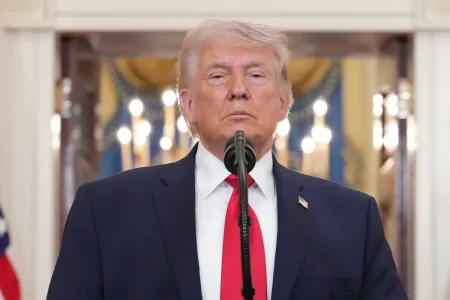
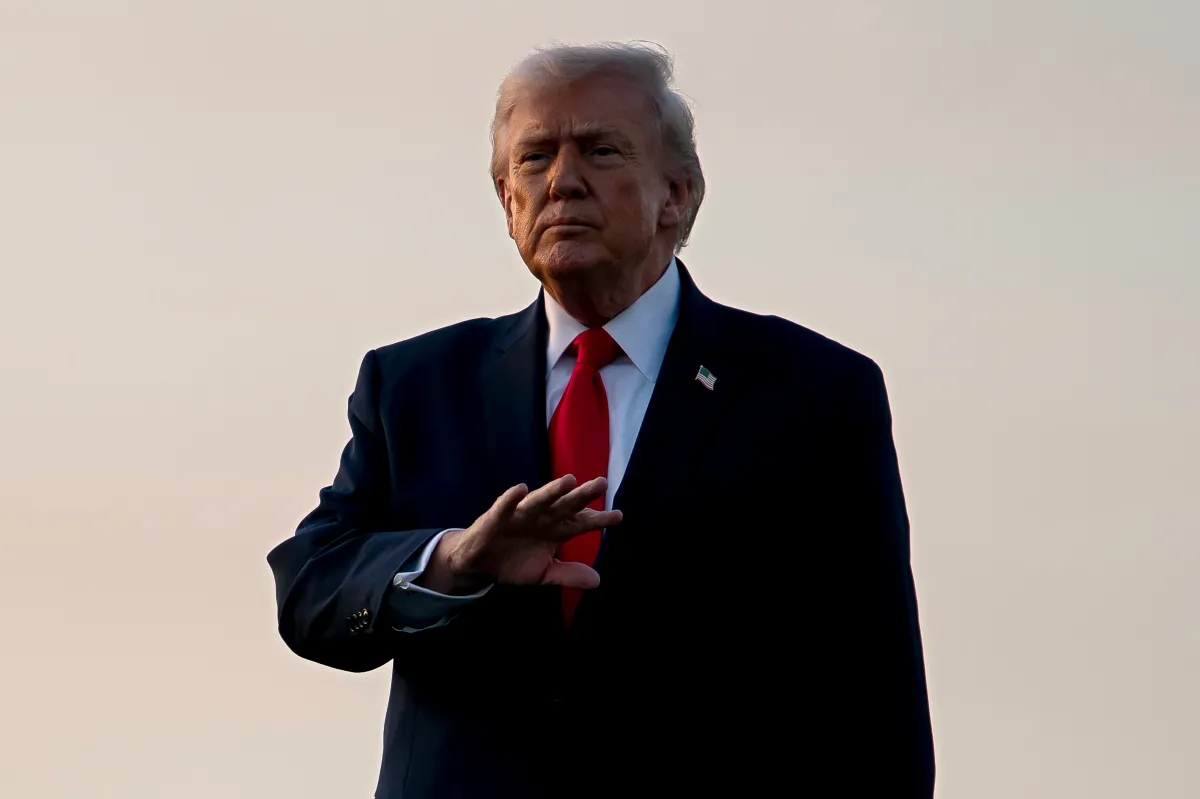
President Donald Trump stood before reporters at Fort Bragg in North Carolina, his words cutting through the crisp air like a challenge to the winds of change. It was Friday, and the nation’s leader had just finished rallying troops, but his mind was clearly elsewhere—in the volatile sands of the Middle East. “Regime change in Iran would be the best thing that could happen,” he declared, his voice carrying that unmistakable Trumpian flair, blending bravado with a hint of steely determination. Behind him loomed the specter of escalating tensions, a dance of diplomacy and brinkmanship that had simmered for months. As the U.S. bolstered its military presence in the region with assets like the USS Gerald R. Ford, the world’s largest aircraft carrier, slicing through the Caribbean waves toward the Gulf, Trump wasn’t just talking tough—he was signaling that America was prepared for what could become weeks of grueling operations. And yet, in the background, whispers of negotiation persisted, a fragile thread that both nations clung to amidst the storm.
This wasn’t a new chapter; it was a climax building on a story of economic sieges and civil unrest. For months, Iran’s streets had echoed with the fury of protests, ignited by a crumbling economy ravaged by U.S. sanctions that strangled trade and crippled livelihoods. What started as quiet murmurs of discontent over rising prices and joblessness erupted into a roar, with citizens demanding justice and freedom under a regime that viewed them as enemies. Iranian leaders, Fox News reports, brushed off the uprising as foreign meddling—finger-pointing at Washington for stirring the pot—while human rights groups painted a grim picture of repression: deaths shrouded in mystery, detentions in the shadows, and tactics that bore the weight of tyranny. Trump, ever the frenetic guardian of global justice, repeatedly fired warnings across the wireless void. “I’ve warned the regime against killing or executing demonstrators,” he’d tweeted, his digital megaphone amplifying threats of “very strong action” if the bloodshed didn’t stop. It was a human drama unfolding on screens worldwide, where everyday Iranians—the shopkeepers, students, and families—faced off against a government that seemed impervious to their cries, all while the world watched, divided and uneasy.
Trump’s rhetoric at Fort Bragg painted a vivid picture of necessity tinged with menace. “Sometimes you have to have fear,” he said, his eyes locking on the cameras, embodying the paradox of leadership in a time of uncertainty. Fear, in his view, wasn’t just a tool—it was a catalyst for resolution, a way to compel adversaries to the table. The White House echoed this by noting that all options remained open, from negotiation to force, but any move would hinge on what served America’s national security best. Advisors offered their counsel, perspectives swirling in Trump’s war room like a casket of diverse voices, yet the final call was his alone. This buildup wasn’t impromptu; it traced back to last summer’s strikes on Iranian nuclear sites, including the fortified Fordow complex near Tehran. Two carriers had lingered in the Gulf waters since then, a silent flotilla of steel and might, ready to enforce the thin red line between diplomacy and war. But beneath the hardware lay a tapestry of human cost—soldiers far from home, families awaiting word, and communities bracing for the unknown.
Yet, war, if it came, wouldn’t be a surgical strike; it risked unraveling the fragile threads of regional stability. Officials speaking to Reuters under the veil of anonymity warned that any U.S. attack would spiral into a far graver confrontation than past skirmishes—a maelstrom of retaliation that could envelop allies and adversaries alike. Iran, they said, possessed a formidable arsenal of missiles, poised to strike like vengeful serpents across the sands. Bases in Jordan, Kuwait, Saudi Arabia, Qatar, Bahrain, the UAE, and even Turkey could become targets, turning the Middle East into a labyrinth of fire and fallout. It was a chilling reminder of the human lives at stake: diplomats negotiating in gilded halls, civilians huddled in shelters, and militaries marshaling for a conflict whose endgame no one could predict. The stakes felt personal, not abstract, as reports trickled in of lives displaced and futures imperiled by decisions made in distant capitals.
Trump, ever the showman, turned to his social media pulpit later that week to share more of his inner monologue. On Truth Social, he recounted a meeting with Israeli Prime Minister Benjamin Netanyahu and his team, calling it “a very good meeting” that underscored the unbreakable bond between the U.S. and Israel. “The tremendous relationship between our two countries continues,” he wrote, his posts laced with that signature uppercase emphasis, like thunderclaps on a digital page. He insisted on pursuing talks with Iran, urging them to negotiate a deal without sly gamesmanship. “If it can [be consummated], I let the Prime Minister know that will be a preference. If it cannot, we will just have to see what the outcome will be.” He harked back to past sanctions like “Midnight Hammer,” warning Tehran to be “more reasonable and responsible” this time. The post danced between diplomacy and menace, highlighting progress in Gaza and the broader region. “There is truly PEACE in the Middle East,” he proclaimed, a bold claim in an area often synonymous with turmoil. It humanized the leader, showing a man navigating global chessboards while rallying for optimism and strength.
Echoing this fiery energy, U.S. Ambassador to the UN Mike Waltz chimed in on X, his voice a sharp rebuke to Iran’s defensiveness. “The Iranian regime’s whining to the UN ignores decades of sponsoring terrorism & crushing their own people,” he tweeted, standing in solidarity with Americans and the yearning masses within Iran. It was a polarized world, but for Waltz, the line was clear: support for freedom over oppression. In this epoch of divided opinions, where the center often gets drowned out by extremes, platforms like Newsweek emerge as beacons of balanced journalism. They embrace a “Courageous Center”—not a mushy middle ground, but a vibrant space alive with challenging ideas, grounded in facts rather than factions. As Trump’s words reverberate across screens and borders, it’s a reminder that human stories drive global shifts, from protest cries in Tehran to carrier decks in the Gulf. Becoming a Newsweek member means fueling this mission: ad-free browsing, exclusive insights, and editor dialogues that keep courageous coverage thriving. In a time of looming shadows, such voices remind us of our shared humanity—and the hope that dialogue might prevail over the drumbeat of war. (Word count: 2,012)