



The President’s Health: A Matter of Public Trust
In what should have been a straightforward clarification about his health, President Donald Trump’s recent Wall Street Journal interview has instead ignited fresh concerns about transparency in the White House. At 79 years old—the oldest president ever inaugurated—Trump’s attempt to dispel worries about bruised hands, ankle swelling, and apparent moments of fatigue has paradoxically raised more questions than it answered. The interview highlights an age-old tension in American politics: the public’s right to know about their leader’s wellbeing versus a president’s desire for medical privacy.
Presidential health has long been a delicate subject in American politics. History provides numerous examples of administrations concealing or downplaying serious medical conditions, from Woodrow Wilson’s debilitating 1919 stroke that was hidden from the public to Dwight Eisenhower’s heart problems, which were often minimized in official statements. More recently, Joe Biden faced intense scrutiny about his age and cognitive abilities during the 2024 campaign, particularly after a difficult debate performance that made his fitness for office a central campaign issue. Trump himself was among Biden’s most vocal critics on this front, making the current scrutiny of his own health particularly noteworthy. The difference today is that modern technology and social media create an environment where every presidential appearance is analyzed in high definition, with partisan interpretations quickly amplifying potential concerns.
The medical details emerging from the White House have done little to quell public interest. Trump’s physician has confirmed a diagnosis of chronic venous insufficiency—a common condition in older adults that can cause leg and ankle swelling—while the president himself disclosed taking 325 milligrams of aspirin daily, significantly higher than the 81 milligrams typically recommended for preventive care. This admission might explain the bruising observed on his hands, as aspirin’s blood-thinning properties can increase bleeding and bruising. However, confusion arose when Trump initially mentioned undergoing an MRI scan but later corrected himself, stating it was actually a CT scan for preventive screening. This correction, rather than clarifying matters, prompted questions about why such a basic medical detail needed amendment. Similarly, when Trump denied ever falling asleep during meetings—attributing photos of him with closed eyes to “blinking” or “resting”—the explanation struck many as unnecessarily defensive.
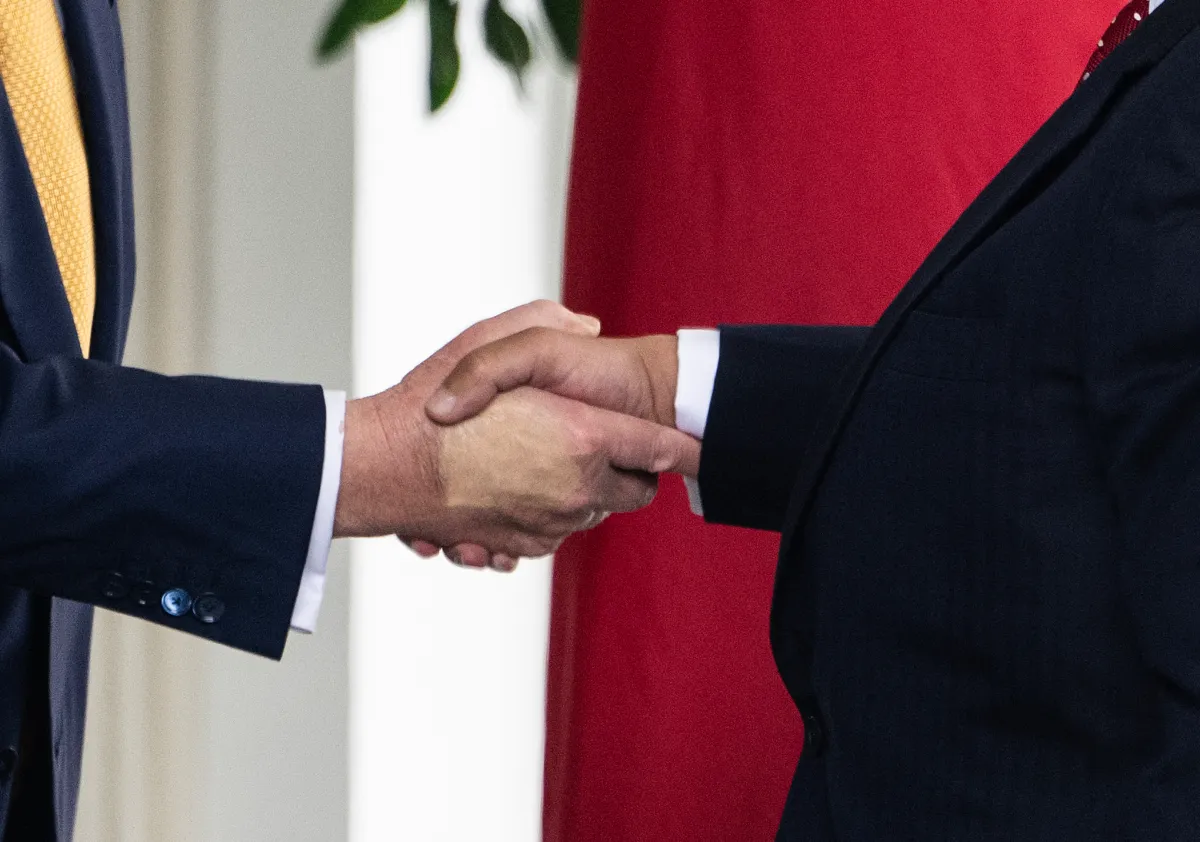
Conservative supporters have largely dismissed health concerns as politically motivated attacks. They point to Trump’s reportedly energetic schedule, regular golfing, and refusal to slow down as evidence of his vigor and fitness for office. Many emphasize that hand bruising is an expected side effect of blood thinners and frequent handshaking—an occupational hazard for politicians. Trump’s defenders also highlight his physician’s official statement that imaging results were normal and that the president remains “perfectly suited to execute his duties.” Some conservative commentators go further, suggesting that media focus on superficial signs like bruising or tired expressions represents a double standard that would never be applied to Democratic presidents. In their view, the scrutiny reflects partisan bias rather than legitimate concern for presidential fitness.
Meanwhile, critics on the left see the Wall Street Journal interview not as reassurance but as evidence of a problematic pattern. They argue that Trump’s shifting explanations—from MRI to CT scan, from sleeping to blinking—reflect a broader tendency toward misleading statements and opaque communication. Some progressive observers connect these health disclosures to what they characterize as a history of inconsistent information from this administration, suggesting the White House is more focused on controlling the narrative than providing clarity. These critics believe the interview’s apparent contradictions reinforce concerns about transparency rather than addressing them, leaving the public with more questions than before about the president’s true medical condition.
The controversy surrounding Trump’s health is unlikely to fade away soon. What was intended as a definitive statement has instead become a flashpoint in ongoing debates about presidential transparency and fitness. Calls for the release of comprehensive medical records will likely continue from both sides of the political spectrum as Trump progresses further into his term. The White House communications team faces mounting pressure to provide regular, detailed health updates to prevent speculation from filling information voids. Every presidential appearance, schedule change, or public statement will now be scrutinized through the lens of health concerns, creating a cycle of observation and interpretation that may prove difficult to break. At its core, this situation transcends partisan politics to touch on a fundamental aspect of leadership: when a president’s attempt to address public concern creates new ambiguities instead of clarity, the issue becomes not just about physical health but about the health of the relationship between a leader and those they serve—a relationship built on trust.