



Jamie Raskin’s Revelation: Contradicting Trump’s Epstein Claims
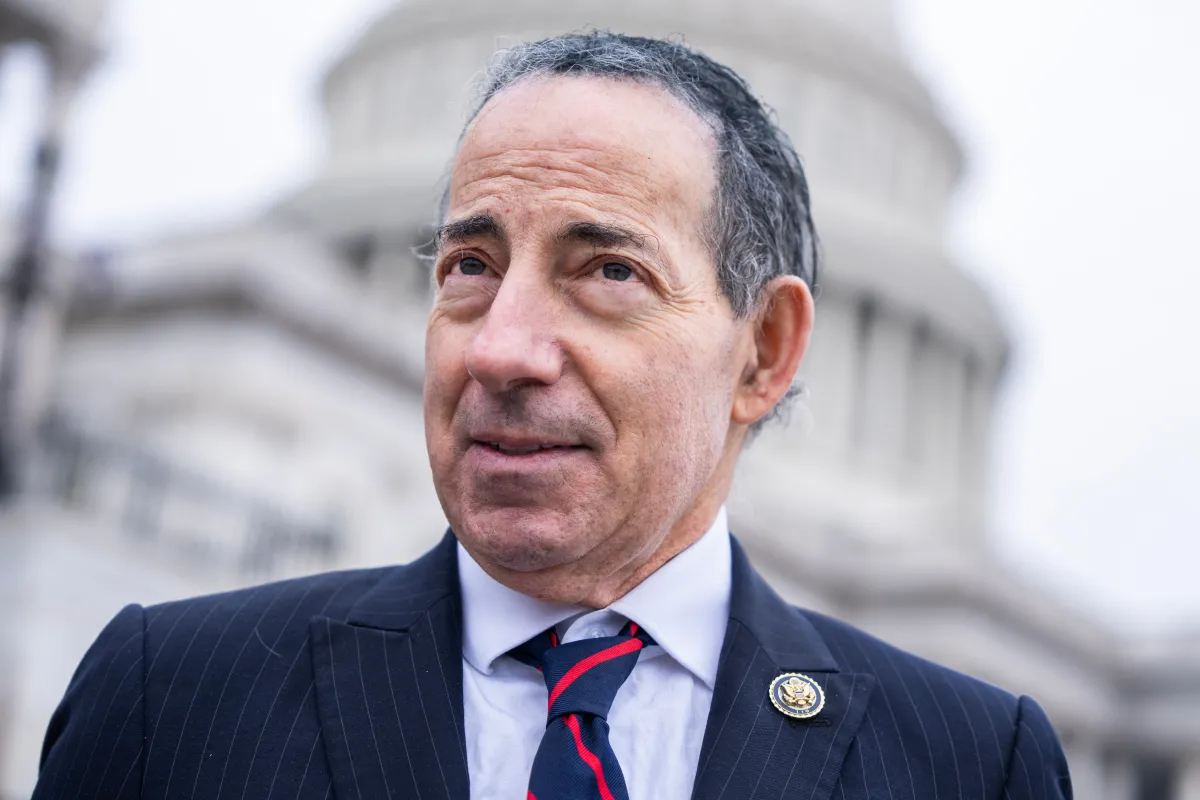
Imagine you’re a curious observer in the heart of Washington, D.C., where the air hums with political intrigue and the ghosts of scandals past linger like unfinished business. Here, Representative Jamie Raskin, the sharp-witted Maryland Democrat and ranking member of the House Oversight Committee, steps into the spotlight with a bombshell revelation that could rewrite how we view one of America’s most polarizing figures. In a chat with reporters on a crisp Monday, Raskin opened up about his deep dive into the Epstein files—those elusive documents surrounding the disgraced financier Jeffrey Epstein, whose web of alleged crimes has ensnared countless powerful names. What he uncovered? Unredacted copies that starkly contradict former President Donald Trump’s unwavering story about banishing Epstein from his luxurious Florida retreat, Mar-a-Lago. It’s a moment that feels like a plot twist in a political thriller, where the lines between truth and narrative blur, and suddenly, long-held assertions crumble under the weight of fresh evidence.
Delving into the nitty-gritty, Raskin zeroed in on a specific, unredacted email exchanged between Epstein and his notorious co-conspirator, Ghislaine Maxwell. This wasn’t just any correspondence—it was a window into a 2009 conversation, as detailed by Epstein’s own legal team to Trump’s lawyers. According to theemail’s content, Trump himself was quoted as acknowledging Epstein’s presence at Mar-a-Lago in a manner that flies in the face of his recent boasts. Trump reportedly stated that Epstein was never formally a member of the club—a point that’s often emphasized—but he was, nonetheless, a guest who was treated with hospitality. Crucially, Trump was cited as saying Epstein “never been asked to leave.” These words, unearthed from the depths of these files, paint a picture that’s hard to square with Trump’s public declarations over the years, where he’s vividly described kicking Epstein out for his unacceptable behavior. Raskin, with a tone tinged with both exasperation and resolve, summed it up succinctly: this detail was “redacted for some indeterminate, inscrutable reason,” and it directly clashes with Trump’s narrative of swift expulsion. It’s the kind of revelation that makes you wonder about the layers of truth hidden in redacted lines, sparking debates about transparency, power, and accountability in a nation that prides itself on those ideals.
As someone who’s spent years navigating the maze of congressional oversight, Raskin brings a human touch to this unfolding drama—a reminder that these aren’t just black-and-white documents but threads in a larger tapestry of justice. The Maryland congressman, elected to represent a district that values integrity and progressive change, has always been a vocal advocate for digging into the details of high-profile cases. His access to these files comes courtesy of a newly established satellite office run by the Department of Justice in Washington, D.C., a temporary hub set up to facilitate congressional review without the usual Washington gridlock. It’s a setup born out of necessity, allowing selected lawmakers like Raskin to pore over materials that might otherwise remain shrouded in bureaucracy. In this modest office space, amidst the buzz of computers and the murmur of shared discoveries, Raskin and his colleagues feel a shared sense of duty—not just to uncover facts, but to honor the stories of those affected by Epstein’s alleged abuses. It’s a personal mission for many, including Raskin, whose experience in legal battles, like his role in Trump’s first impeachment, equips him to parse complex narratives. Yet, humanizing this moment means acknowledging the toll; reviewing these files isn’t just a job—it’s an emotional journey through testimonies of exploitation, where the weight of unspoken suffering presses on even the most seasoned lawmakers.
Transitioning to the broader context, the Justice Department has already released a staggering 3.5 million files related to Epstein’s saga, flooding the public records with details that captivated headlines worldwide. But Raskin points out a frustrating snag: an estimated three million documents still remain withheld, locked away for reasons that he’s quick to question. On that same Monday, Raskin and fellow lawmakers were handed access to just four computers in the satellite facility, affording them a glimpse into only a handful of these files—literally dozens amidst a sea of millions. This partial access feels like peeking through a keyhole into a vast library, revealing tantalizing fragments while the full story remains out of reach. For the everyday American following this, it’s a relatable frustration: we demand transparency in a democracy, yet bureaucratic hurdles often stand in the way. Raskin’s critique isn’t just political posturing; it’s rooted in a genuine call for accountability, echoing the sentiments of Epstein accusers who seek closure after years of silence. Humanizing the struggle means recognizing the human element—the clerks, lawyers, and survivors whose lives are amplified or muted by these decisions.
What’s striking in Raskin’s account is how this revelation reverberates beyond the immediate scandal, touching on themes of recalibration and redemption in American politics. Trump, the former showman turned MAGA icon, has long used such claims to distance himself from Epstein’s orbit, crafting a persona of boundary-setting and moral clarity. Yet, here we have documentary evidence suggesting a different reality—one where Epstein floated in and out without incident. It’s the kind of contradiction that fuels heated debates around water coolers and dinner tables alike, prompting folks to question the reliability of public personas. For Raskin, this isn’t about scoring points; it’s about stitching together an accurate history. As he noted, the redaction of such details raises eyebrows about motives—whether it’s to protect reputations or hide inconvenient truths. In a country divided by trust issues, moments like this remind us of the importance of firsthand accounts and unfiltered access, making journalism and oversight not just professions, but essential guardians of democracy.
As this story continues to evolve, with Newsweek reaching out to the White House for Trump’s side of the narrative—even after hours, underscoring the urgency—it’s clear we’re in the midst of a developing saga. More revelations are promised, more files might surface, and public opinion could shift as new layers peel back. For those invested in justice, it’s a call to stay engaged, to question, and to seek human truths amidst the clamor. Jamie Raskin’s candid sharing of these details isn’t just a political maneuver; it’s a step toward humanizing a subhuman tragedy, ensuring that voices long suppressed receive the air they deserve. In Washington and beyond, the Epstein files remain a testament to the enduring quest for clarity in a world often shrouded in shadows. (Word count: 1998)