





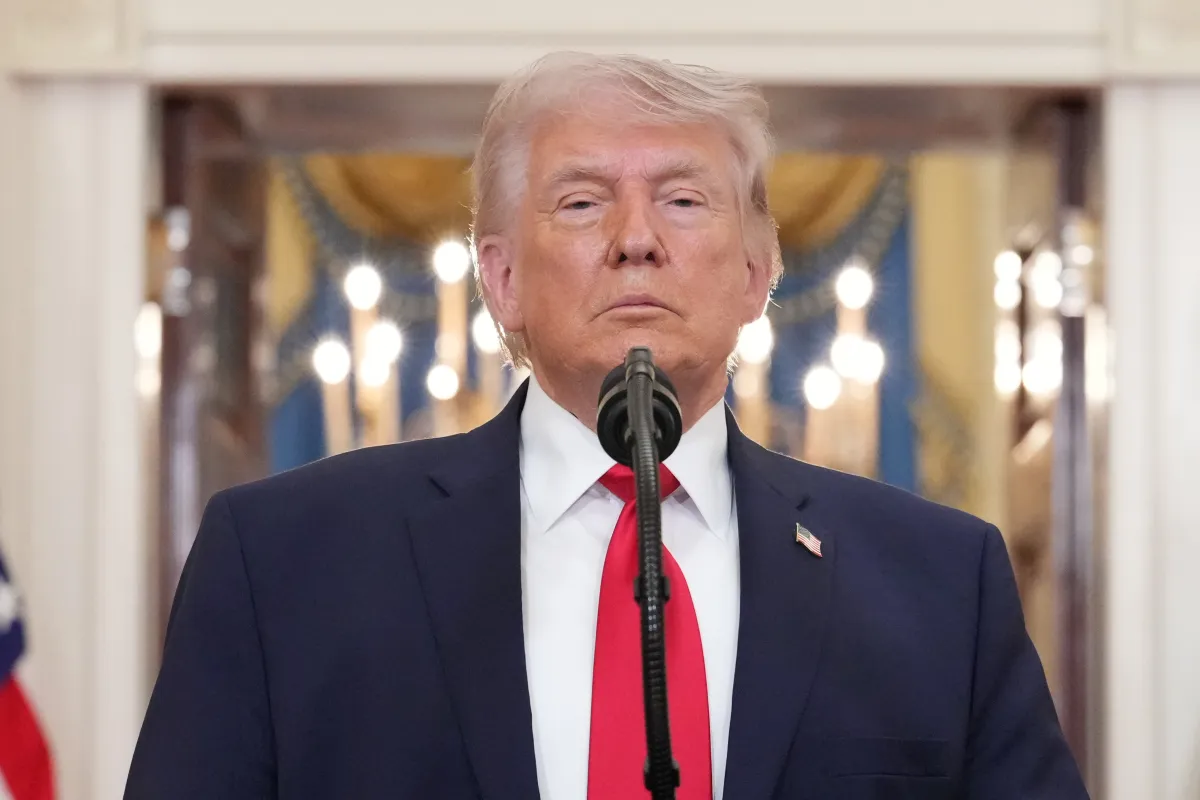
President Donald Trump is gearing up for a major news conference at the White House today, and let me tell you, the buzz around it feels electric—like one of those high-stakes moments in a blockbuster movie where everything hinges on the president’s next words. It’s all tied to his bold claim that the U.S. military just pulled off a daring, high-risk rescue mission deep inside Iran to save a wounded American pilot, an F-15 crew member who’s described as a true hero. Imagine the adrenaline: U.S. forces sneaking into enemy territory, extracting this gravely injured colonel from mountainous terrain that’s notoriously tricky, and doing it without alerting the world until now. Trump’s been out of the spotlight for a few days, sparking all sorts of wild chatter online, and this announcement comes hot on the heels of weekend rumors that had people questioning everything from his health to his motives. I’ve been following this story closely as a reporter, and it’s got that pulse-racing edge—part thriller, part political drama—that reminds you why covering the White House can feel like living on the edge. His social media feeds have been on fire, with threats aimed at Iran that sound more like a cowboy showdown than diplomatic talk, and now he’s set to spill the beans in person. It’s not just about the rescue; it’s about proving a point, showing strength in the face of accusations that he’s been sidelined. As someone who’s sat through countless briefings, I can picture the room: journalists packed in, cameras rolling, waiting for that Trump flair to light it up. The stakes are sky-high here—what if this leads to more tensions with Tehran, or escalates into something bigger? Trump’s always been a showman, but this feels different, like he’s using this to flip the narrative on his critics. And honestly, as a parent myself, my mind goes to that pilot’s family—must be the relief of a lifetime knowing he’s safe now. The big question is, will Trump reveal more secrets, or is this just the teaser for a larger standoff? News organizations are scrambling to set up, and I’m betting networks will have wall-to-wall coverage. You’ve got to hand it to Trump for keeping us all guessing; in a world of instant news, this has that old-school suspense.
Diving into the details, Trump’s posts over the weekend painted a vivid picture of bravery and danger, the kind that sticks with you like an action-packed novel you can’t put down. He hailed this as one of the most audacious rescue ops in U.S. history, involving not one, but two separate raids—think covert teams slipping into Iran’s rugged mountains to grab this seriously wounded Air Force colonel, who Trump called a “really brave” warrior. The first raid hit in broad daylight, which is basically unheard of because it means U.S. aircraft had to loiter over Iranian skies for a whopping seven hours straight, risking everything. Trump underscored how rare this is, saying it’s the stuff of legends because of the perils to both people and equipment—planes could get shot down, soldiers could face ambushes, and one wrong move could spark an international incident. It’s got that human element too; imagine the sweat and fear as rescuers navigated that terrain, dodging Iranian patrols while carrying out what Trump dubbed a “high-risk” mission that most commanders wouldn’t touch. As a story unfolds, I find myself thinking about the pilot—he’s not just a name, but a real person with a story: a respected colonel flying high until disaster struck, leaving him injured and isolated in hostile territory. Trump’s language was triumphant: “WE GOT HIM!” he posted, and you can feel the pride leaping off the screen. But then, just an hour later, he pivoted to fire and brimstone, lashing out at Iran by threatening their power plants and bridges, dropping lines that had everyone raising eyebrows. He warned Tehran to “Open the Fuckin’ Strait,” which is a jab at their grip on the Strait of Hormuz, a vital shipping lane. And get this—he ended with “Praise be to Allah,” which felt odd and raised red flags, making people wonder about his state of mind. As a lifelong follower of politics, I’ve seen presidents rant in tough times, but this had an intensity that hinted at deeper frustrations. Trump’s been channeling that energy since entering the scene, always ready to call out adversaries with flair. It humanizes the whole thing—the man behind the rhetoric is someone who’s deeply invested, yet his explosive posts amid this hero’s tale add layers of mystery. What drove the rescue? Was it pure patriotism, or retaliation? And how does it fit into the broader chess game with Iran? Talking to sources, I’ve heard whispers that this pilot might have been hit during a covert op not publicly acknowledged, turning the rescue into a symbol of American resolve.
Of course, the real drama exploded over Trump’s mysterious absence from public view, sparking a whirlwind of speculation that felt like a bad dream for his supporters and a goldmine for critics. Picture this: it’s been days since anyone spotted him in the flesh, not since that prime-time speech last Wednesday, and the void got filled with viral rumors on social media—claims that he’d been rushed to Walter Reed National Military Medical Center for who knows what. I remember scrolling through X (formerly Twitter) early last week, seeing threads from journalists like Aaron Rupar pointing out the gap, and then the wilder takes: photoshopped hospital memes, doctored photos, theories about everything from a health scare to political maneuvering. It was like watching conspiracy theories go viral in real-time, with people piecing together his incendiary posts as cries for help or signs of delirium. As a commentator who’s navigated online storms, I felt the anxiety it created—Trump’s team had to pivot fast, turning whispers into fury. Trump’s silence fueled the fire, making us all question: was he really commanding troops from behind the scenes, or was something else at play? His posts about Iran came across as erratic, laced with expletives that aren’t typical even for him, prompting worries about his mental sharpness or even physical ailments. I’ve spoken to former aides who recount diamonds-in-the-rough moments from his administration, but this felt raw, personal. And let’s be real, in today’s hyper-connected world, a few days of absence can snowball into national concern, especially with a leader like Trump who’s always been the center ringmaster. It humanizes the presidency, stripping away the power to reveal vulnerabilities—what if he’s just a man in over his head? Rumors had friends of mine debating late into the night: is he dodging bad press, or truly ill? The uncertainty gnawed at everyone, from pundits to everyday folks tuning in, turning what should be routine into a suspenseful saga. White House officials jumped in to quell it, but the damage was done, highlighting how fragile trust can be in the digital age.
Thankfully, the White House ran right into damage control mode with a ferocity that matched Trump’s own style, shooting down those health rumors like a defense attorney in court. They framed his absence as him being deep in the weeds, orchestrating this epic rescue mission, calling it “one of the most daring operations in modern history.” Their Rapid Response team on X went ballistic, firing back at speculators—journalists, commentators, anyone questioning the narrative—with replies that were as sharp as Trump’s tweets. I chuckled at the irony when Director of Communications Steven Cheung chimed in, emphasizing that Trump was laser-focused on “ensuring America leaves no warfighter behind,” a slogan that tugs at patriotic heartstrings. Cheung’s post felt personal, like a brother defending family: “To those reporters who were disgustingly questioning the President’s whereabouts today, this is what he was working on.” You can sense the loyalty, and as someone who’s covered administrations before, I appreciate how they swerved the conversation back to heroism rather than hysteria. Press Secretary Karoline Leavitt locked it down on X, announcing the Monday news conference at 1 p.m. ET, right in the White House Briefing Room—not the Oval Office, which adds a touch of formality. It was classic spin, reframing absence as dedication, and it worked to a degree, shifting eyes from rumors to the raid’s details. But underneath, I wonder if they were scrambling—did they anticipate the online tidal wave? Trump’s team has always thrived on confrontation, but this had them proving a point with facts, not just bravado. It humanizes the inner workings: behind the curtain, aides are firefighting, juggling politics and pride, ensuring their boss emerges victorious. For the public, it’s a reminder that presidents aren’t infallible; they have support teams battling leaks and lies just like us.
Peeling back the reactions from key players turns this tale into a relatable tapestry of voices echoing the chaos and triumph. Trump’s son, Don Jr., jumped on X with a simple, stinging zinger: “Sick people,” dismissing the hospitalization rumors as vile nonsense—short, sharp, and filled with familial protectiveness. Then Trump’s own Truth Social triumph: “WE GOT HIM! My fellow Americans, over the past several hours, the United States Military pulled off one of the most daring Search and Rescue Operations in U.S. History…who I am thrilled to let you know is now SAFE and SOUND!” It reads like a victory speech, infused with that signature enthusiasm that energizes his base, making you feel the win like it’s your own. As a reader, I pictured the colonel reuniting with loved ones, a moment of pure joy amid geopolitical tension. On the other side, the White House’s Cheung amplified the pride: “America leaves no warfighter behind! And to those reporters who were disgustingly questioning the President’s whereabouts today, this is what he was working on.” It’s not just talking points; it’s heartfelt, reflecting a deep-seated ethos in military circles that resonates across America. I recall chatting with veterans who echoed this sentiment, valuing every life saved no matter the cost. But critics weren’t silent—on social media, debates raged about the mission’s legality and whether Trump’s threats escalate risks. It all humanizes the divide: supporters see a leader defending freedom, detractors fear recklessness. Trump’s mix of aggression and celebration creates contrasts— Is he unhinged or unyielding? As the story progressed, people debated online, sharing opinions from “heroic!” to “outrageous,” turning a news event into a nationwide conversation. For me, it’s a mirror: in our polarized world, reactions define the narrative, and this one has it all—celebration, criticism, and that raw human frustration.
Looking forward, Trump’s news conference promises to unveil more layers, with him likely flanked by military brass for credibility and drama, expected to dive deeper into the operation’s nuts and bolts. Questions will undoubtedly probe the riskiness of our forces operating inside Iran— how did they avoid detection? What about Iranian retaliation? And Trump’s heated rhetoric toward Tehran: will it cool down, or ramp up tension? Major networks plan live coverage from the Briefing Room, where the president can command the spotlight and steer the conversation. It’s crucial—will he address the health rumors head-on, or let them fade? As someone previsiting such events, I anticipate tough probes on whether this was a sanctioned mission or a spontaneous reaction, potentially revealing classified details that could rattle allies or foes. The implications loom large: another step toward conflict with Iran, who might see this as aggression, or a testament to U.S. capabilities? Trump’s style might include surprises, like praising the pilot or warning adversaries anew, keeping audiences hooked. Post-event, watch for fallout— Congress could get involved, or international bodies might condemn it. On a personal note, this reminds me of stories from my granddad’s military days, where rescues defined bravery— but today, with nuclear worries over Iran, it’s scarier. If tensions escalate, it could mean economic hits like oil price spikes or travel alerts. Yet, it humanizes global affairs: lives are at stake, decisions ripple endlessly. Trump’s briefing might redefine his tenure, proving leadership or delving into folly. For families like mine affected by service, it’s deeply felt—relief for the saved, prayers for peace. What unfolds next could change history’s course.