






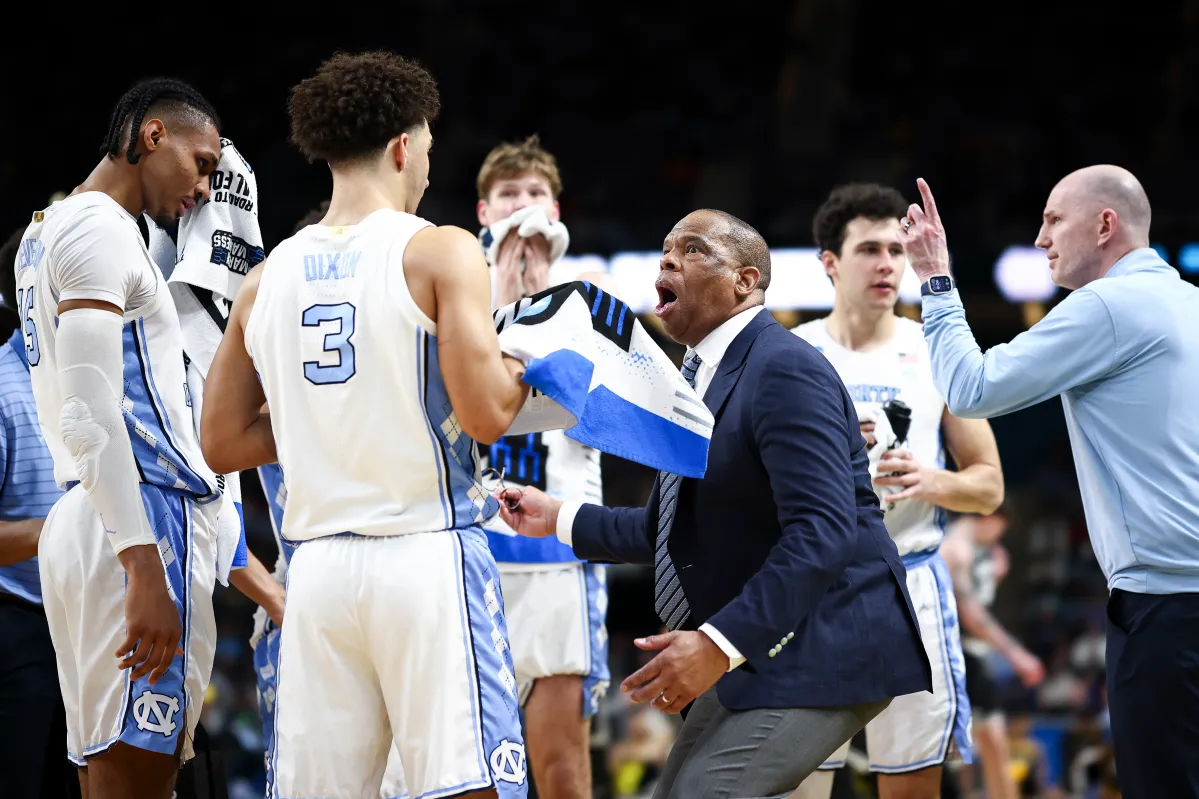
North Carolina’s storied basketball program has always punched above its weight, churning out legends like Michael Jordan and Dean Smith, and for the last five seasons, it was Hubert Davis who carried that torch. When the Tar Heels announced they’d parted ways with Davis on Tuesday, it felt like a seismic shift in college hoops. Davis had racked up an impressive 125-54 record, landing four NCAA Tournament bids, two Sweet 16 runs, and even a trip to the national title game. Those stats tell one story, but the human side? Davis himself said it best in his farewell. “This opportunity has truly been such a blessing,” he shared, crediting Jesus for the gift of guiding young players and building a staff he clearly cherished. He took pride in their shared achievements and hinted at coaching again soon, painting a picture of a man who, despite the abrupt end, still glowed with gratitude. Imagine the quiet moments on the court, the late-night talks with players, the jubilation of that Sweet 16 upset—all of it wrapped in Davis’ unassuming demeanor that made him a fan favorite. Losing him wasn’t just about wins; it was about losing a steady hand who embodied the Heels’ tradition of excellence without flash. Fans might wonder what went wrong—was it the string of second-round exits, or unspoken tensions? Either way, Davis leaves with his head high, a reminder that coaching is as much about heart as hoops prowess.
The University of North Carolina didn’t waste time. With Davis out, whispers about his replacement turned into a full-blown hunt, and insiders expected lightning-fast action to fill the void. One name at the top of the list? Brad Stevens, the brains behind the Boston Celtics, who held the title of president of basketball operations and effectively served as their general manager. It seemed poetic—a college coach turned NBA executive circling back to alma mater, ready to revive the Heels. But as fate would have it, Stevens cooled the fire before it fully ignited. Less than a day after the firing hit the news, Stevens made it crystal clear he wasn’t interested in donning the whistle again. Word on the street, via CBS Sports’ Matt Norlander, was that Stevens had removed himself from the equation, opting to stay in the NBA trenches where his strategic mind had built playoff contenders. Picture the scene: Stevens, a guy known for his low-key charm—think pullovers and thoughtful analysis during timeouts—probably sat down and weighed the scales. Coaching college kids versus orchestrating NBA stars; the raw energy of Chapel Hill versus the corporate gloss of Boston. For a man who’d traded his clipboard for a corner office, diving back into the recruiting grind and Sunday morning media scrums might’ve felt like a step backward. Yet, in that decision, you see the human toll of ambition. Stevens wasn’t rejecting UNC; he was embracing his current path, perhaps out of loyalty to the Celtics or sheer burnout from years in the spotlight.
Even if Stevens bowed out, his resume reads like a coaching dream—166 wins against just 49 losses at Butler University, five NCAA Tournaments, two heartbreaking national championship runner-ups, three Horizon League tourney titles, four regular-season crowns, and two Coach of the Year nods. He took a mid-major program and turned it into a powerhouse, bullying giants like Kentucky and Connecticut without a 7-foot center or a loaded recruiting class. Butler’s Cinderella run to the 2010 national title game is folklore now, a testament to Stevens’ innovative schemes and relentless preparation. He’d drill his players on the X’s and O’s, emphasizing teamwork over individualism, much like his current NBA gig where he cultivates talent like Jayson Tatum and Jaylen Brown. That background made him a tantalizing fit for the Heels, who value fundamental play and smart systems. If he’d taken the job, fans could imagine Stevens reviving that same magic—student-athletes hustling on the practice floor, community outreach, maybe even a hot streak to rival the 2005 title team. But his choice to stay executive-style underscores a broader trend: coaches morphing into front-office wizards, blending passion for the game with business savvy. It’s a bittersweet reminder that not every great fits every opportunity, and Stevens’ departure leaves the Tar Heels hunting anew.
With Stevens off the board, North Carolina’s radar turned to a fresh batch of contenders, each bringing their own flavor to the table. Among them? Arizona’s Tommy Lloyd, the West Coast whirlwind who’s jolted the Wildcats into Big 12 contention; Michigan’s Dusty May, the homespun coach who keeps Wolverines basketball relevant in the Wild West of the B1G; Iowa State’ s TJ Otzelberger, the no-nonsense grinder perpetuating Fred Hoiberg’s legacy in Ames; and Billy Donovan, head coach of the Chicago Bulls, a mastermind with two NCAA titles from his Florida days. These aren’t just names—they’re personalities. Lloyd, with his high-energy style, might energize an ACC crowd battling top talent. May could infuse some Midwestern grit, teaching those Carolina kids to tough it out on the road. Otzelberger brings a blend of toughness and tactical smarts, perhaps appealing to a program craving stability. And Donovan? He’s the seasoned veteran, a guy who’s won at multiple levels, from college royalty to NBA grind. Grouping them feels like casting for a sequel to a beloved film—each actor has strengths that could shine in Chapel Hill’s iconic Dean Dome. You can almost envision Lloyd’s fast-paced offense syncing with the Heels’ speed and precision, or May’s straightforward approach grounding a program prone to drama. The search isn’t just about records; it’s about vision. Who can mesh with thestoried alumni, attract blue-chip recruits like R.J. Davis or Armando Bacot, and honor Dean Smith’s egalitarian ethos? As rumors swirl, fans speculate about interviews, whether over Zoom or in cozy Southern meetings, where coaches pitch their dreams for Kenan Stadium grandeur.
Donovan, specifically, stands out as a willing wildcard. Unlike Stevens, who’d rather strategize trades than substitutions, Donovan seems open to the siren call of UNC. CBS Sports’ Norlander hinted that if the Heels extended an olive branch, Donovan would at least entertain a chat. It’s intriguing—imagine the Washington Generals legend applying his Gator toughness to Bull vampire lore, then pivoting to Tar Heel blue. Donovan’s tenure at Florida yielded those two hardware-laden titles, with a genius for versatile lineups and clutch plays. His players adored him as a mentor, blending strict discipline with genuine care, much like Wooden’s UCLA dynasty. Transitioning to Carolina could be his next chapter, especially after NBA stints at Oklahoma City and Chicago where titles eluded him. What draws him? Maybe the allure of college purity—the one-and-done era might frustrate, but UNC offers potential for lasting impact, grooming prospects like Rasheed Wallace or Tyler Hansbrough. Fans might fantasize about Donovan replicating that Alvarez coach-on-mic enthusiasm, rallying crowds with “One Shining Moment”-level magic. Whichever way, his potential interest adds juice to the speculation, turning routine coaching changes into must-watch drama. Who knows? Maybe a family man like Donovan sees Chapel Hill as a place to settle, raise kids away from big-city chaos, and build a legacy echoing that 2009 title.
Beyond UNC’s halls, basketball’s landscape buzzes with parallel stories, humanizing the churn of coaches and dreams. Take 600-win legend John Calipari, poised to retire after March Madness— a Kentucky icon stepping away after decades of shaping stars like Kawhi Leonard and Anthony Davis, proving that even immortals need a sunset. Or NFL insider Ian Rapoport facing heat over the Travis Kelce incident, where a controversial audio sparked debates on media ethics and athlete image, reminding us how words can overshadow plays. Then there’s Giants QB Jaxson Dart training with UFC champion Jorge Masvidal for an offseason edge, blending gridiron grit with octagon fury in a quest for dominance. And don’t forget Dan Orlovsky’s wild tangent on Fernando Mendoza, fueling conspiracy theories among fans— a casual comment ballooning into viral rants, capturing the passion (and paranoia) that unites sports enthusiasts. These nuggets blend with UNC’s saga, painting modern athletics as a tapestry of ambition, rejection, renewal, and unrelenting humanity. As the Tar Heels navigate this crossroads, they honor the game’s soul—coaches as fathers, mentors, strategists, invested in the kids’ futures more than personal glory. Stevens opting out isn’t a loss; it’s a pivot. Donovan contemplating a return? That’s hope. In the end, whoever lands in Chapel Hill will carry the weight of Tar Heel lore, striving not just for wins, but for the intangible magic that makes basketball feel alive. UNC’s next chapter promises more twists, but one thing’s sure: the heart of the game beats on.