




Venezuela at a Crossroads: Voices from a Nation in Transition
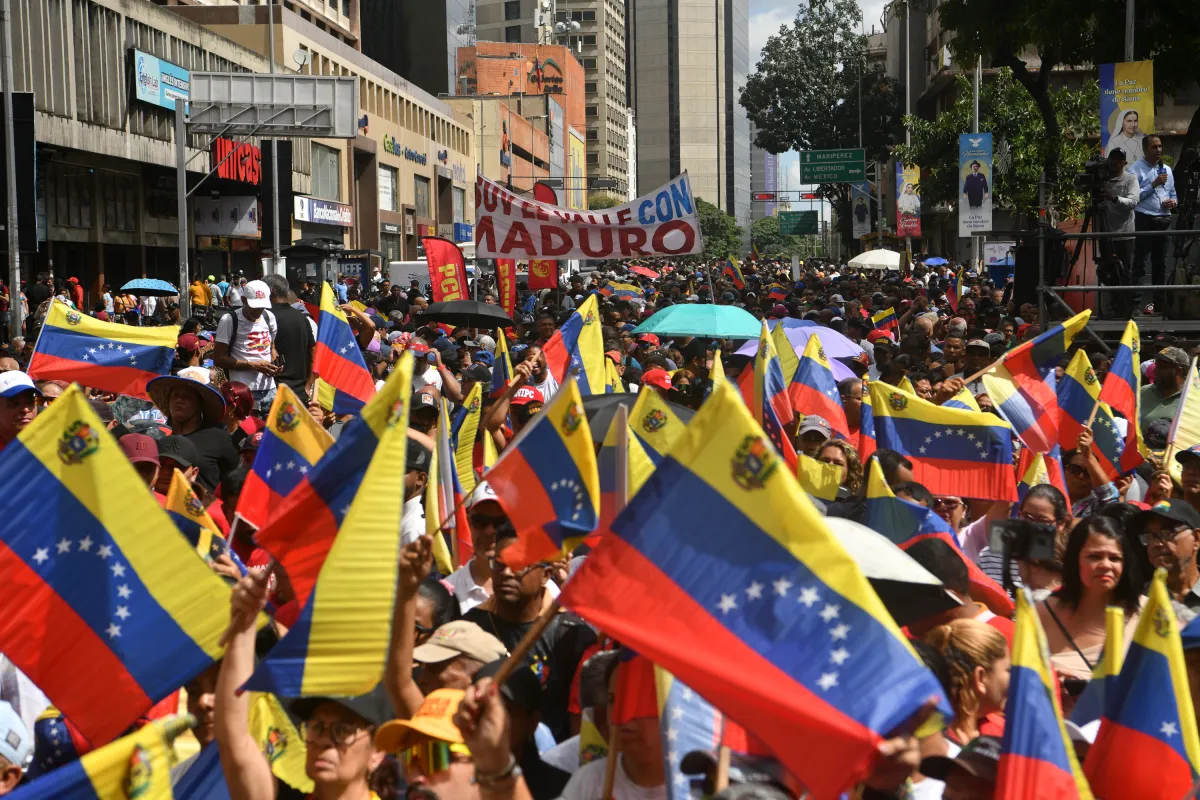
In the early hours of a January morning, Venezuelans at home and abroad awakened to shocking news that would ripple through their collective consciousness – President Nicolás Maduro had reportedly been removed from power. This unexpected development triggered a cascade of emotions and reactions across the Venezuelan diaspora, estimated at over six million people worldwide, and among those still living within the country’s borders. The events unfolded against the backdrop of a nation that has experienced profound political and economic turmoil for more than two decades, leaving citizens to navigate yet another chapter of uncertainty. As confusion spread, people struggled to make sense of conflicting information, military movements, and official statements that seemed to raise more questions than they answered.
Flora Martínez, a 41-year-old Venezuelan expatriate now living in Colorado, embodies the complex emotional journey many in the diaspora are experiencing. Having left Caracas a decade ago, Martínez had gradually disconnected from Venezuela’s seemingly endless cycle of crises, finding it too painful to remain engaged with news from a homeland she felt had become trapped in a “vicious circle” of deterioration. “I had lost all hope,” she confesses, describing her deliberate withdrawal from following Venezuelan current events. Yet the recent developments surrounding Maduro’s reported removal instantly pulled her back into the orbit of Venezuelan politics, stirring a mixture of cautious optimism and deep-seated anxiety about what might follow. Her perspective is tempered by years of witnessing how political transitions in Venezuela have repeatedly failed to deliver lasting change. Martínez worries particularly about hardline supporters of the revolution whose “arrogance and blind loyalty” might sabotage any opportunity for peaceful transition. She sees the government’s continued anti-imperialist rhetoric as potentially strategic – a performance to maintain credibility with their base while negotiating behind closed doors. “It’s like their king was captured, but they haven’t actually surrendered yet,” she observes with the weary wisdom of someone who has seen enough false starts to remain guarded.
Inside Venezuela itself, the initial response to news of Maduro’s removal revealed a population conditioned by years of crisis management. Michael Packman, a 60-year-old resident of Merida, describes being awakened by his wife with news that “Venezuela had been attacked.” Living far from the capital, Packman and his neighbors responded with pragmatic caution rather than panic – checking the streets, stocking up on essentials, and observing an increased security presence that felt oddly routine. “It didn’t feel entirely unexpected,” he notes, highlighting the extraordinary resilience Venezuelans have developed through years of political and economic instability. In Caracas, the experience was more immediate and disorienting. Eduardo, a 40-year-old resident of the capital, recalls hearing aircraft overhead and witnessing scenes of public anxiety that reminded him of “something out of The Walking Dead” as people rushed to stores amid profound uncertainty. Yet even as daily life continued under a cloud of confusion, the anticipated collapse into chaos did not materialize – a testament to Venezuelans’ remarkable ability to adapt to sudden change.
The international dimensions of Venezuela’s situation add another layer of complexity to an already convoluted picture. Donald Trump’s announcement that he would “run” the country struck many Venezuelans as an uncomfortable echo of pre-Chávez era interventionism when, as Packman puts it, “Latin America was run from Washington.” This historical memory creates tension even among those who desire change, raising concerns about sovereignty and self-determination that transcend immediate political loyalties. For observers like Martínez, the global reaction has been equally frustrating, as she perceives the international left as more invested in criticizing Trump than supporting a peaceful transition for the Venezuelan people. “It feels like they want this to become another Iraq or Vietnam, to justify their hatred for Trump,” she laments, pointing to the way Venezuela has become a symbolic battleground in larger ideological conflicts rather than being understood on its own terms. This international politicization adds to the burden of ordinary Venezuelans, whose suffering becomes secondary to geopolitical narratives.
The information landscape surrounding these events further complicates Venezuelans’ ability to make sense of their changing reality. Years of media control and propaganda have created deep skepticism of official narratives. Martínez recalls how when Maduro’s stepson was arrested in the U.S. with 800 kilograms of cocaine, Venezuelan state media remained silent for days before framing the incident as an attack on the revolution – even as the stepson himself pleaded guilty. Similar patterns emerge in current coverage, with discrepancies between domestic and international reporting creating an information vacuum filled by speculation and uncertainty. This media environment has trained Venezuelans to read between the lines, analyzing official statements for hidden meanings and unspoken agreements. Packman suggests the entire situation may represent “a negotiated settlement between Venezuela and the US” – a face-saving arrangement where the United States claims a symbolic victory while Venezuela maintains enough governing structure to prevent complete collapse.
Despite these challenges, there exists among Venezuelans a tempered hope – not necessarily for immediate transformation but for the possibility that this moment might somehow break the deadlock that has kept their country in crisis. Eduardo describes a cautious optimism: “No one is celebrating because we are still afraid of reprisals from the government. But at the same time, there is a feeling of happiness mixed with anxiety.” This emotional ambivalence reflects the complicated reality of a population that has learned through bitter experience that political changes rarely deliver on their initial promise. Perhaps most poignantly, Packman observes that Venezuelans are responding to this latest upheaval by doing what they have always done: “Improvising, adapting quickly, and moving on—that’s nothing new. It’s just the name of the game in Venezuela.” In this resilience lies both the tragedy and triumph of the Venezuelan people – their extraordinary capacity to endure circumstances that should be unendurable, even as they continue to hope, against all odds, for a future worthy of their determination.