






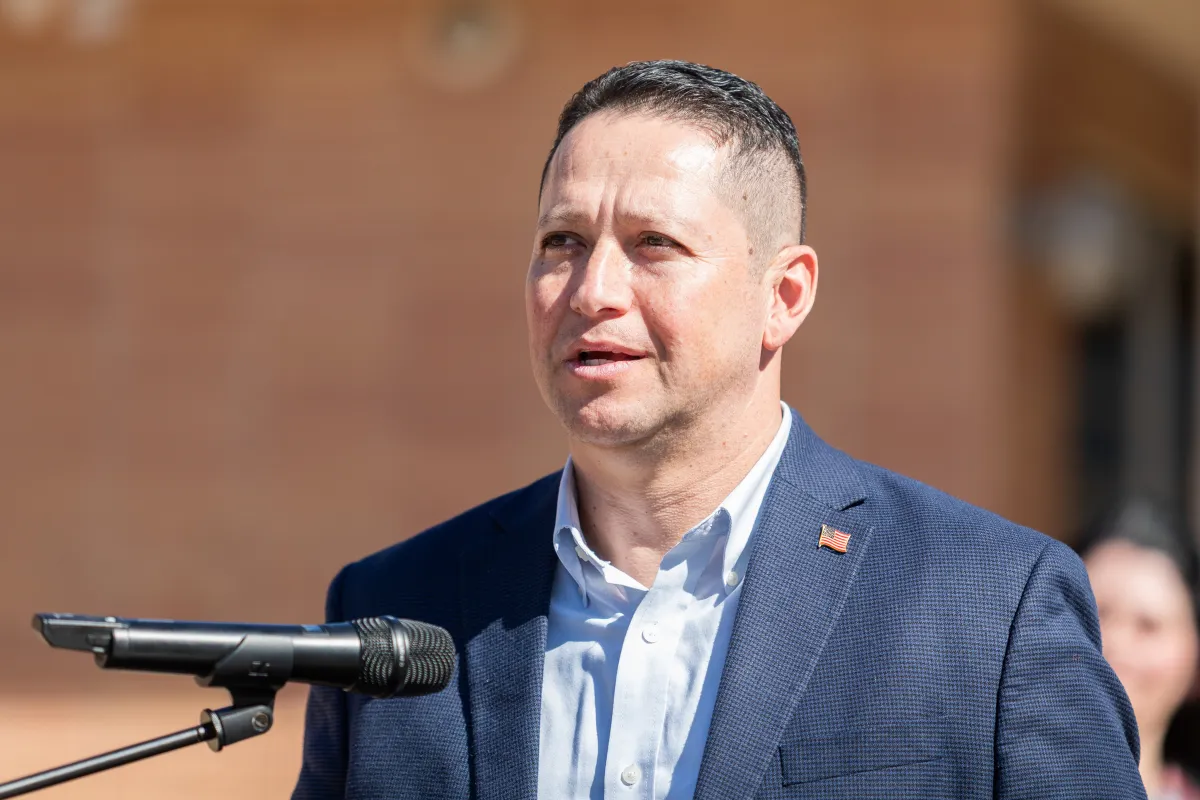
In the quiet unraveling of a public life, Congressman Tony Gonzales, a stalwart Republican from Texas, made a heartfelt announcement that shook his district and beyond. Representing a community familiar with resilience—from battling border challenges to grieving after tragic school shootings—he stepped back from the political arena, choosing not to seek re-election. This wasn’t a decision born of defeat but of deep introspection, surrounded by the love of his family, including his wife and six children. Gonzales, who had spent two decades in the military and three terms in Congress, spoke with a mix of pride and sorrow, reflecting on oaths sworn at 18 and a career dedicated to the greater good. His words resonated as those of a man grappling with personal demons, yet committed to finishing his term with unwavering loyalty to his constituents.
As Gonzales penned his farewell on social media, he echoed the values that defined his journey: perseverance in the face of adversity and a relentless fight for what mattered most. “Do as much as you can,” he urged in his statement, words that painted him as approachable and grounded, not just a politician but a neighbor from the heart of Texas. Readers could almost picture him—perhaps in a humble home, surrounded by family photos—wrestling with the weight of his choices. This announcement wasn’t cold or detached; it carried the warmth of gratitude for supporters who had stood by him through thick and thin. In humanizing terms, it was a story of redemption, of choosing authenticity over ambition, amidst the relentless spotlight of public life.
For the first time, Gonzales openly acknowledged a turbulent personal chapter: an affair with a former aide, Regina Ann Santos-Aviles. This revelation added layers of vulnerability to his persona, transforming him from a distant figure of authority into a flawed individual reckoning with mistakes. In an interview, he spoke candidly, his voice likely tinged with remorse, painting a picture of someone who had crossed boundaries in a moment of weakness. Such admissions humanize public figures, reminding us of the universal struggles of temptation and regret, even for those in positions of power.
The tragedy deepened when Santos-Aviles, a vibrant 35-year-old woman, passed away in September 2025 under harrowing circumstances. She set herself on fire in her backyard in Uvalde, Texas, in what the Bexar County Medical Examiner’s Office officially ruled a suicide. This heartbreaking event cast a long shadow, turning the affair into a story of personal loss and irreversible pain. Friends and community members might have felt the sting of unanswered questions, imagining a young life cut short, leaving behind loved ones in grief. Gonzales’s connection to this sorrow added an emotional undercurrent to his departure, humanizing the narrative as one of shared human fragility.
Adding to the complexity, the House Ethics Committee launched an investigation into allegations of sexual misconduct toward Santos-Aviles and potential unfair discrimination through favors extended to her. This probe underscored the accountability expected of leaders, framing Gonzales not as a villain but as someone facing the consequences of actions in a profession that demands the highest integrity. It stirred empathy for the ethical tightrope walked by politicians, who are, at their core, real people navigating personal and professional storms.
As this breaking story unfolds, Gonzales’s choice to serve out his term reflects a commitment to his district that transcends scandal. In these moments, we see not just headlines but the emotional tapestry of a man’s life—duty, love, and the quest for inner peace. His story invites reflection on forgiveness and healing, a reminder that even heroes have heartaches, and communities can rally around those willing to own their journeys.
(Word count: 621)