


The Unexpected Odyssey of Mike Conley: A Veteran’s Trade Odyssey Begins
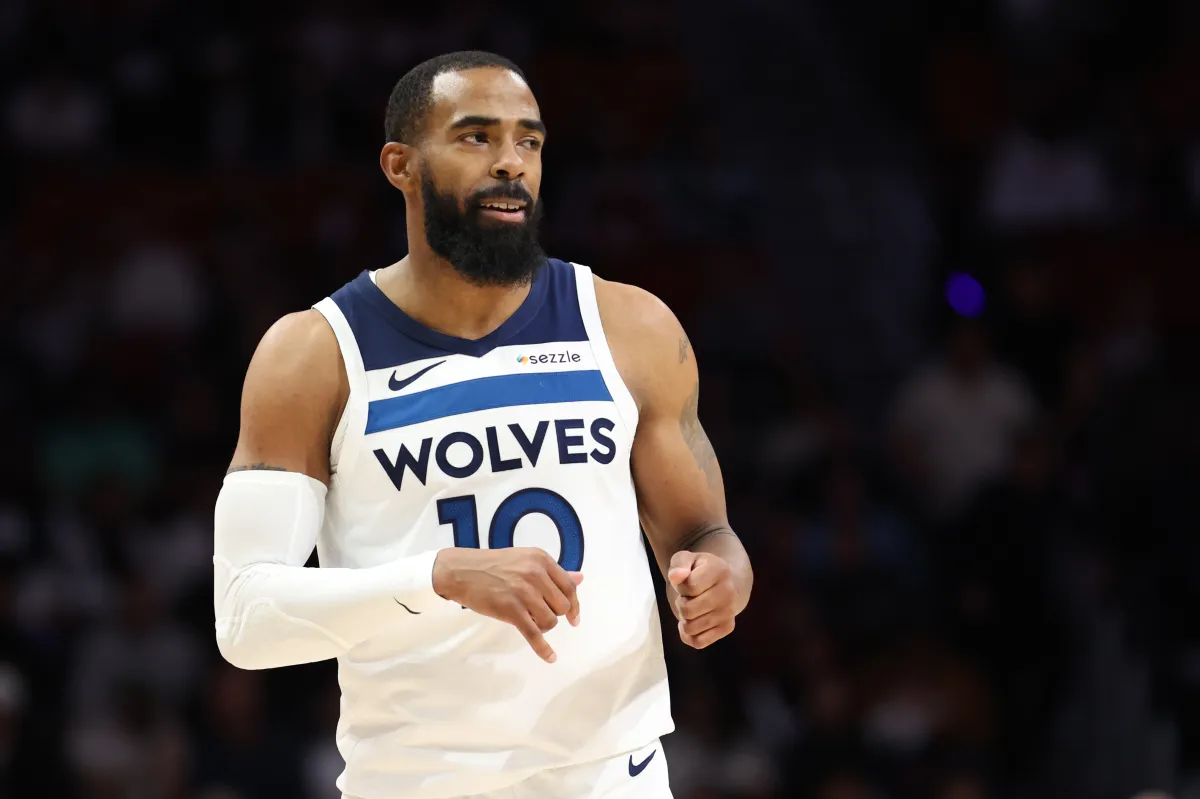
In the whirlwind world of the NBA, where fortunes can shift in a heartbeat, the Minnesota Timberwolves embarked on a bold, cost-conscious maneuver on a Tuesday afternoon that felt more like a strategic retreat than a full-sprint advance. Picture this: the Timberwolves, a team perched on the edge of playoff contention, decided to pare down their roster by parting ways with a seasoned veteran who had been a steady hand during turbulent times. Mike Conley, the 19-year guard with a résumé drenched in hardwood wisdom, found himself at the center of a three-team trade that whispered of fiscal pragmatism rather than championship dreams. Instead of hauling in fresh faces or promising draft assets to bolster their lineup, Minnesota opted for clean sheets: cash considerations in return for shipping Conley to the Chicago Bulls and a future first-round pick swap to the Detroit Pistons. It was a move that screamed “belt-tightening,” allowing the Wolves to free up payroll space without cluttering their roster with unneeded pieces. Imagine the Wolves’ front office, huddled in their war room, poring over spreadsheets and player evaluations, ultimately deciding that Conley’s hefty $10.7 million salary was a luxury they could no longer afford. This wasn’t just a transaction; it was a reflection of the NBA’s unforgiving economics, where teams juggle budgets like tightrope walkers balancing on a fine line between ambition and austerity. For Conley, a guy who’s spent years weaving through defenses and orchestrating plays, this marked the fourth chapter of his Timberwolves tenure—a bumpy ride that saw him contribute quietly but importantly. Fans might remember him as the point guard archetype: reliable, unflappable, and infinitely useful in mentoring younger stars. Yet, in this harsh business, his value was outweighed by the cold calculus of cap space. The Bulls, reeling from their own roster woes, accepted Conley as a short-term placeholder, but whispers already suggested he was on borrowed time in Chicago. Little did anyone know, this trade was merely the curtain-raiser for Conley’s next act in an even more unpredictable sequence of events.
The scene unfolded like a high-stakes game of musical chairs, where Conley, the reliable veteran, was the puck in a shuffle that highlighted the NBA’s frenetic pace. Barely 24 hours after landing in Chicago, the Bulls wasted no time in dealing him onward, thrusting Conley into yet another organization’s orbit. It was a swift pivot that underscored how quickly loyalties and strategies can evaporate in this league, where players are commodities traded across city lines like vintage cars at an auction. For Conley, a man whose career has taken him from the raucous courts of Memphis to the polished arenas of Utah and beyond, this was just another chapter in a journey that’s richer than a Stephen King novel—full of twists, unlikely heroes, and the ever-present specter of uncertainty. Rumor mills buzzed with speculation: why the hurry from Chicago? Were the Bulls, desperate to invigorate their core with kwaliteit prospects, merely passing the baton to avoid another contractual headache? Conley’s arrival in Chicago was as transient as a summer storm; he barely unpacked his metaphorical bags before the team’s GM was on the phone, negotiating his exit. This rapid-fire deal marked the Bulls’ attempt to recalibrate their offense, shedding what they deemed excess baggage while eyeing younger, more athletic options. For Conley, it must have felt like chasing a mirage—each new landing spot promising stability, only to dissolve into another trade alert. Yet, in the chaos, there was a silver lining: his experience remained a coveted asset, even if teams couldn’t commit long-term. Sports analysts dissected the move, noting how the NBA’s parity—where any team can flip the script with a smart deal—kept everyone on their toes. Conley, ever the professional, likely approached it with a stoic grin, understanding that the trade happened on the pitch yet inflicted off-court life disruptions. His story is a testament to the player’s plight: revered for game-day grit, but often at the mercy of executive whims. As he boarded that flight to his second destination in as many days, one couldn’t help but empathize with the human toll—the family uprooted, the abrupt goodbyes, all while maintaining that impeccable facade of resilience. This wasn’t just a trade; it was a human saga, echoing the rollercoaster lives of those who dedicate their prime to the pursuit of a fleeting victory.
Touching down in Charlotte, Conley entered the eco-system of the Hornets, a team that’s become synonymous with resurgence and youthful energy under their fiery head coach. The Hornets, riding a hot streak that has them vying for the playoffs with infectious enthusiasm, swapped a pair of guards to acquire Conley, but it quickly became evident that the fit was as awkward as forcing a square peg into a round hole. The real star of this exchange for Charlotte was not the veteran Conley, but the explosive young talent, Coby White, whom they pried from the Bulls. In a deal that swapped White and Conley for a package including Collin Sexton—the high-octane scorer with crossover chops that could make defenders dizzy—and Ousmane Dieng, the athletic forward with defensive instincts sharper than a tack, plus three second-round draft picks that could blossom into future franchise anchors. It was a smart maneuver by the Hornets to infuse their lineup with White’s NBA-ready scoring punch, his ability to create his own shot turning defenses into pretzels. Sexton and Dieng, for their part, departed with a mix of excitement and apprehension; Sexton, known for his fearless drives to the hoop and clutch moments that lit up arenas, found new horizons with the Bulls, while Dieng, with his wingspan that blocks shots like a protective shield, aimed to make an impact elsewhere. The three second-rounders? Those are like lottery tickets—low-risk investments with the potential for high-reward rookies who could define the Hornets’ future. For Conley, though, this landing mirrored his destiny: a welcome mat that read “temporary visitor.” The Hornets’preference for timeline alignment—prioritizing young, dynamic guards—meant Conley’s methodical style, honed from 19 seasons of hard-won wisdom, might not mesh with their fast-paced symphony. It was a stark reminder of how basketball’s landscape favors the energetic over the enduring, especially when teams like Charlotte chase the playoff pulse with a roster built for immediacy. Fans of the Hornets buzzed with optimism, envisioning White’s flair elevating their offense, but for Conley, it was another rung on the ladder of uncertainty. His journey highlighted the league’s evolving ethos: a blend of nostalgia for veterans like him and a hunger for the next wave of stars.
Amidst the shuffling and wheeling, there’s a intriguing subplot that could paint the Timberwolves as unexpected victors in this convoluted tale, turning a cost-cutting decision into a potential masterstroke. Conley’s $10.7 million salary, a burden that prompted his initial exodus from Minnesota, presents a tantalizing “what if” scenario that has NBA insiders speculating like detectives piecing together a mystery. Multiple reports echo the sentiment that Conley is a prime candidate for a buyout beyond the trade deadline—a financial lifeline for teams eager to shed expiring contracts without parting with assets. If the Hornets, in their quest for fiscal flexibility or roster refinement, decide to buy him out, Conley could become an unrestricted free agent, opening the door for a surprising reunion with the Timberwolves. According to Timberwolves insider Dane Moore, this isn’t mere idle chatter; it’s a scenario actively under consideration by Minnesota’s brass. Imagine Conley returning on a minimum deal, his veteran’s salary slashed to a fraction, allowing him to slide back into the Wolves’ orbit without derailing their cap strategy. During his recent stint with Minnesota, spanning four seasons, Conley logged significant minutes, appearing in 44 games and dropping averages of 4.4 points, 2.9 assists, and a field goal percentage hovering around 32 percent—modest by his historical standards, yet indicative of his contributions beyond the stat sheet. Statistically, it wasn’t his magnum opus; injuries and the natural wear of 19 professional years dulled his explosiveness, resulting in numbers that echoed restraint rather than dominance. Yet, the Timberwolves cherished him for intangible treasures: his leadership, a beacon for younger players navigating the NBA’s rapids, and his playoff pedigree, a reservoir of experience that could fortify their bench come spring. Stories abound of Conley mentoring rookies, sharing war stories from his Grizzlies glory days or Spurs stints, turning the court into a classroom. This intangible value, paired with his unwavering professionalism, made him a cultural cornerstone—just the kind of figurehead a young squad like the Wolves craves. Should he return on more favorable terms, it could be a narrative twist, transforming a perceived misstep into proactive genius.
While Conley’s saga unfolds like a suspenseful novel, the Timberwolves’ gaze remains split, with their ambitions extending beyond one veteran point guard to broader horizons that include whispers of a blockbuster involving Milwaukee Bucks superstar Giannis Antetokounmpo. Sources suggest Minnesota is actively engaged in trade talks for the Greek Freak, pursuing a seismic shift that could redefine the Eastern Conference pecking order. Antetokounmpo’s allure—his god-like athleticism, scoring feats that redraw game plans, and leadership ethos—are the stuff of legend, making these conversations a tantalizing diversion from Conley’s carousel. Should Giannis don the green and blue, it would eclipse Conley’s subplot, positioning the Wolves as contenders overnight. Yet, in the interim, Conley’s potential return offers a grounded bridge to that lofty aspiration, providing immediate depth and stability. The NBA’s rumor mill spins endlessly, with every chirp from ESPN or Bleacher Report fueling debates among fans who dissect trades like theologians poring over scripture. For Conley, this period must be a blend of purgatory and possibility—awaiting clarity while reflecting on a career marked by loyalty and adaptability. His journey encapsulates the human drama of athletes: glorified one moment, enigmatic the next, yet perpetually resilient. As teams like the Timberwolves navigate these waters, balancing fiscal realities with competitive fire, Conley’s story serves as a poignant reminder of basketball’s humanity beneath the glitz. It urges fans to look past the transactions and appreciate the men and women who bleed for the game, whose triumphs and tribulations breathe life into the sport we adore.
In wrapping up this multifaceted narrative, the Timberwolves’ initial cost-cutting vanishes into a larger tapestry of NBA intrigue, where Mike Conley’s odyssey emerges as a microcosm of the league’s relentless churn. From Minnesota’s shrewd divestment to his fleeting stop in Chicago and tentative perch in Charlotte, Conley’s path embodies both the ephemeral nature of player-team bonds and the enduring appeal of seasoned wisdom. Reports labeling him a buyout target hint at pragmatic solutions for teams overburdened by contracts, potentially granting the Timberwolves a stealthy rehire on economical terms. His stats and leadership prowess with Minnesota underscore why he’d be a wise reclamation: not for flashy numbers, but for the stabilizing influence that could ease younger talents’ burdens. Amidst concurrent sagas like Antetokounmpo trade rumors, Conley’s tale adds layers of depth to the NBA’s storyline, reminding us that behind every deal lies a human element—ambitions met, sacrifices made, and futures redefined. For the latest twists, rumor percolations, and deep dives into NBA lore, don’t miss the ongoing coverage from Newsweek Sports, where the game’s pulse beats loudest in every update. This isn’t just about trades; it’s about the dreams deferred and revived, the heroes who navigate chaos with grace, and the fans who live for every unexpected turn. As Conley charts his course, one thing’s certain: in the NBA, the only constant is change, and that’s what keeps the league eternally captivating.