





Supreme Court Limits Trump’s National Guard Authority in Key Decision
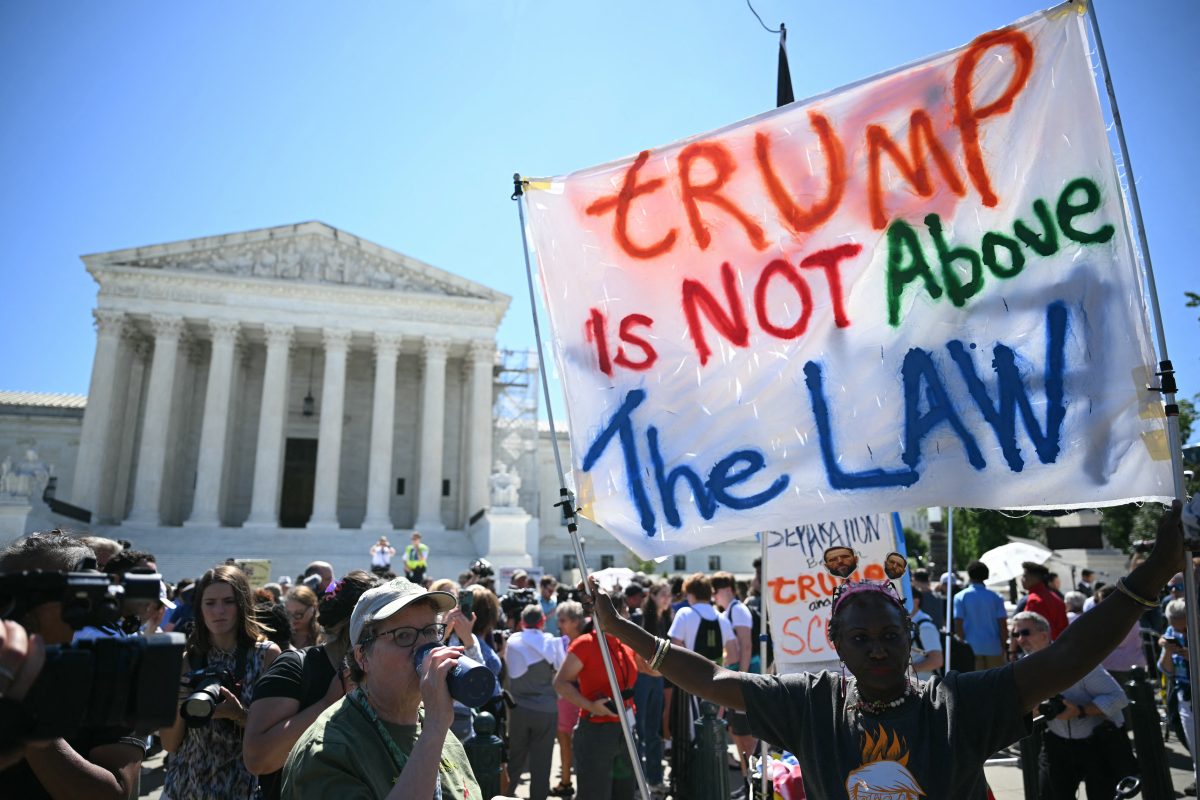
In a significant development for the balance of federal and state powers, the Supreme Court has delivered what former federal prosecutor Glenn Kirschner calls a “crushing blow” to President Donald Trump’s attempts to deploy the National Guard domestically. The high court’s decision temporarily blocks the president’s order to send National Guard troops to Chicago, potentially establishing guardrails on executive authority in deploying military personnel for domestic law enforcement. This ruling arrives amid contentious debates about federal overreach, states’ rights, and the constitutional limits of presidential power during times of civil unrest.
The Supreme Court’s majority opinion plainly stated that “at this preliminary stage, the Government has failed to identify a source of authority that would allow the military to execute the laws in Illinois.” This decision followed a lower court ruling by U.S. District Judge April Perry that initially halted the deployment, which a federal appeals court had declined to overturn. While three conservative justices—Samuel Alito, Clarence Thomas, and Neil Gorsuch—dissented from the majority opinion, Justice Brett Kavanaugh concurred with the decision while writing separately to clarify his position on certain legal questions. Though the White House maintains that the president’s actions were meant to “protect federal law enforcement officers, and to ensure rioters did not destroy federal buildings and property,” the Court’s ruling suggests limitations exist on presidential authority to deploy military forces in domestic settings.
The significance of this decision extends far beyond the specific case of Chicago. As Kirschner noted on his YouTube program Justice Matters, “This will help in Portland, Oregon. This will help in Los Angeles, California. And it will help in every other city and every other state where Donald Trump tries to overstep his constitutional bounds and militarize the streets of America.” The ruling could serve as an important reference point in ongoing lawsuits challenging similar National Guard deployments in other Democratic-led cities, including Los Angeles, Portland, and Washington, D.C. While the order does not establish binding precedent, it provides valuable insight into how the Court views the constitutional constraints on presidential power regarding military deployment within U.S. borders—a question with profound implications for American democracy and the separation of powers.
Interestingly, even as the Court blocked this specific deployment, it left open significant alternative pathways for presidential action. Justice Kavanaugh specifically mentioned in his concurring opinion that the Court’s decision “does not address the president’s authority under the Insurrection Act” or “purport to disturb the president’s long-asserted Article II authority to use the U.S. military to protect federal personnel and property.” This observation was echoed in the dissenting opinion authored by Justice Alito and joined by Justices Thomas and Gorsuch. The Insurrection Act of 1807, which allows presidents to deploy military forces to suppress rebellion or domestic violence, provides broader discretion than standard National Guard activations. Last invoked by President George H.W. Bush during the 1992 Los Angeles riots, the Act gives presidents substantial latitude with limited judicial oversight, as established by an 1827 Supreme Court ruling that the determination to invoke the Act “belongs exclusively to the president.”
Reactions to the Court’s decision have fallen predictably along political lines. Illinois Governor JB Pritzker, a Democrat, celebrated the ruling as “a big win for Illinois and American democracy,” expressing relief that the Court recognized limits to the president’s authority to federalize the National Guard within his state. Conservative voices, meanwhile, have suggested the president should consider invoking the Insurrection Act instead. Conservative activist Nick Sortor wrote on X (formerly Twitter), “Might be time for the INSURRECTION ACT, 47!” The White House, for its part, emphasized that “nothing in today’s ruling detracts from [the president’s] core agenda” of enforcing immigration laws and protecting federal personnel, suggesting the administration will continue pursuing these objectives through other means.
As this legal saga continues to unfold, the Supreme Court’s ruling raises profound questions about the boundaries between federal and state authority, especially regarding the deployment of military forces on American soil. While this order is preliminary rather than a final ruling on the merits, it establishes important parameters that could shape how courts handle similar cases moving forward. The decision ultimately reflects the delicate constitutional balance American democracy seeks to maintain: protecting legitimate federal interests while preventing overreach that might threaten the foundational principles of federalism and civilian control of the military. With additional legal challenges pending in multiple jurisdictions, the courts will likely continue refining these boundaries in the months ahead, providing greater clarity on this crucial aspect of American governance.