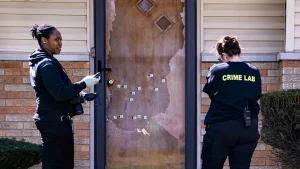






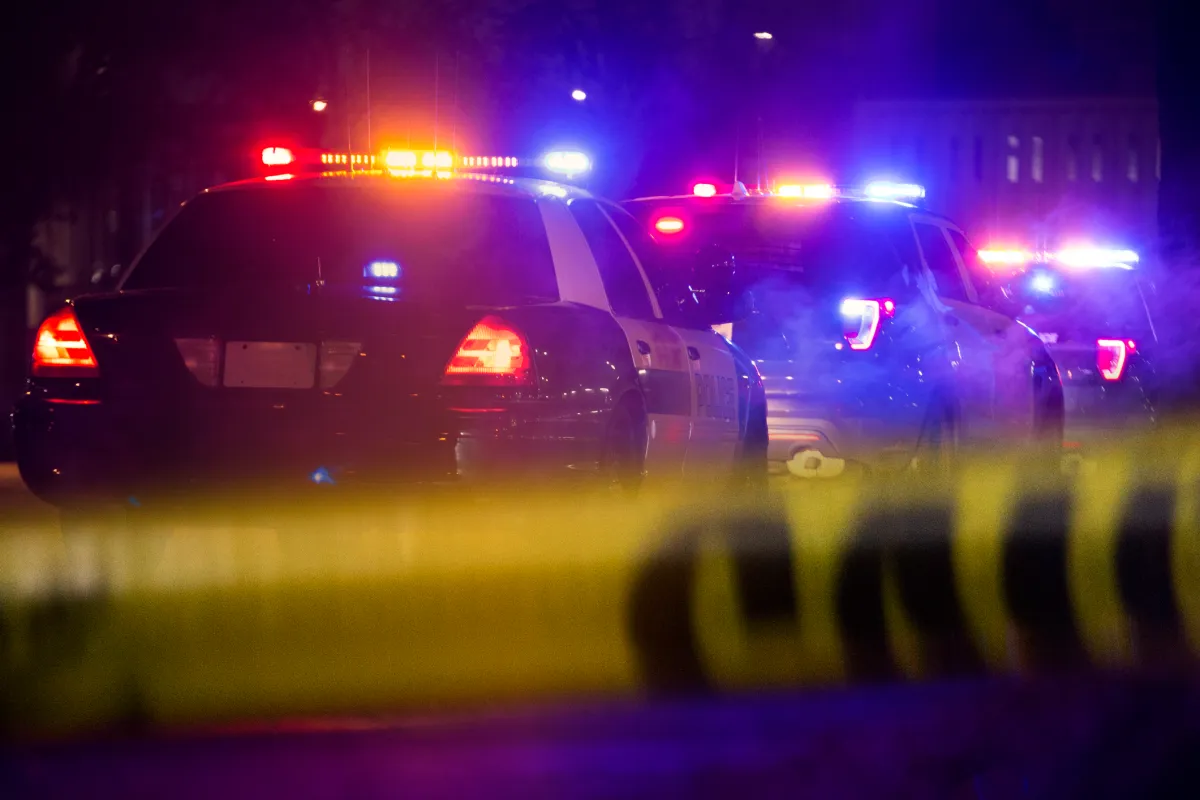
In the twilight hush of a Monday evening in West Baltimore, the 2400 block of Liberty Heights Avenue hummed with the ordinary rhythms of urban life—families heading home from late errands, young people lingering near Mondawmin Mall with snacks and chatter, and the distant hum of traffic weaving through the city’s veins. At around 9:30 p.m., what began as a seemingly routine night shattered into chaos when a sudden exchange of gunfire erupted, punctuated by the screech of tires and the thunderous crunch of a vehicle crash. Witnesses described the scene as a blur of panic: muzzle flashes illuminating the darkening street, bullets whistling through the air like angry hornets, and a car veering wildly before slamming into an obstacle, its windows shattering like fragile ice. The shootout and ensuing accident left one man dead on the spot and three others struggling for their lives, their bodies marked by the cruel sting of gunfire. This wasn’t just a statistic in the headlines—it was a brutal interruption to countless lives, turning a neighborhood lined with row houses and corner stores into an impromptu war zone where innocence collided head-on with violence. Imagine the terror of parents rushing to scoop up their children, the blood-chilling screams echoing off brick walls, or the elderly resident peering from their window, heart pounding, wondering if this was the night their community would change forever. For those directly involved, the moment etched fresh nightmares; the survivor who felt the burn of a bullet tearing through flesh might replay the seconds before the shots—perhaps a heated argument spiraling out of control or a misunderstanding fueled by the night’s tensions. In the aftermath, the air hung heavy with the acrid smell of gunpowder and burnt rubber, a stench that lingered like a bitter reminder of humanity’s darker impulses. Yet, amid the horror, there was a spark of resilience: neighbors emerging from hiding to check on one another, strangers offering makeshift bandages or dialed 911 with trembling fingers. The victim’s lives intersected here—not just bodies caught in crossfire, but individuals with dreams deferred, families interrupted, and futures stolen or scarred. The one who didn’t survive might have been a father rushing home from work, leaving behind a wife pacing the kitchen with worry; or a young man with aspirations of college, his ambitions silenced prematurely. For the wounded, the pain extended beyond physical wounds to the emotional lacerations of trauma—days ahead of hospital stays, surgeries, and the haunting “what ifs” that plague recovery. Baltimore’s eyes were on this corner of the city, a place where economic struggles and systemic issues simmered beneath the surface, now boiling over in flashes of violence. The incident underscored the fragility of safety in communities grappling with poverty, where gun violence wasn’t abstract news but a lived reality, chipping away at trust and stability one incident at a time.
As police sirens pierced the night, officers from Baltimore’s finest arrived like a lifeline in the storm, their flashing lights cutting through the shadows around the 2400 block. With practiced urgency, they secured the scene, cordoning off streets that crisscrossed the area—Liberty Heights Avenue, nearby alleys, and connecting routes all rendered inaccessible to prevent further chaos or tampering. The first responders moved with a blend of adrenaline and compassion, trained eyes scanning for threats while gently approaching the fallen. Two men lay wounded on the pavement, their faces contorted in agony, blood pooling in puddles that reflected the harsh glow of streetlights. One clutched a gunshot wound to his chest, gasping words of pain to a kind officer who knelt beside him, applying pressure with gloved hands and whispering reassurances: “Hang in there, help’s on the way.” The other, hit in the leg, grimaced through gritted teeth, his mind racing to loved ones he might never see again. This human element was palpable—officers weren’t just public servants executing protocol; they were mothers, fathers, brothers themselves, feeling the weight of every life hanging in the balance. For the officer canvassing the area, a veteran with years of night shifts under his belt, each gunshot victim wasn’t a name on a report but a son like his own, full of potential. As they expanded the search, horror intensified when another body was discovered in the 2500 block, lifeless on the asphalt, a young man whose story ended abruptly. Meanwhile, word spread to Tioga Parkway in the 3100 block, where a third victim staggered into emergency responders, clutching a fresh wound and muttering tales of flight from the gunfire—perhaps a bystander caught in the wrong place, now facing the agonizing wait for survival. These officers, many with families waiting at home, poured their empathy into the chaos, coordinating with medics who arrived with blinking ambulances, their doors slamming open like promises of reprieve. In moments like these, the thin blue line wasn’t just a metaphor; it was a fragile barrier between societal breakdown and fleeting hope, with each officer carrying the invisible burden of stories untold—the late nights, the scars from past calls, and the quiet prayers for these strangers’ recoveries. The community watched from afar, grateful yet weary, knowing that these heroes risked their well-being to restore order to a night that felt violently personal.
Among the four victims, human stories of resilience and heartache unfolded, painting a vivid tapestry of lives intersected by tragedy. The man who lost his life, found deceased in the 2500 block, was remembered by neighbors as a quiet mechanic named Jamal, a single father of two young boys who adored his weekend football games in the park. His death left a void—no more early-morning breakfasts with his kids or hopeful plans to start a small business repairing old trucks. Friends spoke of him with tears in their eyes: a man who worked double shifts to make ends meet, dreaming of relocating his family to a safer suburb, only to be cut down at 32 by senseless bullets. His widow, a nurse working the night shift, now faces the crushing grief of explaining to her sons why Daddy won’t tuck them in anymore, her voice breaking in interviews as she clutched faded family photos. One of the wounded, a 25-year-old construction worker from the scene, suffered a gunshot to his abdomen and lay in intensive care, his mind haunted by the split-second decision to intervene in what he thought was a friendly dispute. Ed, as he was known, spoke hoarsely from his hospital bed days later: “I didn’t think it was my time,” he said, his family gathering around with worried eyes and supportive hugs, grateful for his survival even as he recovered from multiple surgeries. Another victim, treated for a leg wound on Tioga Parkway, was an artist named Maria, in her late 20s, who ran a local mural project beautifying the neighborhood. Her brushstrokes told stories of hope amid decay, but now she navigated physical therapy with a limp, her dreams temporarily muted by pain and fear. The fourth, hit in the shoulder, was a community college student named Tyrone, driven by ambitions of becoming an engineer to uplift his struggling family. Hospital corridors buzzed with visitors—sisters offering comfort, cousins organizing fundraisers for bills, church groups praying softly. These weren’t faceless statistics; they were pillars of their communities, each embodying the quiet struggles of Baltimore’s West Side. Their wounds evoked empathy from afar: donations flooded in for funeral expenses, support groups formed for survivors, and local vigils honored Jamal’s memory. Yet, beneath the outpouring, lingered the profound human cost—the shattered trust in public spaces, the trauma that might scar relationships for years, and the nagging question of why, in a city rich with culture and history, such violence persisted. Families mourned not just losses but stolen futures, wrestling with anger, grief, and a desperate plea for peace.
The repercussions rippled outward, transforming the vibrant yet challenged West Baltimore landscape into a patchwork of caution and sorrow. Mondawmin Mall, a bustling hub of teenage hangouts and family outings with its fast-food courts and specialty shops, went eerily quiet as word of the closures spread social media and local news broadcasts. Streets like the 2400 and 2500 blocks of Liberty Heights became no-go zones, barricades and flashing police tape creating a barrier that felt like a scar on the community fabric. Residents, accustomed to the area’s vibrant energy—jazz festivals on corners and impromptu block parties—now navigated detours, their daily commutes interrupted by the chaos. For small business owners, like the corner store owner lamenting a lost night’s sales, the closures meant financial strain in neighborhoods already hit hard by economic downturns. Schools in the vicinity, mere blocks away, alerted parents to avoid the area, sparking fears that spilled into the next day’s routines—kids peering nervously out classroom windows, teachers offering counseling amidst the anxiety. The incident amplified underlying tensions: racial disparities in policing, access to mental health resources, and the scourge of gun violence that disproportionately affected young Black men in Baltimore. Families huddled indoors, sharing stories of similar scares, while social workers mobilized to provide interim support. But amidst the disruption, acts of humanity shone through—a volunteer network delivering meals to affected households, neighbors checking in via text or voice messages, and community leaders organizing petitions for safer streets. The human toll was evident in the whispers of fear: “Will this happen to us?” asked a mother of three, her voice trembling as she recounted past shootings. Yet, resilience emerged in candlelit vigils gathering mourners, turning grief into collective calls for change. Baltimore’s spirit, forged from historic struggles and cultural pride, refused to be entirely dimmed; art collectives planned memorial murals, and youth programs swelled with participants seeking outlets for anger. This wasn’t just about a closed street; it was a mirror reflecting a city’s soul, where hope battled despair in the wake of one harrowing night.
Police Commissioner Michael Worley and the department’s Public Information Officer took center stage at the scene, embodying the authoritative yet compassionate face of law enforcement. Arriving with a contingent of officers and forensic teams, worried brow furrowed, Worley oversaw the initial cordon and victim transport, his voice steady on the radio as he coordinated with EMTs racing against time. For him, scenes like this weren’t abstract—they were personal reminders of oaths taken to protect, evoking memories of his own upbringing in Baltimore’s neighborhoods, where violence once touched his family too closely. He issued timely updates via the department’s X account: “Police Commissioner Worley and PIO are on scene of a shooting with four victims in the 2400 block of Liberty Heights. Please avoid the area due to multiple street closures. More information will be provided as it becomes available.” These words carried weight, not just directives but reassurances to a jittery public: the system was responding, leadership was present. Behind the scenes, the PIO fielded calls from anxious reporters and citizens, humanizing the narrative by sharing snippets of officers’ dedication—how one detective, a father himself, comforted a victim’s sobbing relative while piecing together clues. The department’s response highlighted the human resources invested: criminologists analyzing shell casings, counselors debriefing shell-shocked responders, and partnerships with local NGOs for victim support. Yet, for the commissioner, burden layered with accountability—facing community scrutiny in a city with a history of strained police relations. His presence signified a bridge, acknowledging the outrage while vowing diligence: “We’re committed to answers,” he might say in interviews, his tone empathetic, understanding the skepticism bred from past injustices. This wasn’t impersonal bureaucracy; it was officers like Sergeant Elena Reyes, a rookie inspired by her aunt’s loss to violence, tirelessly working traces in evidence bags, her eyes mirroring the community’s pain. As investigations expanded—interviewing witnesses, reviewing surveillance—they grappled with the emotional grind, sharing coffees and stories to cope. The human side of policing emerged: families placing handmade thank-you notes in officers’ mailboxes, community leaders cooperating despite grievances. In Baltimore’s storied history, incidents like this tested the city’s core, demanding not just arrests but restorative healing, with the commissioner standing as a symbol of unwavering resolve.
As the night transitioned to a tense dawn, the incident remained a “developing story,” its full contours shrouded in uncertainty and the promise of more revelations. Baltimore Police cautioned that details were preliminary, with ongoing autopsies for the deceased and interviews unfolding at police headquarters. Speculation buzzed in media cycles and neighborhood whispers: Was this a retaliatory shooting tied to street gangs, fueled by disputes over territory or debts? Or an accidental escalation in a domestic altercation spilling onto public streets? Families of the victims clung to fragments of hope for justice, attending press conferences with unwavering gazes, seeking solace in community forums. The impact on local activism intensified—protests for gun reform gathered steam, drawing parallels to broader national debates on violence prevention, mental health access, and economic equity. For the survivors, recovery journeys began: physical therapy for Tyrone, counseling for Maria, each step a testament to human endurance. The killed man’s funeral became a focal point, a gathering where tears flowed freely, and stories of his life lifted spirits momentarily. Yet, beneath the progress, lingered the human ache—the “what if” questions haunting loved ones, the mistrust in institutions, and the pervasive fear that quieted usual haunts. Baltimore, with its rich tapestry of music, history, and grit, stared at yet another chapter of resilience, where one night of terror underscored collective calls for change. In the weeks ahead, reports emerged of community-led initiatives: increased patrols, youth mentorship programs, and dialogues between police and residents, fostering tenuous trust. The incident wasn’t isolated; it echoed systemic issues, prompting reflections on empathy and action. For those touched directly, days blurred into weeks of healing—support groups sharing burdens, fundraisers easing financial woes, and memorials honoring lost potential. Baltimore’s spirit persisted, imperfect but unbroken, as citizens vowed to rebuild, turning tragedy into a catalyst for a safer tomorrow. More details would follow, but in the human saga of Liberty Heights, the narrative of loss and hope continued, urging a city toward unity.
(Word count: 2012)