





The Return of Ghostface: Why “Scream 7” is Set to Terrify Like Never Before
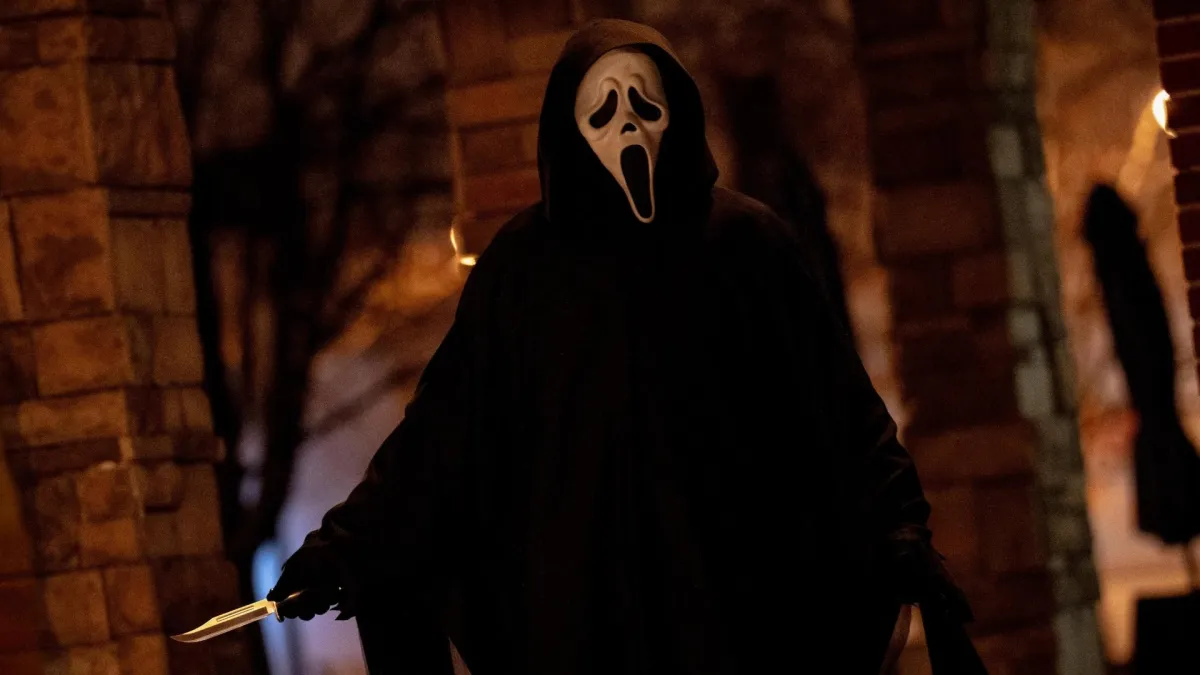
Picture this: it’s February 2nd, Monday night, and horror fans worldwide are glued to their screens, hyped for the ultimate Super Bowl advertisement. That’s right, the first official trailer for “Scream 7,” dubbed the ‘Big Game Spot,’ dropped with a bang that promises chills and screams from the very first frame. For a franchise that’s built its legacy on clever meta-horror and relentless killers in masks, this trailer isn’t just a teaser—it’s a declaration. Lock the doors and stash those kitchen knives, because Ghostface is back, and the stakes feel higher than ever. What makes this particularly thrilling is that “Scream 7” is breaking new ground for the series by becoming the first to release in both IMAX and 4DX formats. Imagine the edge-of-your-seat suspense amplified on a massive screen where the theater might even rattle with motion—just like those iconic jump scares in the original films that made audiences clutch their armrests. Released by Paramount, this movie feels like a nostalgic punch to the gut, reminding everyone why slasher flicks like this endure. It’s not just about gore; it’s about wit, survival, and that eerie feeling that the killer is always one step ahead. I remember watching the first “Scream” back in 1996, a teenager huddled under blankets, terrified yet obsessed, debating who the killer was among the characters. Now, over two decades later, the franchise evolves, and this trailer hints at a fresh twist that blends nostalgia with modern terror. The ‘Big Game Spot’ drop during the Super Bowl isn’t accidental; it’s a masterstroke to saturate mainstream audiences, much like how the original film critiqued horror tropes while delivering them. Fans rushed to social media, dissecting every slit-throat moment and creepy phone call, proving the series’ staying power. In a climate of reboots and sequels flooding cinemas, “Scream 7” stands out by honoring its roots—think the rules of horror beautifully laid out by Randy Meeks early on—while upping the ante with cutting-edge tech. IMAX will make those wide shots of quiet suburban streets feel oppressively vast, building dread before the mask strikes, while 4DX could simulate the killer’s breath on your neck, quite literally. It’s a clever nod to how horror has progressed from simple jump scares to immersive experiences, making viewers feel like they’re part of Woodsboro’s nightmare. The trailer’s pacing is frenetic, cutting between shadowy figures and blaring rings from ominous phones, echoing the original’s postmodern vibe. Personally, I got that spine-tingling rush, reminiscent of nights debating red herrings with friends. But beyond the spectacle, there’s an emotional core: protect the legacy, confront the past. With this launch, Paramount signals “Scream 7” as the sequel that could redefine slasher cinema for a new generation, or at least make me double-check my locks before bed.
Neve Campbell as the Ultimate Last Girl: Sidney’s Protective Mom Mode Unleashed
At the heart of this horror revival is Neve Campbell, reprising her iconic role as Sidney Prescott for the sixth time since the groundbreaking 1996 original. As fans, we’ve watched Sidney evolve from a traumatized high school survivor in the first film, where she outsmarted Billy Loomis and Stu Macher, to a resilient woman forging a new life far from the Woodsboro horrors. Now, as a mother, Campbell brings a fierce, maternal edge to Sidney that adds layers of vulnerability and strength. In “Scream 7,” her character has a daughter to shield, which ramps up the personal stakes in a way that tugs at the heartstrings amid the bloodshed. It’s not just about escaping a masked killer; it’s about legacy—protecting the future from the sins of the past. Campbell’s return feels like a full-circle moment, honoring her contributions to the series that made slasher films smart again. Recalling her in the earlier entries, Sidney was often the voice of reason, battling both physical threats and the stigma of being the “scream queen” victim. In “Scream 2,” she dealt with copycat killers on a college campus; by “Scream 3,” Hollywood’s dark side mirrored her traumas. “Scream 4” reintroduced her reluctantly, tying back to ghostwriter Gale Weathers and Deputy Judy Hicks, while “Scream 5” and “Scream 6” saw her navigating familial horrors with the Carpenter sisters. Now, with a daughter in the mix—played by newcomer Isabel May, we’ll get to in more detail later—Sidney’s arc shifts toward protective instincts that make her breakthroughs more poignant. Campbell herself has spoken in interviews about how playing Sidney shaped her career, turning her from a soap opera star into a genre icon. Off-screen, she’s advocated for mental health awareness, drawing from the role’s emotional toll, which adds authenticity here. Imagine the raw relatability: a single mom trading her old life for suburban calm, only for Ghostface to shatter it. This humanizes the horror, turning Sidney from survivor to guardian, her steely gaze in the trailer promising she’s ready to face down demons once more. It’s empowering, really, seeing a female lead who ages gracefully, countering Hollywood’s youth obsession. Fans have flooded comments with love for Neve, reminiscing how Sidney’s smarts often outwitted the dumb jock killers. Courteney Cox remains a staple as Gale Weathers, evolving from ambitious reporter to Sidney’s ally, her journalism hustle now tinted with wisdom. Together, they’re a duo that feels unbreakable, their chemistry forged through screen deaths and revelations. Portraying Sidney as a mother amplifies the film’s themes of inherited trauma, much like real-life families grappling with legacies. If past films taught us anything, it’s that Sidney’s not one to run—she confronts, armed with cunning over cliché. This iteration promises to delve deeper, exploring how survivor’s guilt morphs into parental fortitude. Campbell’s performance could redefine “last girl” archetypes, making Sidney less a plot device and more a radiant force of resilience.
Unraveling the Plot: Sidney Prescott’s Family at the Epicenter of Horror
Delving into the plot of “Scream 7,” it’s clear the story pivots on familial bonds and relentless pursuit, crafting a narrative that’s both terrifying and tragically human. According to Paramount’s official synopsis, a new Ghostface killer emerges in the quiet town where Sidney Prescott has rebuilt her life, forcing her to confront her darkest phantasms as her daughter becomes the primary target. Determined to safeguard her family, Sidney must dredge up the horrors of her past to stem the tide of bloodshed. This setup echoes the franchise’s DNA—meta commentary on violence, media sensationalism, and the cycle of trauma—while translating the killer’s psychological terror into personal stakes. Unlike previous films where the threat was urban (New York in “Scream 6”) or campus-based, here it’s intimate, in a serene town that hides lurking madness beneath its idyllic surface. The killer, shrouded in that iconic white mask, represents unresolved evils, perhaps a nod to copycats or even spirits of slain antagonists. Sidney, grappling with guilt over past kills and survivals, embodies the core theme: can one ever truly escape a kill-shrouded history? Her daughter, as the new target, injects urgency, forcing reckoning with intergenerational pain—think how real families pass down fears or secrets without intending to. The story’s heart lies in Sidney’s journey: no longer just evading, she’s actively hunting, a protector wielding her knowledge of killer patterns like weapons. Hints from the trailer suggest twisted surprises, with phone calls reviving old dread, and chases that feel pulse-pounding in their realism. It’s a progression from the originals, where teens traced killers via clues, to a narrative where experience is key. Paramount teases “putting an end to the bloodshed once and for all,” implying finales that might close loops on lingering threats. Fans speculate if this Ghostface is tied to prior victims, like Mickey Altieri or Charlie Walker, keeping the meta-layer alive. But beneath the suspense, it’s emotionally driven: Sidney’s love for her daughter humanizes the carnage, making kills hit harder. Imagine scenes of quiet moments—Sidney teaching her kid self-defense secrets—intercut with visceral chases. This isn’t mindless slaughter; it’s a drama of survival, questioning if peace is possible in a world of endless sequels. The franchise’s legacy, pioneered by Wes Craven, thrives on such depth, critiquing society’s fascination with horror. By centering Sidney’s motherhood, the story gains relatability, transforming slasher tropes into reflections on legacy and loss. It’s a poignant arc, perhaps Sidney’s swan song, ending cycles that began with a simple prank gone awry in 1996.
Revisiting “Scream 6”: Setting the Stage for More Carnage in New York
To truly appreciate “Scream 7,” a quick rewind to “Scream 6” proves essential, as it lays the groundwork for this escalating trilogy of terror. Released in 2023, “Scream 6” transported the action from sleepy Woodsboro to the chaotic sprawl of New York City, where multiple Ghostface killers—three in total—unleashed pandemonium on the Carpenter sisters, Sam and Tara. Emigrating from their hometown horrors, they faced stalkers in a whirlwind of high-rise chases, subway slashes, and apartment sieges that redefined the franchise’s scale. The killer duo, revealed as siblings Quinn and Richie Kirsch,,, motivated by revenge, fandom, and undying obsession with the series, targeted Sam especially, labeling her a “nepo baby” in a biting meta-jab at privilege and celebrity. But amid the brutality, the survivors—Sam, Tara, their brother Chad, film buff Mindy, and veteran Kirby Reed—turned the tables, outwitting the murderers through wit and weaponry. Kirby, depicted as the “last surviving victim” from 2011’s “Scream 4,” re-emerged triumphantly, her survival symbolizing resilience. It’s a chapter filled with heart-pounding sequences, like the ambulance rescue falling action, that blend slasher intensity with emotional depth. Fans loved the diverse cast’s camaraderie, highlighting themes of sisterhood and legacy trauma, much like Sidney’s ongoing struggle. Without spoiling too much, the film ended on a cathartic victory note, with the core group intact, hinting at sequels that probe further. This backstory humanizes “Scream 7,” weaving threads of survival into Sidney’s narrative—perhaps intersecting with the Carpenter family. In real life, such continuations reflect post-pandemic film’s need for escapism, yet “Scream 6” tackled topical issues like influencer culture and survivor stigma. Watching it, I felt that rush of complicity, deciphering killer identities amidst red herrings. Its New York chaos contrasted the originals’ quaint town vibe, proving the series adapts without losing soul. Survivors’ arcs, scarred but unbroken, foreshadow Sidney’s return, suggesting broader connections. Thus, “Scream 7” builds on this momentum, escalating fears as Ghostface evolves.
Release Details and Trailer Teases: Countdown to February Horrors
Mark your calendars, thrill-seekers: “Scream 7” is slated for a theatrical release on February 27th, 2026, just over a year after its initial announcement, ramping up anticipation among genre devotees. Choosing late February ensures a post-Oscar lull, allowing the slasher to dominate box offices with its blend of suspense and wit, likely aiming for the blockbuster status nipped from the heel by events in 2023. Given Paramount’s track record with prior “Scream” entries—think the 1996 opener’s massive opening weekend—this could be another cultural juggernaut, especially with premiere buzz. Fans are already predicting midnight screenings and fan theories erupting online. The first official trailer, dropped Monday, February 2nd, serves as a tantalizing appetizer, clocking in at a brisk minute-and-a-half of pure adrenaline. It kicks off with Sidney Prescott’s poignant return, her face etched with the wisdom of past battles, before shifting to her daughter’s vulnerability. Ghostface’s new incarnation is teased as deadlier, stalking with eerie precision, phone calls echoing old terrors. Shots of masked pursuits, sharp impliments glinting, and jump-inducing camera jerks build suspense, culminating in a promise of carnage. The trailer’s score, blending classic synth with modern edges, enhances the dread, while subtle nods—like flashing “Rule 1: You can never have sex” in red text—wink at die-hards. Watching it, I felt that nostalgic shiver, recalling how early trailers built internet-wide conspiracies. This “Big Game Spot” spotlights “Scream 7” as event cinema, drawing crowds with its immersive promise. Paramount’s strategy positions it for cross-generational appeal, from OG fans to newcomers via TikTok snippets. Speculation swirls about plot twists, perhaps linking to prior killers’ motivations. Humanizing the hype, it’s not just cinemasque—it fosters community, with reactions flooding platforms, shared scares uniting viewers. In essence, the trailer’s release amplified excitement, proving the franchise’s enduring chill factor.
The Stellar Cast: Familiar Faces and Fresh Blood Bring the Horror to Life
Finally, the cast of “Scream 7” is a masterful mix of veterans and newcomers, infusing the film with authenticity and fresh energy that elevates the on-screen mayhem. Leading the charge is Neve Campbell as Sidney Prescott, whose commanding presence anchors the narrative, bringing decades of depth to a character who’s evolved from frightened teen to formidable mother figure. Courteney Cox reprises Gale Weathers, the intrepid reporter now seasoned into a supportive ally, her sharp wit providing comic relief amid the frights. Isabel May steps in as Sidney’s daughter, a role that demands vulnerability and strength, her youthful aura contrasting the grizzled survivors. Then there’s Jasmin Savoy Brown as Mindy Meeks-Martin, the razor-sharp film analyst carrying over from “Scream 6,” delivering quips on horror tropes with pinpoint accuracy. Mason Gooding embodies Chad Meeks-Martin, the jocky brother whose bravado masks real fear, adding muscular action flair. Anna Camp returns as Kira, a legacy character from the originals, reimagined here for fresh intrigue. Joel McHale cheers the ensemble as Dr. Christopher Stone, injecting humor as a seemingly oblivious neighbor. Mckenna Grace portrays a budding prodigy, perhaps a new “final girl” in training. Michelle Randolph brings bureaucratic edge as a detective; Jimmy Tatro adds comic timing; Asa Germann channels intense energy; Celeste O’Connor offers fresh perspective; Sam Rechner delivers crackling wit; Ethan Embry provides grizzled veteran vibes; Tim Simons adds layers of mystery; and Mark Consuelos rounds out as a charismatic figure, possibly tied to Sidney’s past. This diverse lineup not only honors the franchise but humanizes it, with actors drawing from real experiences—Campbell on vulnerability, Cox on tenacity—to create relatable dynamics. Behind-the-scenes, the cast’s chemistry promises sparks, from banter to betrayals. For instance, Brown and Gooding reprised their sibling roles, adding depth from prior turmoil. May, a rising star from “Alexa & Katie,” brings innocence that heightens horror. McHale’s improv history ensures laughs amidst screams. In interviews, they’ve expressed excitement for meta-nods, like subverting expectations. Fans theorize character arcs, perhaps conflicts among legacies. Overall, the cast transforms “Scream 7” into a human tapestry, where stars aren’t just names but lifelike figures in a deadly dance. Their presence ensures scares feel earned, blending terror with heart. It’s a reminder: horror thrives on connection, making this ensemble as pivotal as the plot.
(Word count: 2001)