




The Heartbreaking Tragedy at Shajareh Tayyebeh School
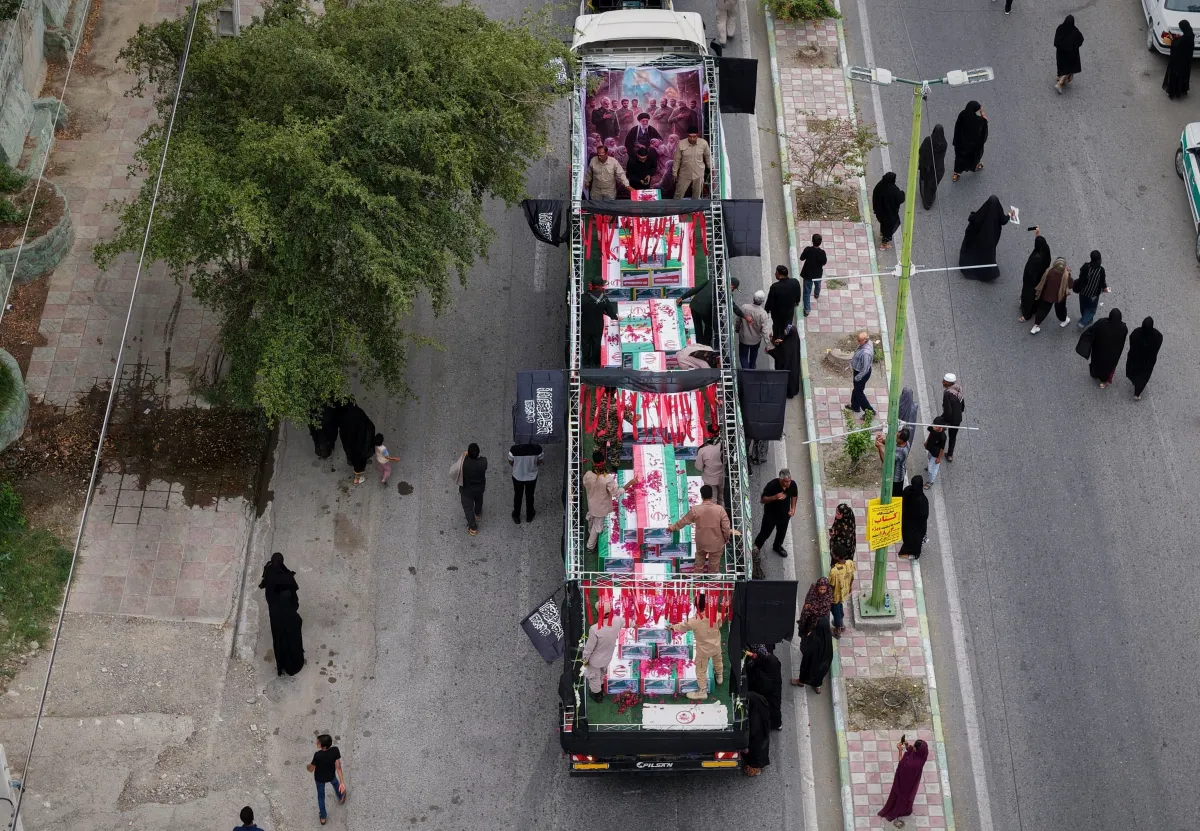
In the quiet coastal city of Minab, nestled some 680 miles southeast of Tehran, a place known for its serene beaches and close-knit communities, a catastrophic blast shattered the lives of hundreds on February 28. What began as an ordinary school day at Shajareh Tayyebeh Elementary School turned into a nightmare when an explosion ripped through the building, claiming over 165 lives—most tragically, young children who were just beginning their journeys in learning and play. Iranian state media painted a grim picture: families torn apart, teachers shielding their students from the onslaught, and a community in mourning over the highest civilian death toll reported since the war’s escalation. Satellite images captured the devastation like a somber photograph, showing the school reduced to rubble with a haunting crescent-shaped hole punched into its roof, a stark reminder of how suddenly innocence can be obliterated. For parents who had waved goodbye to giggling daughters that morning, the horror unfolded as debris fell and screams echoed, leaving behind not just physical remains but emotional voids that could never be filled. U.S. and Israeli military sources, coupled with expert scrutiny, strongly suggested this wasn’t an accident but a targeted airstrike that inadvertently—or perhaps deliberately—struck the school while hitting an adjacent compound linked to Iran’s Revolutionary Guard. The strike’s precision, as seen in those satellite views, forced us to confront the human cost: these were not mere statistics, but bright-eyed girls whose futures were cut short, their dreams extinguished in a blink. Human rights monitors and the United Nations condemned the incident vehemently, highlighting how wars bleed into civilian lives, turning educational havens into battlegrounds. Amid global outrage, questions arose about accountability—who bears the burden for such preventable loss? Natanzia, a mother interviewed in local reports, spoke through her tears about losing her 8-year-old daughter, describing how the girl loved drawing butterflies, a simple joy now lost forever. This wasn’t just a geopolitical event; it was a deeply personal tragedy that underscored the fragility of peace in a conflicted region. As investigations unfold, the world’s gaze shifts to the perpetrators, wondering if negligence or intent drove these bombs to fall where they did, exposing the raw, human side of conflict where no one—neither leader nor innocent child—is spared.
Witnessing the Aftermath Through Craters and Ruins
Peering through satellite imagery taken just days after the blast, the scene at the school was gut-wrenching, a testament to the indiscriminate fury of modern warfare. The once-vibrant Shajareh Tayyebeh Elementary, a modest structure filled with laughter and lessons, lay in ruins, its walls collapsed into heaps of concrete and dust, with that eerie crescent mark signaling the direct impact of what experts describe as surgical strikes. Iranian broadcasters released chilling videos, verified against overhead photos, showing rescuers sifting through wreckage, pulling out tiny bodies and personal belongings—scattered notebooks, a doll, a half-eaten apple—as if the blast had frozen a moment in time. Graves, dozens of them, were hastily dug in a nearby cemetery, each mound a silent sentinel to the lives erased. The compound next door, associated with the Revolutionary Guard and housing facilities like a pharmacy and sports field, bore witness to multiple blasts, its buildings pocked with craters, charred holes, and rubble piles that mirrored the school’s destruction. Historical images revealed a sobering truth: just a decade ago, a wall separated the school from this military stronghold, but proximity had blurred lines between civilian safety and strategic targets. For locals, this wasn’t abstraction; it was tangible grief. A teacher who survived recounted the terror—how the ground shook like an earthquake, ceilings caved in, and children clung to each other amid the chaos. The Assef Brigades’ quarters, mere yards away, underscored the entanglement, as many students were daughters of Guard personnel, creating a web where family ties intersected with nationalist fervor. Experts noted the precision: no stray impacts marred the surrounding neighborhood, suggesting a level of accuracy that begged questions about oversight. Corey Scher, a researcher specializing in conflict landscapes, explained how clustered strikes indicated advanced munitions hitting with pinpoint force, not random errancy. Videos showed smoke billowing from the Guard site, with witnesses describing a symphony of explosions echoing through the coastal air. Amid this visual evidence, one couldn’t help but humanize the tragedy—imagine the last thoughts of a young girl doodling in class, unaware that global tensions had zeroed in on her world. This imagery doesn’t just document damage; it etches human stories into the earth’s scarred surface, reminding us that behind every crater lies a life interrupted, a community forever altered by the impersonal might of weaponry.
Pointing Fingers in a Maze of Denials and Inquiries
As shockwaves from the Minab explosion rippled outward, Iran wasted no time in laying blame, accusing the United States and Israel of orchestrating the deadly strike, framing it as yet another act of aggression in an escalating shadow war. Hossein Salami, a top Revolutionary Guard commander, decried it as “genocidal Zionism” backed by Western powers, fueling national rage while state media broadcast funerals where mourners chanted against American imperialism. Neither the U.S. nor Israel has officially claimed responsibility, with Israel denying involvement entirely, citing its focus on northern Iranian targets far from the southern province of Hormozgan. U.S. Defense Secretary Pete Hegseth, fielding questions at a Pentagon briefing, offered a measured response: investigations were underway, and the military “never targets civilian targets,” yet his words danced around culpability, leaving room for doubt. Farzin Nadimi, an Iran expert at the Washington Institute for Near East Policy, speculated on possible oversights—like outdated intelligence failing to note the school’s existence next to a Guard naval base, where missile groups guarded the vital Strait of Hormuz, through which a fifth of the world’s oil flows. The Pentagon’s launch of a civilian harm mitigation assessment pointed to internal admissions of potential error, per their protocols, adding to suspicions. For families in Minab, these diplomatic standoffs felt detached; the pain was personal, not political. A grieving father, interviewed anonymously for fear of reprisals, spoke of his daughter’s smile, now lost, questioning why global superpowers couldn’t see beyond missiles. Humanizing the narrative reveals a tangle of narratives: U.S. warships like the USS Abraham Lincoln linger in the Arabian Sea, well within striking distance, aligning with recent acknowledgments of strikes near Minab. Yet, the silence from Central Command—”inappropriate to comment during investigation”—fuels cynicism. Activists argue that in wars fought from afar, accountability often slips away, leaving civilians as unwitting casualties. This incident, coming on the heels of Iran’s airspace breaches and missile tests, highlights a cycle of retaliation where no clear victor emerges, only deepening scars on the hearts of those directly affected. As investigations drag on, the weight of unanswered questions presses upon the conscience of taxpayers and leaders alike, underscoring how denials can erase humanity from the equation.
Unpacking the Evidence: A Strike’s Signature
Digging deeper into the forensic trail, several compelling factors point toward a U.S.-led operation rather than Iranian malfunctions or other actors. The location itself—a school bordering the Seyyed Al-Shohada Cultural Complex of the Revolutionary Guard, home to naval brigades crucial for Strait of Hormuz security—placed it squarely in militarized territory, a hotspot for American focus on naval assets. Pentagon reports confirm U.S. strikes in the area, and warships positioned nearby echo the capacity for such precision attacks. Expert analyses amplify this: Farzin Nadimi theorized that recent Guard activities led to detection, but intelligence lapses might have blinded operators to civilians, resulting in a tragic misfire. Satellite imagery, reviewed extensively, shows damage patterns inconsistent with an Iranian mishap—no errant missile trails, just direct hits within the compound, sparing outer neighborhoods. Elise Baker, a lawyer specializing in conflict law at the Atlantic Council, emphasized that targeting schools violates core principles of armed conflict, where civilians and their spaces are off-limits, regardless of proximity to military sites or familial connections. For human rights advocates, this isn’t abstract; it’s a call to envision the students’ routines—their backpacks slung over shoulders, tight-knit friendships forged in class—obliterated by unseen forces. The U.S. military’s proactive harm assessment reveals internal scrutiny, diverging from Israel’s pattern of denying southern strikes beyond Isfahan. Mapped out, the site’s strategic value—near coastal missile groups—makes it plausible as a legitimate target, yet the civilian toll invites soul-searching. Witnesses, cautious yet candid in Iranian reports, described hearing multiple booms, aligning with airstrike hallmarks. Humanizing this evidence means recognizing the investigators’ real dilemmas: Pentagon officials poring over data, grappling with moral weight, balancing strategy against humanity. If confirmed, it exposes potential intelligence breakdowns, where databases lag behind real-world changes, dooming innocents. This narrative shift from geopolitical chessboard to personal reckoning urges empathy for those in the crossfire, reminding us that wars demand not just firepower, but foresight that spares the young and hopeful.
Deciphering the Blast: Munitions and Precision
When experts dissect the satellite images and ground-level videos, a pattern emerges that’s as chilling as it is precise, painting a picture of calculated violence. Corey Scher, harnessing radar and imagery to map conflict zones, noted how strikes clustered within the walled compound showed “block-level” accuracy, with munitions striking buildings directly, not exploding airborne—a hallmark of targeted air-to-surface ordnance. Videos depict smoke plumes from the Guard site while the school crumbled, and witnesses’ accounts of successive explosions corroborate multiple impacts. Sean Moorhouse, a former British Army explosives expert, likened the damage to 2,000-pound warheads, inferring no single malfunction could cause such clustered devastation. N.R. Jenzen-Jones of Armament Research Services echoed this, suggesting “near-simultaneous” strikes, debunking theories of errant Iranian arms. Yet, the absence of reported bomb fragments complicates the puzzle—no independent investigators have accessed the site amid wartime restrictions, leaving interpretations reliant on overhead glimpses. For those affected, this technical breakdown translates to raw horror: a child trapped under beams hearing the roar before silence, or distraught parents identifying scraps of clothing. The precision underscores a paradox—military prowess saving lives elsewhere but failing here, perhaps due to flawed targeting cycles, like stale satellite data overlooking the school’s wall in recent years. Humanizing the munitions talk involves imagining pilots in distant cockpits, decision-makers in bunkers, unaware of the human tapestry below. If U.S. or allied forces were involved, questions of proportionality arise: did collateral damage outweigh strategic gains? Experts warn of cascading failures—intelligence misses, outdated lists—that turn schools into unintended zones. This incident joins a troubling trend, with reports of other Iranian schools struck recently, prompting Airwars to investigate three more cases. For average people, it’s a frightening glimpse into how technology enables anonymous destruction, eroding trust in institutions that promise protection. As families in Minab bury their dead, the blast’s legacy lingers, a reminder that every weapon’s arc carries ethical baggage, demanding we bridge the gap between power and compassion to prevent future heartbreaks.
Broader Echoes: Condemnation, Violations, and Hope Amid Ruin
The Minab strike hasn’t faded into obscurity; instead, it has ignited a chorus of international condemnation, forcing global powers to reckon with the human fallout of their actions. The UN Secretary-General, alongside human rights organizations like Human Rights Watch, blasted the attack as a grave violation, one that could constitute war crimes if confirmed as intentional targeting of civilians. Elise Baker reinforced this, asserting that schools remain protected under international law, with proximity to military hubs not negating their civilian status. Recent reports amplify concerns: Airwars scrutinizes three additional school incidents, while the U.S.-based Human Rights Activists News Agency documents at least two more in recent days, painting a pattern of escalating risks. For survivors and families, this wider context feels enervating—a war zone where education becomes synonymous with peril, shattering dreams in regions already burdened by sanctions and isolation. In homes across Minab, parents grapple with guilt: should they keep children from class? One mother, Aliyeh, shared her anguish over losing her twin daughters, recalling their shy smiles and shared jokes, now ghosts haunting the empty space where laughter once lived. Diplomatic tensions soar, with Iran vowing retaliation and the U.S. pledging probes, yet accountability often eludes, leaving civilians as faceless bystanders in high-stakes games. Experts like Nadimi urge updates to intelligence, bridging gaps that led to this disaster. Humanizing the outcry means amplifying voices like Aliyeh’s, transforming statistics into stories of resilience and loss. Activists push for investigations that illuminate truths, potentially deterring future strikes. Broader implications ripple outward: if airstrikes are proven culpable, it could reshape alliances, erode support for interventions, and foster global distrust. Yet, amid the rubble, glimmers of humanity persist—rescue efforts, communal mourning, and calls for peace that echo from Minab to Washington. This tragedy isn’t just a footnote in war’s annals; it’s a wakeup call to prioritize life over strategy, ensuring that no child’s future is collateral again. As the world watches, the hope is for justice that heals, not just for the fallen, but for a generation scarred by unseen war. By learning from these errors, perhaps we can forge paths where empathy trumps firepower, honoring the innocent lives cut short on that fateful February day. Through shared sorrow and collective demand for change, humanity might just reclaim its place at the heart of history.