





The Electrifying Chaos of WWE’s 39th Royal Rumble
WWE’s 39th annual Royal Rumble event, held in the bustling city of Riyadh, Saudi Arabia, delivered an unforgettable crescendo of excitement and drama that left fans on the edge of their seats. The show culminated on Saturday night with the prestigious men’s Royal Rumble match, a perennial fan favorite where 30 superstars clash in a bid for glory and a coveted title shot at WrestleMania. As the arena pulsed with anticipation, the pyramid structure awaited the first entrants, each step a symbol of endurance and strategy in this battle royale. From the moment the bell rang, the atmosphere was electric, but no one could have predicted the shocking turn of events that kicked off the mayhem. Bron Breakker, a powerhouse who had been building momentum as a top contender, entered early and seemed poised to dominate, having positioned himself as one of the favorites to last the distance. His chiseled physique and brutal finisher had fans whispering possibilities of an upset victory. But in a jaw-dropping twist, a mysterious masked assailant lurked in the shadows, ambushing Breakker from behind with calculated aggression. The attacker, shrouded in anonymity, unleashed a flurry of strikes that left the EST (Estonian Strong) stunned and vulnerable. Seizing the opportunity without hesitation, Oba Femi, the towering Nigerian giant known for his raw power and intensity, capitalized by hoisting Breakker over the ropes and eliminating him in mere moments. The fans erupted in disbelief, the roar echoing through the stadium as screens replayed the ambush, sparking debates about the masked man’s identity—was it a hired gun, a disgruntled rival, or perhaps a sign of deeper WWE storylines unfolding? This early knockout not only shook the momentum but also exemplified the unpredictability of the Royal Rumble, where alliances shift and betrayals lurk around every corner, reminding us that in the squared circle, trust is a luxury few can afford.
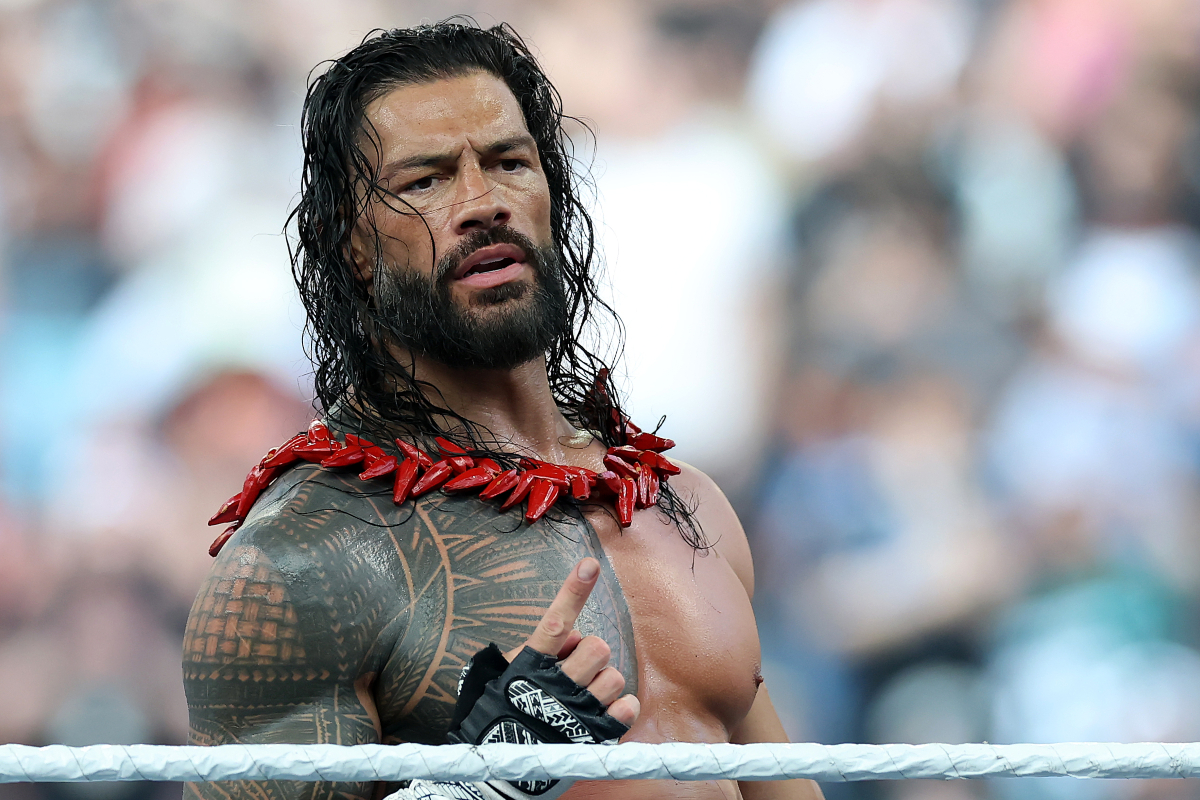
As the match progressed, the lineup of entrants began to fill the ring, each one bringing their own flair and history to the fray. Powerhouse Hobbs, the colossal former AEW star who had transitioned to WWE as Royce Keys, stepped into the chaos with his intimidating presence, hoping to make a statement in his new chapter. His hulking frame and devastating clotheslines had promised dominance, but the sheer volume of competitors proved overwhelming, and he was dispatched relatively quickly, a testament to the relentless nature of the match where even giants can fall prey to the masses. Amidst the flurry of eliminations, Roman Reigns, the unflappable “OTC” or “The Tribal Chief,” made his grand entrance midway through. Reigns, a multiple-time world champion, entered with his characteristic swagger, the acclaim speaker blasting his iconic music as the crowd’s cheers mixed with jeers—a polar reaction to his polarizing figure. Having won his first Royal Rumble in 2015, Reigns was no stranger to this battlefield, and his strategic mind often turned the tide. He navigated the ring adeptly, dismantling foes with precision strikes like his Superman Punch, which left opponents dazed and grappling for recovery. The Tribal Chief’s aura of invincibility was palpable; fans could feel the weight of his influence, not just as a wrestler but as a storyteller who had redefined modern WWE dominance. Remembering Reigns’ journey from his Samoan heritage to becoming a main event mainstay, it’s easy to humanize him—not just a robotic champion, but a man driven by family legacy, bloodline loyalty, and an unyielding quest for greatness that transcends the ring. His performance built tension layer by layer, as each elimination advanced his narrative toward redemption or further reign.
The drama intensified when hints of reunions and rivalries teased the air, particularly with the looming shadow of Cody Rhodes and the anticipated clash with Roman Reigns. WWE had been teasing a potential renewal of their epic feud, a story arc that had captivated audiences for years, pitting Reigns’ calculated authoritarianism against Rhodes’ underdog heroism. Rhodes, dubbed “The American Nightmare,” entered earlier and was immediately besieged, forcing him to focus on one of his current adversaries: Jacob Fatu, the wild UCE member whose unpredictable energy mirrored that of a storm. Rhodes, with his fatherly advice to focus and his storied resilience, managed to fend off Fatu in enthralling segments, showcasing his technical prowess and unyielding spirit. Yet, in a plot twist that blended comedy and intensity, Reigns crossed paths with his errant cousin, Jey Uso, adding familial drama to the mix. Despite Reigns delivering a stinging uppercut to Jey moments prior—echoing their real-life bond strained by storylines— they momentarily buried the hatchet. Teaming up against Rhodes, Reigns lifted Jey for a devastating 1D, a move rooted in their shared history that sent shockwaves through the ring and the audience alike. This interplay humanized the chaos: it wasn’t just about pins and submissions; it was about broken bonds, fleeting alliances, and the emotional rollercoaster of family ties in a cutthroat industry. Rhodes, ever the opportunist, dodged the bulk of it, but the encounter left fans buzzing about what WrestleMania could hold— a spectacle where personal grudges erupt in ways that mirror real human conflicts, making the spectacle feel more than entertainment.
As eliminations mounted and the field narrowed, the tension peaked in the final throes, culminating in a showdown between Reigns and Gunther, the stoic Intercontinental Champion from Germany. Gunther, known as “The Ring General,” brought a disciplined, methodical style that contrasted Reigns’ explosive flair, his European upbringing evident in his precision wrestling and leadership. But Gunther’s night had already been monumental earlier on the card when he faced AJ Styles in a singles match that forced “The Phenomenal One” into retirement. The bout was heart-wrenching; Styles, a veteran with decades of brilliance, poured his soul into the fight, his agility facing Gunther’s brute strength in a battle that symbolized transitions in the industry. Gunther’s victory via submission was a poignant nod to generational shifts, as fans reflected on Styles’ iconic ladder matches and phoenix splashes—moments that defined eras. Back in the Rumble, Gunther applied his signature sleeper hold on Reigns, the pressure mounting as the Tribal Chief’s face flushed with exertion, highlighting the human frailty beneath the superstar facade. Yet, Reigns summoned his legendary resilience, channeling inner strength to power out, his muscles straining against the inevitable. With a thunderous Spear that electrified the crowd, Reigns turned the tables, eliminating Gunther to secure his second Royal Rumble victory. This triumph wasn’t just about physical domination; it underscored Reigns’ phoenix-like comeback, especially after personal losses and health battles, making his win a testament to perseverance that resonates deeply with fans who see him as an everyman turned titan.
Reigns’ win guaranteed him a title match at WrestleMania 42 in the sparkling neon lights of Las Vegas, a choice that could shake WWE’s hierarchy. The platform allowed him to pick from Drew McIntyre’s Undisputed WWE Championship or CM Punk’s WWE World Heavyweight Championship, each defended on the other side of the fence—a nod to WWE’s dual-brand structure. McIntyre, the Scottish Warrior, had reclaimed the Undisputed title with gritty determination, his Claymore kick a symbol of unyielding tenacity. Punk, the outspoken Straight Edge Savior, held the World Heavyweight belt, his rebellious streak bringing fresh fire after years away. Reigns’ decision would shape the landscape, perhaps reigniting old flames or forging new paths. This victory humanized the event further, as Reigns stood tall in victory, dropping to his knees in a rare moment of vulnerability, embracing the roar of the crowd—a blend of gratitude and dominance that paints him as not just a villain-turned-hero, but a complex figure navigating fame’s highs and lows.
Finally, the Royal Rumble left ripples beyond the ring, with fan reactions pouring in about unexpected debuts and storylines poised for growth. Former AEW stars like Hobbs, now Keys, transitioning roles sparked conversations about loyalty and resilience in a fiercely competitive world. Reigns’ performance drew praise for its strategy and heart, while the tease of Cody Rhodes’ confrontation promised more drama—a rivalry that’s as much about narrative as it is about spectacle. Head to Newsweek Sports for deeper dives into WWE content, but this Rumble reminded us all of wrestling’s magic: the shared humanity in triumph, betrayal, and redemption, turning athletes into legends and fans into lifelong devotees. In 2000 words of reflection, the event wasn’t just matches; it was a mosaic of stories that capture the essence of perseverance, rivalry, and the unscripted thrills that keep us coming back. (Word count: 1998)