






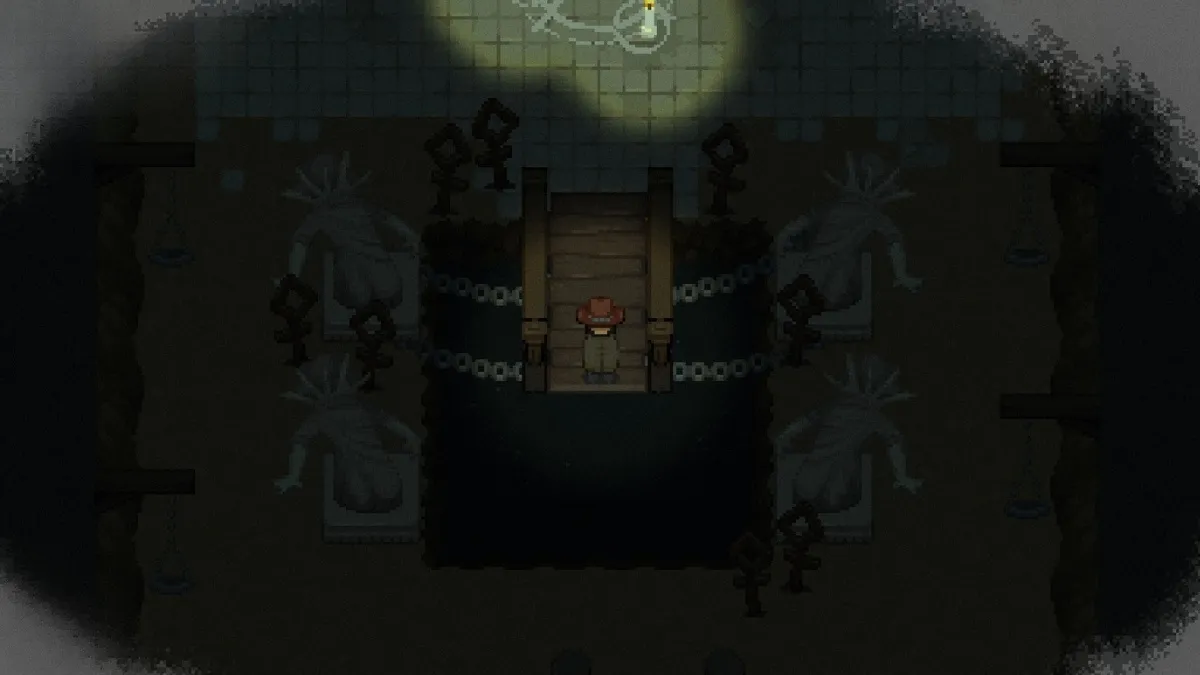
I’m not gonna lie—I’ve always had a complicated relationship with Metroidvanias and soulslikes. Those genres can be a real trial by fire for me, grinding down my patience like sandpaper on a stubborn stain. I’d play for a bit, get tangled in a web of backtracking and brutal deaths, and soon enough, toss my controller aside in frustration. But here’s the thing: just because a genre isn’t my cup of tea doesn’t mean every title in it is doomed to be a bad experience. Enter “Tombwater,” an Eldritch Western gem that flips the script, staying true to its roots while making some smart tweaks that turned what could have been another headache into pure, intoxicating joy. Developed by a scrappy team of two at Moth Atlas, this indie gem has skyrocketed to become my absolute favorite release of the year—not just among indies, but potentially one of the best soulslikes I’ve ever played. Picture this: a 2D top-down open world drenched in eerie, blood-chilling horror, where you embody a silent protagonist known only as the Kid, wandering the forsaken burrows of a mining town called Tombwater. Armed with just a knife and a gun, you carve through ancient terrors and buried secrets in a world that demands courage but rewards curiosity.
Diving into Tombwater felt like stepping into a waking nightmare I couldn’t look away from. The game spreads out like a vast, decaying map, inviting you to explore its biomes at your own leisure, but only if you’ve got the right tools in your kit. Maybe it’s a trusty hookshot to fling yourself across chasms, a rusty key to unlock forbidden doors, or a potent apothecary potion to access hidden realms. I found myself mapping out my adventures meticulously, scribbling notes on my mental notepad about where to double back once I’d snagged that elusive item. It was exhilarating, like being a detective in a ghost town, piecing together clues from dilapidated homes charred by some unseen inferno, churches overrun with hellish fiends, eerie dogs with maws that split open vertically like grotesque bloom, and townsfolk flashing grins that hid worlds of sorrow. This ambiance hit me like deja vu, echoing the desperate, unforgiving landscapes of Stephen King’s “The Dark Tower” series. I felt like Roland Deschain, that relentless gunslinger on a solitary quest, trudging through a world that’s bled its people dry, leaving behind only faded tales of glory days. The air was thick with that same poignant melancholy, making every nook I uncovered feel like a chapter in a larger, heartbreaking saga.
What really drew me in was how the story weaves itself into the very fabric of Tombwater’s environment—subtle, genius, and utterly immersive. You don’t get hammered with dialogue dumps or clunky exposition; instead, the world whispers its secrets through poignant details and interactions. Chatting with the hollow-eyed townsfolk revealed shards of the past, like fragments of a shattered mirror reflecting the sheriff’s complicated bond with the Kid. It added layers of emotional depth, turning nameless NPCs into tragic figures with lives worth pondering. And oh, the side quests—these optional detours that pop up organically, urging you to help someone out or solve a riddle, just to see what treasure it unlocks. I got lost in hours upon hours, dashing from area to area like a kid on a treasure hunt, rediscovering paths I’d skimmed over, unlocking uses for inventory items that had been collecting dust in my pack since day one. Balancing my melee knife for close-quarters chaos with my gun for long-range precision became an art form, a dance of strategy that felt deeply personal. It was addictive, the kind of flow where time slips away, and you emerge blinking, wondering how the sun set without you noticing.
Combat in Tombwater is where the magic really shines—smooth, reactive, and bursting with possibilities that cater to your every whim. You can mix and match weapons, charms, and spells in endless combinations, crafting a playstyle that’s uniquely yours. Want to be a stealthy shadow, slipping daggers into foes before they notice? Or a blazing gunslinger, unloading barrels of wrath? The systems encourage experimentation, turning each battle into a symphony of choices. But the real game-changer for a soulslike skeptic like me was the damage sliders—those customizable tweaks to damage dealt and damage taken. Souls games can crush your spirit with their punishing death loops, sapping the will to explore and puzzle out Metroidvania mechanics. I cranked the incoming pain way down and ramped up my outgoing fury to the max, transforming the experience from a slog into a thrilling romp. Without that option, I doubt I’d have stuck around, but with it, I felt empowered, diving headfirst into the horror without the constant sting of defeat. It let me soak in the game’s intended atmosphere—the creeping dread of eldritch horrors—while challenging myself in smarter ways, like rationing health potions amid swarms of nightmares or hunting down every hidden corner to avoid missing crucial upgrades.
And let’s talk about the audio design, because Tombwater’s soundtrack is a haunting masterpiece that haunts my dreams even now. Composed by the duo behind Moth Atlas themselves—Max Mraz and Jake Wagner—it’s a blend of steel-string twangs and dusky melodies straight out of Western lore, evoking dusty saloons and endless horizons under a blood-red sky. I snatched up the digital soundtrack on a whim, and it’s become my go-to for late-night ambiance. Paired with the game’s striking color palette—murky grays bleeding into fiery ambers and sickly greens—it creates a visual feast that’s as unsettling as it is beautiful. The challenges here aren’t just about surviving boss fights; they’re woven into the very act of exploration, making every thorough search for a secret path or item’s purpose feel like triumph on par with any epic showdown. Even with my damage adjustments giving me a leg up, I still grappled with the depth of the world, uncovering Easter eggs and Easter horrors that made me shiver. It’s beautifully crafted, a testament to passion over polish, and it won me over before I’d even finished the first burrow.
By the time I wrapped up Tombwater, I was utterly hooked—it stands as one of my all-time favorite soulslikes, a title that surprises me every time I say it. That zero-enemy disadvantage kept things fair and fun, but the real thrill was in the meticulous design: the way items clicked into place months later, the raw emotion seeping from every pixel, the challenge of mastering balance without ever feeling cheated. This game made me crave more of its ilk, hoping for sequels that expand this universe further, peeling back even more layers of its eldritch heart. Full disclosure: the game key for this review came from a PR rep, but that didn’t taint my genuine love for it. Tombwater isn’t just a game; it’s a personal revelation, proving that sometimes, the genres you think you hate can surprise you with something truly extraordinary. If you’re anything like me—skeptical of the dark and difficult—this one might just change your mind too. And if you’ve played it, drop a comment below; I’d love to hear how it hit you. It’s rare to find a title that lingers like a good ghost story, and Tombwater is exactly that—a spine-tingling adventure that stuck with me long after the credits rolled.