


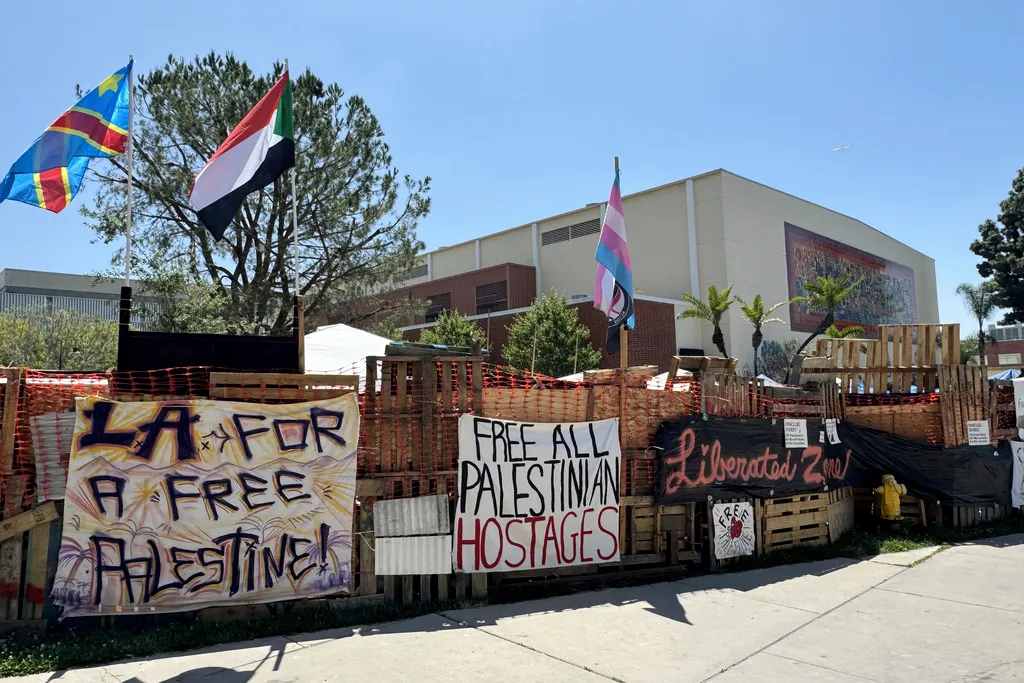
Federal Judge Condemns Trump Administration for Constitutional Violations Against Pro-Palestinian Campus Activists
In a scathing rebuke of the current administration, Reagan-appointed federal judge William G. Young declared that Homeland Security Secretary Kristi Noem and Secretary of State Marco Rubio “have failed in their sworn duty to uphold the Constitution.” This extraordinary condemnation came during a Thursday hearing addressing the Trump administration’s policies targeting non-citizen, pro-Palestinian activists on U.S. college campuses. Judge Young, who has served on the federal bench since his 1985 appointment by President Reagan, expressed his intention to issue an order preventing the administration from taking retaliatory actions against academics who have challenged what he views as unconstitutional arrests, detentions, and deportations. “The big problem in this case is that the Cabinet secretaries, and ostensibly, the president of the United States, are not honoring the First Amendment,” Young stated, highlighting the gravity of the constitutional crisis he perceives.
The case highlights a troubling pattern that began last year when the Trump administration started revoking legal status for student visa holders associated with campus protests or discussions about the Israel-Hamas conflict. These efforts gained national attention when individuals like green-card holder Mahmoud Khalil faced deportation proceedings seemingly based on their political expression. In September, Judge Young issued a landmark 161-page ruling determining that these administration policies violated the First Amendment’s free speech protections. The lawsuit challenging these actions was brought by prominent academic organizations including the American Association of University Professors and the Middle East Studies Association. During a nine-day trial in June, fifteen witnesses testified about the chilling effects these policies had created across American college campuses, painting a picture of systematic suppression of certain political viewpoints.
The judge’s September ruling was unequivocal in its defense of constitutional rights for non-citizens: “This case—perhaps the most important ever to fall within the jurisdiction of this district court—squarely presents the issue whether non-citizens lawfully present here in [the] United States actually have the same free speech rights as the rest of us. The Court answers this constitutional question unequivocally ‘yes, they do.’ ‘No law’ means ‘no law.’ The First Amendment does not draw President Trump’s invidious distinction and it is not to be found in our history or jurisprudence.” During Thursday’s hearing, Judge Young described the administration’s actions as a “breathtaking” conspiracy to violate international students’ free speech rights. When Department of Justice lawyer Paul Stone argued that no remedy should be entered in the case, Young responded forcefully: “The Secretary of Homeland Security in concert with the Secretary of State, approved by the President of the United States to violate the Constitutional rights of these people and you’re telling me there is no remedy? I respectfully disagree.”
The administration’s response to these judicial findings has been defensive and dismissive. The White House has indicated plans to appeal Judge Young’s earlier ruling, while Homeland Security Assistant Secretary Tricia McLaughlin offered a statement that seemed to sidestep the constitutional issues entirely: “Our ICE law enforcement should be thanked for risking their lives every day to arrest murderers, pedophiles, rapists, gang members, and terrorists instead of vilified by sanctuary politicians.” This response fails to address the core constitutional concerns raised by the court and instead attempts to reframe the discussion around law enforcement efforts against violent criminals—a narrative disconnection that further illustrates the divide between the judicial and executive branches on this matter.
What makes this case particularly significant is its fundamental examination of constitutional protections for non-citizens lawfully present in the United States. Judge Young’s ruling reaffirms that the First Amendment’s protections extend to all people within American borders, regardless of citizenship status. The Trump administration’s policies created a troubling precedent by suggesting that non-citizens could be punished specifically for political expression that the government found objectionable—in this case, pro-Palestinian activism. The court’s intervention represents a critical check on executive power and a reaffirmation that constitutional rights cannot be selectively applied based on national origin or political viewpoint. The judge’s forthcoming order aims to prevent further “retribution” against those who have challenged these policies, potentially setting important boundaries for how the administration can respond to political dissent.
The tension between the judiciary and executive branch highlighted in this case reflects broader conflicts about the scope of presidential power, immigration enforcement, and free speech protections in America. Judge Young’s unusually direct criticism of Cabinet secretaries—stating they have “failed in their sworn duty to uphold the Constitution”—underscores the seriousness with which he views these violations. As the White House prepares to appeal and the Department of Justice maintains that no remedy is necessary, the case will likely continue through the federal court system, potentially reaching the Supreme Court. The outcome will have profound implications not just for campus activists but for all non-citizens living in the United States and their ability to engage in constitutionally protected political expression without fear of deportation or other punitive measures. In a democracy founded on principles of free speech and equal protection under the law, the resolution of this case may well define a crucial aspect of American constitutional identity for generations to come.