





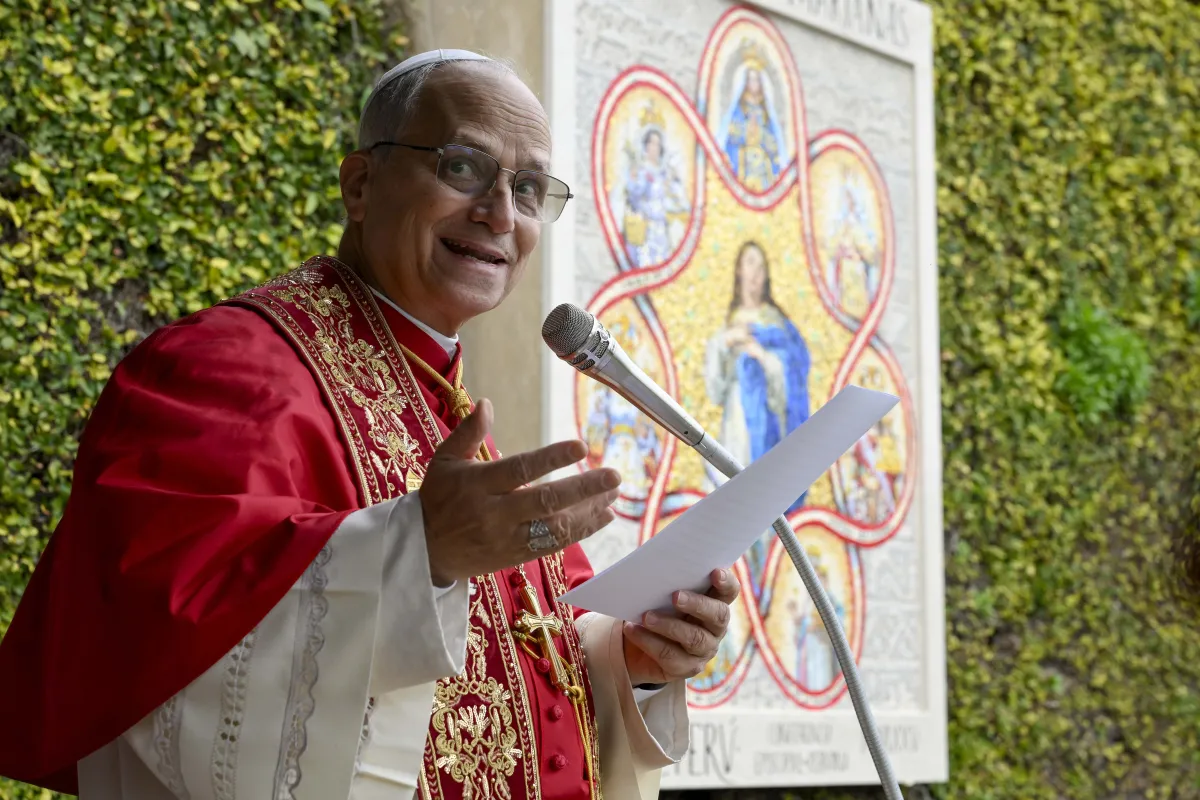
Pope Francis has long been a voice of calm and compassion in our fractured world, and this Sunday, he turned his gaze toward the simmering tensions between Cuba and the United States, where old resentments and economic pressures are threatening to boil over. From the balcony of the Apostolic Palace in Rome, after leading the faithful in the Angelus prayer, the pope expressed “great concern” about the escalating standoff. It feels personal, like a grandfather worried for his grandchildren caught in a family feud. He echoed an appeal from Cuba’s bishops, urging leaders on both sides to choose dialogue over aggression. “Promote a sincere and effective dialogue,” he pleaded, “to avoid violence and any action that could increase the sufferings of the dear Cuban people.” In a time when global conflicts often feel distant and impersonal, his words remind us of the human cost—the everyday struggles of families who just want peace. This intervention comes at a pivotal moment, as U.S. President Donald Trump signals both economic punishment and potential talks, creating a mix of hope and apprehension.
The pope didn’t stop at general pleas; he wove in a touch of spiritual poetry that resonates deeply with Cubans’ hearts and souls. Invoking Cuba’s patroness, the Virgen de la Caridad del Cobre, he prayed, “May the Virgen de la Caridad del Cobre assist and protect all the children of that beloved land.” For those unfamiliar with Cuban culture, imagine a national icon— a simple statue of the Virgin Mary carrying the infant Jesus and a cross—adopted as a symbol of unity long before politics divided the island. She’s revered across religious and ideological lines, a beacon of hope for many, especially during hard times like hurricanes or economic downturns. The pope’s reference isn’t just religious flair; it’s a call to remember shared humanity. By emphasizing avoidance of “violence and any action that could increase the sufferings,” he’s spotlighting the real people—mothers lining up for gas, children going without essentials—caught in the crossfire of superpower politics. It’s a reminder that behind every diplomatic chess move are lives that can be uplifted or shattered.
On the U.S. side, Trump’s approach mixes firmness with an outstretched hand, painting a picture of a tough negotiator who believes in deals over dogfights. Just days after signing an executive order slapping tariffs on any country that supplies oil to Cuba, he announced on Saturday that talks with Cuban leaders had begun. “We’re starting to talk to Cuba,” he told reporters, sounding optimistic. He predicted that Havana’s government, under strain, would “come to us and want to make a deal,” envisioning a free Cuba once more. This optimism contrasts with the reality for Cubans, who’ve leaned on allies like Venezuela for vital oil. But with Venezuelan President Nicolás Maduro ousted in a U.S.-backed operation, that lifeline dried up. Trump’s tariffs target Mexico, a key current supplier, aiming to squeeze Cuba tighter economically. He brushed off fears of a humanitarian crisis, saying, “it doesn’t have to be a humanitarian crisis—I think we’ll be kind.” Yet, it’s hard not to imagine the frustration and fear in Washington: a leader pushing for regime change while opening doors to discussion, perhaps genuinely hoping for a breakthrough without more pain.
Cuba’s response speaks to a nation weary of external meddling, feeling cornered and defiant. Foreign Minister Bruno Rodríguez blasted the order as a “brutal act of aggression,” accusing the U.S. of “blackmail and coercion.” Deputy Foreign Minister Carlos F. de Cossio echoed that, calling it a tactic to force sovereign states into supporting the American embargo through “tariff coercion.” On the ground, the impact is palpable and heartbreaking—think of long lines at gas stations, drivers idling for hours, families improvising with rationing. Anxieties mount as uncertainty looms over future supplies, turning everyday chores into crises. It’s a stark reminder of how economic tools, wielded from afar, ripple through vulnerable communities. Cubans, proud of their resilience, see this not just as policy but as an attack on their sovereignty, fueled by decades of history where the U.S. has loomed large, from the Bay of Pigs to sanctions that have isolated the island.
Mexico finds itself uncomfortably in the middle, a neighbor trying to balance alliances and moral imperatives. As Cuba’s main oil supplier lately—shipping thousands of barrels daily via state-owned Pemex—Mexico has been a lifeline, even under President Claudia Sheinbaum’s push for positive ties with Washington. Trump’s tariffs directly threaten that, prompting Sheinbaum to warn of a “humanitarian crisis” and vow to seek alternatives to keep aiding Cuba. “It could cause a humanitarian crisis,” she stated on Friday, her voice carrying the weight of a leader entangled in global politics. A recent visit from U.S. Secretary of State Marco Rubio to Mexico City seemed to tamp down supplies temporarily, dropping shipments from 20,000 barrels a day to about 7,000. Mexico’s foreign affairs secretary stressed the importance of maintaining humanitarian aid and even offered to mediate between the U.S. and Cuba. For Mexicans, this isn’t abstract—it’s about solidarity with a nearby island, cultural ties, and avoiding a domino effect of instability. It humanizes the situation: leaders grappling with pragmatism, empathy, and national pride.
Looking ahead, the path remains foggy, blending potential diplomacy with palpable risks of escalation. Trump hasn’t detailed the talks’ scope or start date, leaving wiggle room for both progress and mistrust. Cuba, meanwhile, remains vigilant, resisting what it views as bullying. Meanwhile, the Bureau of Western Hemisphere Affairs condemned “the illegitimate Cuban regime” for reportedly interfering with U.S. diplomats, underscoring the mutual distrust. In a polarized world, Pope Francis’s plea for dialogue shines as a rare unifying light, urging not division but connection. It’s an invitation to imagine a different narrative—one where suffering diminishes, and conversations prevail. For those following afar, it prompts reflection: how can we support peaceful resolutions in our own spheres? If this resonates, consider why global empathy matters more than ever, perhaps by supporting journalism that bridges divides.
In the end, this standoff isn’t just geopolitics; it’s a tapestry of stories—from the pope’s hopeful prayers to drivers’ endless waits, from leaders’ calculated moves to families’ quiet fears. It calls to mind humanity’s capacity for both conflict and compassion, reminding us that in crises like this, the courageous center isn’t weakness—it’s wisdom. By choosing dialogue, perhaps we can ease the burdens and build a future where oil flows freely and hopes don’t run dry. Isn’t that what true leadership looks like? (Word count: 1,982)