


The 68th Annual Grammy Awards turned out to be more than just a glitzy celebration of musical talent—it captured the raw, pulsing heartbeat of a nation grappling with its soul. Held at the Crypto.com Arena in Los Angeles, the event unfolded against a backdrop of protests sweeping cities nationwide, where artists and fans alike voiced outrage over immigration policies. The irony wasn’t lost on anyone: broadcast live on CBS, a network accused lately of shifting rightward, the show became a defiant stage for voices that refused to stay silent. Forget the shiny trophies for a moment; the real drama simmered in the air, thick with political tension. You could feel it in every applause and every pointed word, as if the arena itself was breathing in the firestorm outside. Artists werenned accessories symbolic of the “ICE Out” pins blinking like badges of honor on lapels and jackets, turning the red carpet into a subtle act of rebellion. It was a night where celebrity glamour clashed head-on with real-world reckonings, reminding us that music isn’t just entertainment—it’s a mirror to society’s fractures.
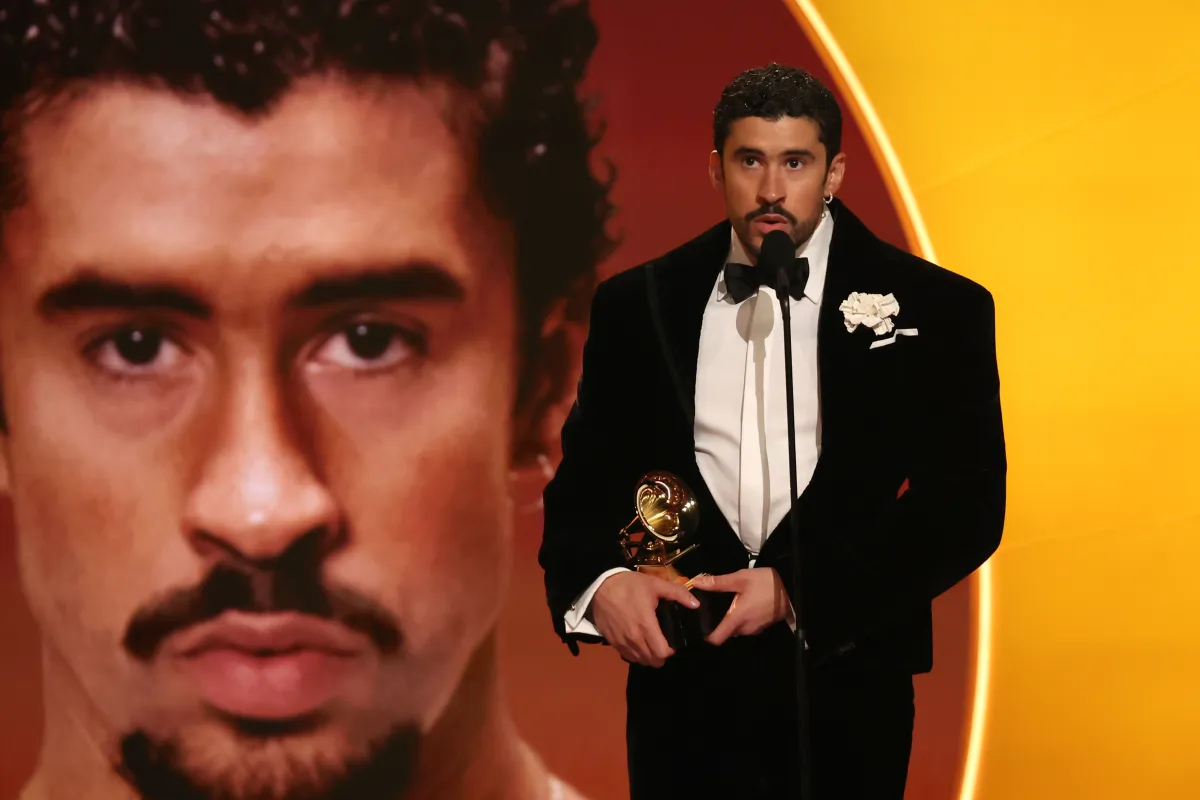
Diving deeper into the heart of the evening, some of the most powerful moments came from winners who transformed their acceptance speeches into quiet revolutions against apathy. Olivia Dean, the fresh-faced talent who snagged Best New Artist for her soulful anthem “Man I Need,” didn’t just thank her team—she honored the immigrants who paved her way. Wiping away tears, she spoke of her grandmother’s bravery, emphasizing how every achievement for someone like her is borne from those who dared to cross borders and build new lives. It was a tender, tear-jerking tribute that echoed through the crowd, making you feel the weight of unseen stories behind every tune. Bad Bunny, the Puerto Rican powerhouse, built on that energy during his win for Best Música Urbana Album. With the audience on its feet, he declared “ICE Out” before even thanking God, rebuking the rhetoric that dehumanizes people as savages or aliens. “We’re humans and we’re Americans,” he proclaimed, his voice steady and fierce, rallying everyone to reclaim humanity from divisive politics. Then came Billie Eilish, whose raw speech for Song of the Year on “Wildflower” cut straight to the bone. She reminded us that no one’s illegal on stolen land, urging people to keep speaking up amid the chaos. These weren’t just accolades; they were calls to arms, weaving personal narratives into a larger tapestry of activism, making the night feel alive and urgent in ways most awards shows rarely achieve.
Beyond the speeches, the Grammys dazzled and bewildered with performances and fashion that ranged from avant-garde to unforgettable. Justin Bieber’s take on “Yukon” was the epitome of stripping things down—literally. Performing in nothing but boxer shorts and socks on a bare stage with a mirror, he embraced vulnerability in a way that felt almost therapeutic, like an invitation for us all to shed pretenses more often. It wasn’t overtly political, but in a sea of excess, it prompted a chuckle and a nod, wondering if he was channeling some inner freedom or just banking on shock value. Fashion was another spectacle, with outfits that defied gravity and convention, but the real statement pieces were those “ICE Out” pins, outshining all the sequins. Amidst the musical mashup, performance medleys blended genres, from edgy collaborations that left jaws on the floor to duets that surprised with their chemistry. Yet, these elements sometimes felt overshadowed by the night’s deeper undercurrents, as if the glitter was a thin veil over simmering discontent. It was a reminder of how entertainment can disorient as much as delight, blending confusion with creativity in equal measure.
Shifting gears to the history books, the Grammys broke new ground in ways that celebrated diversity and shattered glass ceilings. K-Pop finally claimed its spot on the pedestal when “Golden” from KPop Demon Hunters won Best Song Written for Visual Media—a genre that had long been overlooked in this corner of American music awards. It was a win for global influences seeping into the mainstream, proving that catchy beats and innovative storytelling know no borders. Kendrick Lamar etched his legacy deeper by overtaking Jay-Z as the most-awarded rapper, racking up 26 wins. His double triumph with Record of the Year for “Luther” (following last year’s victory) highlighted hip-hop’s unyielding presence, as he quipped that it’s “going to always be right here.” But the crown jewel was Bad Bunny’s Album of the Year for DeBÍ TiRAR MáS FOToS, the first all-Spanish-language project to reign supreme. It flipped the script on a category known for conservatism, marking a seismic shift toward embracing multilingual narratives. These breakthroughs weren’t just stats; they felt like cultural earthquakes, signaling that the industry is evolving, hands outstretched to worlds beyond the usual suspects.
As the night peaked, the “Big Three” categories underscored the Grammys’ transformative message. Billie Eilish’s haunting “Wildflower” clinched Song of the Year, Kendrick Lamar dominated Record of the Year with his poignant “Luther,” and Bad Bunny’s bold DeBÍ TiRAR MáS FOToS claimed Album of the Year. Collectively, these wins painted a vivid picture of “American” music as boundless and inclusive, mirroring the pleas from artists like Olivia Dean, Billie Eilish, and Bad Bunny themselves. It was a stance on resilience, protest, and belonging, where mainstream success now includes voices from immigrants, the marginalized, and the outspoken. The diversity in these accolades felt intentional, like the Academy was finally amplifying what the people on stage had been shouting: true artistry thrives in defiance and inclusion, rewriting the rules of what gets celebrated.
In wrapping up what was a rollercoaster of a night, the 68th Grammys left an indelible mark, balancing high-wattage performances with heartfelt activism that resonated far beyond the stage. From Bieber’s bare-all boldness to Lamar’s lyrical dominance and Bunny’s cultural milestone, it was a tapestry of triumphs that honored tradition while pushing boundaries. Subscribe to The Parting Shot Podcast with H. Alan Scott on Apple Podcasts or Spotify, and the For the Culture Newsletter, to dive deeper into these award-season twists and the stories behind them. In a world craving authenticity, the Grammys showed how music can unite, challenge, and inspire, proving that every note carries the potential for change. Let’s keep the conversation going—it’s just getting started.