

The Spark of Controversy
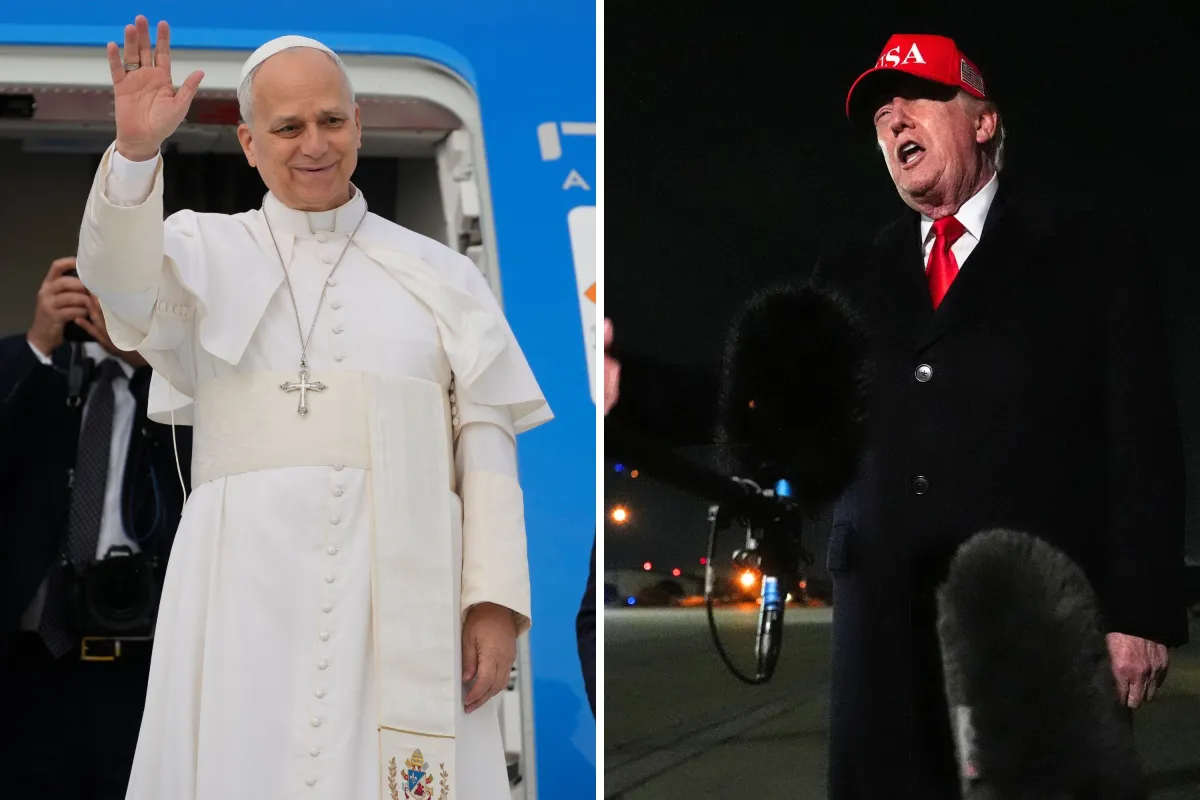
Imagine waking up to the unsettling news that your country’s leader has publicly criticized not just any figure, but the spiritual head of a global faith community—over 1.4 billion people worldwide. That’s exactly what happened earlier this week when President Donald Trump took to his social media platform, Truth Social, to unleash what many saw as a ferocious attack on Pope Leo XIV. This isn’t your typical political squabble; it’s a clash between the highest office of the United States and the Vatican, ignited by Trump’s blunt accusations that the pope was “weak” on crime and “terrible” on foreign policy. The incident blew up online, with social media buzzing as people processed how a sitting president could so directly challenge the legitimacy and efficacy of the first American-born pope. It all started on Sunday night, right after Trump landed at Joint Base Andrews in Maryland. Reporters crowded around him, eager for post-trip comments, but instead of standard diplomatic talk, Trump went off-script, declaring himself “not a big fan” of Leo. He painted the pope as someone endorsing nuclear weapons and tolerating crime in American cities—charges that seemed aimed at Leo’s recent stances on global issues, particularly his criticisms of aggressive military policies.
The implications were enormous, rippling through communities where faith intersects with politics. Catholics, who form a significant part of the American electorate, felt a personal sting, wondering how their spiritual leader could be maligned this way. Trump’s comments didn’t just stay on Truth Social; they echoed in living rooms and church halls, fueling debates about respect, power, and the separation of church and state. For many, it felt like a betrayal—not just of protocol, but of the shared values that have historically bound leaders across spheres. Trump’s accusations suggested Leo was somehow beholden to him, claiming without evidence that Leo’s ascension to the papacy was a strategic move tied to Trump’s own presidency, like a quid pro quo in a high-stakes game. “If I wasn’t in the White House, Leo wouldn’t be in the Vatican,” Trump posted, adding that the pope needed to “use Common Sense” and stop “catering to the Radical Left.” These words cut deep, humanizing the tension into a raw, personal feud. You could almost picture the hurt faces of faithful congregants, torn between their love for their president and their devotion to the Pope. It made one ponder: In an era of divisive rhetoric, where does the line blur between free speech and respect for tradition?
The People’s Response: A Petition Takes Off
Not everyone stood by silently. Christopher Hale, a Catholic political consultant and editor of the Letters From Leo newsletter, took it upon himself to channel this outrage into action. That very Sunday night, he launched a petition via Change.org, urging Trump to issue a formal apology to Pope Leo XIV. Hale’s words were impassioned, reflecting the heartfelt indignation of countless followers. “Tonight, the President of the United States attacked the Holy Father on Truth Social—calling him ‘WEAK,’ questioning his legitimacy, and demanding he stop advocating for peace,” Hale wrote. He didn’t mince words, labeling it “beneath the office of the presidency and an insult to 1.4 billion Catholics worldwide.” It was a rallying cry that tapped into the human desire for fairness and empathy. People from all walks of life—young families, retirees, professionals—began signing en masse, sharing their reasons with touching personal stories. One signer wrote about how Pope Leo’s messages on peace had inspired their own journey toward forgiveness; another recounted attending church and feeling the president’s words as a personal affront to their faith.
By Monday morning, the petition had exploded, surpassing 13,200 signatures in just hours. It wasn’t just numbers; it was a community rising up, using the power of collective voice to demand accountability. Hale’s initiative humanized the issue, turning it from a distant political drama into something intimate and urgent. Supporters poured out their emotions, some expressing shock that a leader they admired could speak so harshly about a figure revered for compassion and global diplomacy. It sparked conversations in coffee shops and online forums, where people debated the merits of Trump’s claims versus Leo’s lifelong commitment to social justice. Many Catholic families shared how Trump’s words felt like an attack on their identity, prompting reflections on faith’s role in modern politics. The petition’s growth was a testament to how the digital age empowers everyday voices, allowing individuals to stand against what they see as injustice. It wasn’t about partisanship alone; it was about protecting the dignity of a man who, for many, represented hope amid chaos—much like how a parent might shield a child from bullying.
What Exactly Is Being Asked?
At its core, the petition is straightforward yet profound: it pleads for President Trump to reach out and apologize directly to Pope Leo XIV for the inflammatory remarks. This isn’t about demanding policy changes; it’s a call for humility and reconciliation in a time when the world craves unity. Imagine crafting a heartfelt letter of sorry, acknowledging the hurt caused—except this one needs to come from the Oval Office. Supporters argue that such an apology could bridge the divide, showing that even powerful leaders can admit fault and foster dialogue. As the signatures climbed, efforts to get the White House’s response intensified. Newsweek reached out on Monday morning, but the administration redirected inquiries back to Trump’s own Truth Social posts, essentially doubling down without addressing the plea head-on. This evasion frustrated many, who saw it as a missed opportunity for leadership. They longed for a response that would humanize Trump, painting him not as an unyielding critic, but as someone capable of growth and respect for differing viewpoints.
The petition’s human element shone through in the anecdotes shared by signers. A mother described how discussing the spat with her children led to meaningful talks about kindness and public figures as role models. Another individual, a veteran, connected Trump’s criticism to broader concerns about how leaders handle moral issues like war and crime. They didn’t just want an apology for Leo; they wanted one for the principles at stake—peace, legitimacy, and the avoidance of personal vendettas in high office. By requesting this gesture, the petition invited Trump to step into a more empathetic role, potentially mending ties with a vast demographic crucial to American politics. It underscored the reality that in a diverse nation, insensitivity can alienate, and empathy can heal, much like a family dispute resolved with a sincere “I’m sorry.” As more joined, it evolved into a movement for accountability, reminding everyone that power comes with responsibility to uplift rather than tear down.
The Backstory: Building Tensions
To truly grasp this drama, we have to rewind to the underlying tensions that set the stage. Reports from just a week ago revealed a strained relationship between the Trump administration and the Holy See, highlighted by a January meeting between Pentagon officials and Vatican representatives. Under the surface, it was about Pope Leo’s state-of-the-world address, which many interpreted as a subtle jab at U.S. foreign policy, particularly regarding conflicts like the Iran war. Cardinal Christophe Pierre, then the pope’s ambassador to the United States, was reportedly summoned by Under Secretary for Policy Elbridge Colby—a move that spoke volumes about the administration’s defensiveness. Accounts from outlets like the Free Press painted it as a hostile encounter, but the Department of Defense quickly pushed back, describing it as “a respectful and reasonable discussion” with “the highest regard” for continued dialogue. This divergence in perspectives highlighted how narratives can clash, much like differing family stories at a dinner table.
These were real people in real moments of diplomacy, navigating egos and ideologies. Trump, ever the showman, escalated things into personal territory, accusing Leo of “toying with a country that wants a nuclear weapon” and suggesting his election was influenced by American politics. It humanized a figure like Pierre, who, as a bridge between faiths and states, likely felt the weight of representing global peace amid political firestorms. Supporters of the pope viewed these developments as part of a broader pattern where strong moral stances invite pushback. Imagine the cardinal returning from such a meeting, perhaps exhausted but resolute, inspired by Leo’s unwavering calls for dialogue. This backstory wasn’t just policy—it was about human resilience in the face of power plays, illustrating how personal convictions can spark international debates.
Trump’s Escalation and Personal Attacks
Trump’s words didn’t come from nowhere; they built on this simmering discontent. On Sunday, amid the usual pomp of a presidential arrival, he unleashed a torrent of criticism, directly questioning Pope Leo’s suitability for his role. “We don’t like a pope that’s going to say that it’s OK to have a nuclear weapon. We don’t want a pope that says crime is OK in our cities,” he declared, his voice carrying the frustration of a leader defending his turf. It was raw and unfiltered, the kind of outburst that reminded folks of Trump’s trademark style—bold, if polarizing. By suggesting Leo’s papacy hinged on his American roots and Trump’s influence, Trump injected a conspiratorial edge, claiming credit in a way that downplayed the sacred election process. This wasn’t diplomacy; it was a personal takedown, crafted like a tweet aimed at maximum impact. On Truth Social, he dialed it up further, advising Leo to “get his act together” and “focus on being a Great Pope, not a Politician.”
These remarks struck a chord because they felt human—flawed and impassioned. Trump positioned himself as the common-sense guy railing against what he saw as elitist meddling, yet inadvertently revealed vulnerabilities in leadership. Critics saw it as an overreach, demeaning a man dedicated to global compassion. Families tuned in, absorbing how such rhetoric could ripple into their lives, perhaps eroding trust in institutions. Trump’s approach humanized the standoff, showcasing the clash between unyielding individualism and collective empathy. It prompted reflections on when personal grievances should yield to broader harmony, much like how old friends might reconcile after a heated argument.
Pope Leo’s Poignant Response and Call for Peace
Meanwhile, Pope Leo XIV, ever composed, addressed the firestorm with grace aboard the papal plane on Monday. Far from cowering, he eloquently reaffirmed his mission, saying, “I have no fear of the Trump administration, or speaking out loudly of the message of the Gospel, which is what I believe I am here to do.” His words were a balm, steering clear of political mudslinging while upholding his values. Refusing to engage in debate, he emphasized that his role wasn’t about politics but proclaiming the Gospel undiluted. “I don’t think that the message of the Gospel is meant to be abused in the way that some people are doing,” he noted, a subtle yet powerful rebuke. This stance resonated deeply, portraying Leo as a steward of timeless truths rather than a player in transient power games.
He doubled down on his commitment to peace, vowing to persist in opposing wars, especially the Middle East conflicts claiming countless lives. “Too many innocent people are suffering in the world today,” he declared, his voice imbued with genuine sorrow. “I will continue to speak out loud against war, looking to promote peace, promoting dialogue and multilateral relationships among the states to look for just solutions to problems.” These weren’t hollow promises; they were heartfelt imperatives, humanizing the global crises through the lens of personal loss. His response invited everyone to reflect on empathy’s power, showing how a leader’s kindness can inspire change. In the face of criticism, Leo emerged as a beacon, reminding us that true strength lies in compassion, not confrontation. Supporters around the world felt uplifted, seeing his poise as a lesson in dignity amid discord.