






Padres’ Financial Gambles: The Struggle to Turn Payroll Into Performance
In the high-stakes world of Major League Baseball, few teams have been as financially aggressive as the San Diego Padres in recent years. Despite assembling one of baseball’s most expensive rosters, the Padres find themselves at a crossroads, facing the sobering reality that money alone doesn’t guarantee championship success. Their recent signing of Michael King to a three-year, $75 million contract highlights their continued commitment to spending big, even as questions mount about the effectiveness of their financial strategy. Since 2023, the team has committed to five contracts worth over $100 million each, yet the coveted World Series appearance remains elusive, with the team failing to advance beyond the American League Championship Series despite their considerable investments.
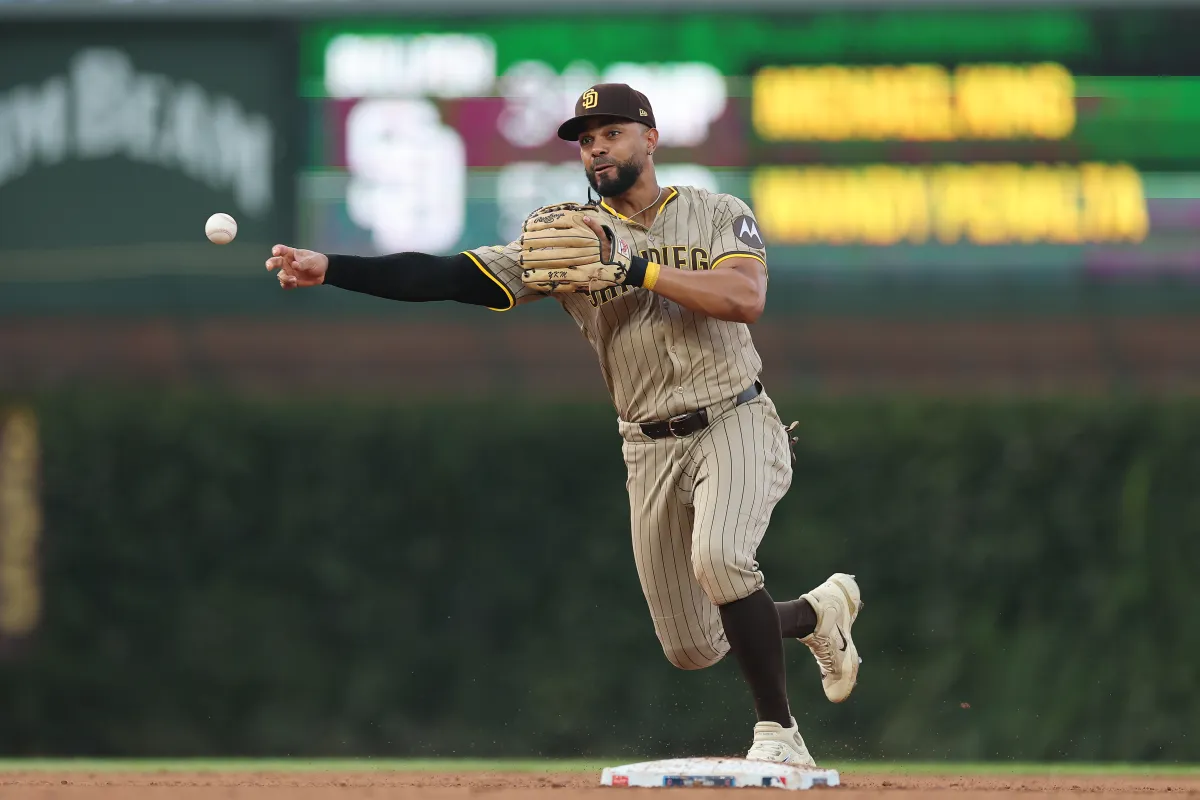
Perhaps no contract better symbolizes the Padres’ spending dilemma than that of shortstop Xander Bogaerts. The four-time All-Star, who turned 33 this year, still has eight years remaining on his massive 11-year, $280 million deal. While Bogaerts hasn’t been a complete disappointment – posting a respectable .272/.331/.407 batting line with 7.4 WAR during his three seasons in San Diego – his performance hasn’t matched the expectations that come with being one of baseball’s highest-paid players. His declining production represents a troubling trend for the Padres, who now face difficult decisions about their financial future and roster construction. CBS Sports’ Mike Axisa has even suggested the team should consider trading Bogaerts, despite the financial hit they would likely take in such a deal.
The Bogaerts situation reflects a broader challenge in baseball: the aging curve rarely aligns with long-term contracts for players in their thirties. During his decade with the Boston Red Sox, Bogaerts established himself as one of baseball’s premier shortstops, winning two World Series championships and earning his reputation as an elite player. His transition to San Diego, however, has coincided with a gradual decline in productivity – a natural progression for most players his age, but particularly problematic when attached to a contract that will pay him handsomely until he’s 41 years old. This declining performance versus increasing salary represents the kind of financial anchor that can hamstring an organization’s flexibility for years.
Should the Padres pursue a trade involving Bogaerts, the financial implications would be substantial. As Axisa noted, such a move would almost certainly require San Diego to subsidize a portion of his remaining salary – potentially around $10 million per year – to make him attractive to other teams. Even with this concession, the Padres would still free up approximately $15 million annually over the next eight seasons, creating valuable payroll flexibility. The financial burden of paying a player to perform for another team is never appealing to ownership, but there comes a point when the long-term benefits outweigh the short-term financial hit. The Padres could potentially sweeten any deal by including prospects, though their farm system is currently considered thin after years of trading young talent for established stars.
The King signing demonstrates that the Padres remain committed to competing in the immediate future, even as they grapple with these financial challenges. The 30-year-old pitcher represents the team’s biggest offseason acquisition thus far, reinforcing their pitching staff as they look to overcome their postseason disappointments. Yet this latest significant financial commitment raises questions about whether the organization has learned from past spending patterns or is simply doubling down on a strategy that has yet to deliver the desired results. The contrast between the Padres’ willingness to spend and their inability to break through in October has become one of baseball’s most intriguing narratives.
As the Padres navigate this crucial offseason, their handling of contracts like Bogaerts’ will reveal much about their organizational philosophy going forward. The fundamental tension in their situation reflects a universal challenge in sports: balancing competitiveness in the present against financial flexibility for the future. While trading Bogaerts would signal a significant shift in strategy and an acknowledgment of a contractual misstep, it might ultimately provide the breathing room necessary for more sustainable success. Whatever path they choose, the Padres’ experience offers a cautionary tale about the risks of aggressive spending without proportional returns – a lesson being closely watched by teams throughout Major League Baseball as they formulate their own approaches to building a champion.