





Packers’ Heartbreaking Playoff Collapse Against Bears Reveals Deeper Issues
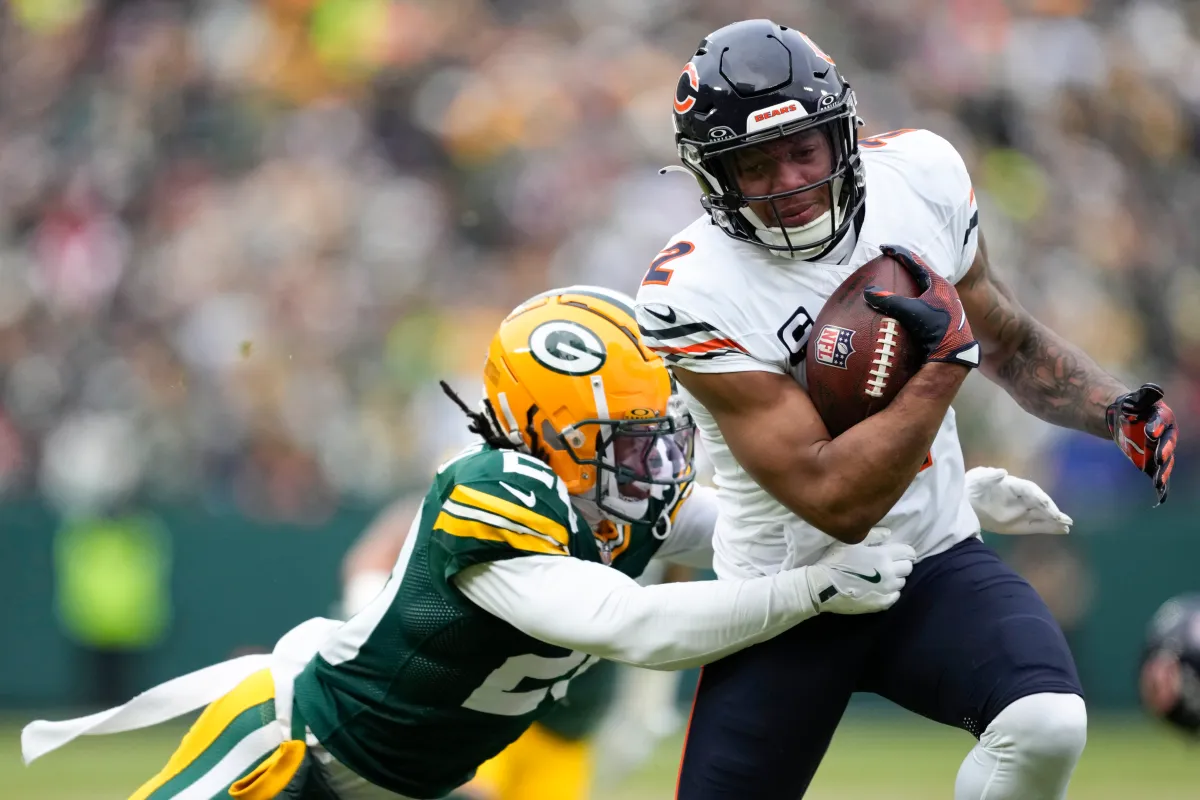
In a stunning turn of events that left Green Bay fans in disbelief, the Packers suffered a devastating playoff exit on Saturday night, squandering an 18-point lead to fall 31-27 to their longtime rivals, the Chicago Bears. What began as a commanding 21-3 advantage unraveled in dramatic fashion as the Packers allowed an astounding 25 points in the fourth quarter alone, marking their second late-game collapse against the Bears in just four weeks. The previous meltdown occurred on December 20th at Soldier Field, where a 16-6 fourth-quarter lead evaporated into a 22-16 overtime defeat. This troubling pattern of late-game collapses has raised serious questions about the team’s ability to maintain composure when it matters most.
The aftermath of Saturday’s loss revealed the raw emotions and frustration bubbling within the Packers’ locker room. Safety Javon Bullard, who contributed 83 tackles during the regular season, made headlines with his post-game comments that dismissed the Bears’ accomplishment. “No disrespect to them, but it ain’t [expletive] that they did,” Bullard told reporters with obvious frustration. “It’s us. We’ve got to finish. You know we whoopin’ they [expletive] the whole game, but that’s us. We’ve got to finish.” While his comments may have stemmed from the immediate pain of defeat, they highlighted the team’s internal recognition of their recurring problem with game management and maintaining momentum through all four quarters of play.
Despite Bullard’s attempt to discredit Chicago’s victory, the facts paint a clear picture of a team that dominated for three quarters before losing control when facing pressure. The Packers had effectively contained the Bears’ offense through three quarters, allowing only six points and seeming well on their way to advancing in the playoffs. Even after Chicago narrowed the gap to 21-16 in the final quarter, Green Bay responded with a touchdown that pushed their advantage back to 27-16 with just 6:36 remaining on the clock. At this point, victory seemed all but assured for the Packers, making what followed all the more shocking to players and spectators alike.
The final minutes of the game showcased the emerging brilliance of Bears rookie quarterback Caleb Williams, who orchestrated a comeback for the ages against the stunned Packers defense. Williams was nearly unstoppable in the fourth quarter, amassing 184 passing yards and two touchdowns during that period alone. The defining moment came with just 1:43 remaining when Williams connected with receiver D.J. Moore for the go-ahead touchdown that silenced the Lambeau Field crowd. This clutch performance demonstrated precisely why Chicago invested so heavily in Williams as their franchise quarterback, while simultaneously exposing the Packers’ inability to execute defensive stops in critical situations.
Beyond the scoreboard, the statistics tell a deeper story about why Green Bay faltered when it mattered most. The Packers’ defense surrendered a staggering 445 yards of total offense throughout the game, failing to generate the key stops needed to preserve their lead. Discipline also proved to be a significant factor, as Green Bay committed seven penalties for 65 yards compared to Chicago’s mere two infractions. These mental errors and breakdowns in execution ultimately proved too much to overcome, even for a team that had demonstrated dominance through most of the contest. The contrast between the Packers’ early-game excellence and late-game collapse raises serious questions about conditioning, mental toughness, and tactical adjustments.
This painful playoff exit marks another chapter in the storied Bears-Packers rivalry, but more importantly, it represents a significant crossroads for the Green Bay organization. Two similar collapses against the same opponent within a month suggest systematic issues rather than mere coincidence. As the team enters the offseason, they face difficult questions about how to address their inability to close out games from positions of strength. While Bullard’s post-game comments may have lacked graciousness toward the victorious Bears, his core message resonates with a truth the Packers must confront: learning to finish games is an essential skill for any team with championship aspirations. Until they solve this critical weakness, late-game leads will continue to feel precarious rather than secure for a franchise accustomed to greater success.