





Nigeria’s Growing Religious Persecution Crisis
In a troubling development, Nigeria has earned the unfortunate distinction of being ranked the seventh most dangerous country in the world for Christians, according to a comprehensive report recently published by Open Doors, a nonpartisan Christian advocacy organization. The country received an alarming score of 89 out of 100 on the World Watch List 2026, marking a steady climb from its 12th place ranking in 2020. This deteriorating situation has captured international attention, with Nigeria now behind only North Korea, Somalia, Yemen, Sudan, and Eritrea in terms of severity of Christian persecution. The rising violence has prompted unprecedented action, including U.S. military strikes against Islamic State militants in northwestern Sokoto state on Christmas Day, following criticism from President Donald Trump regarding the Nigerian government’s inability to protect Christian communities.
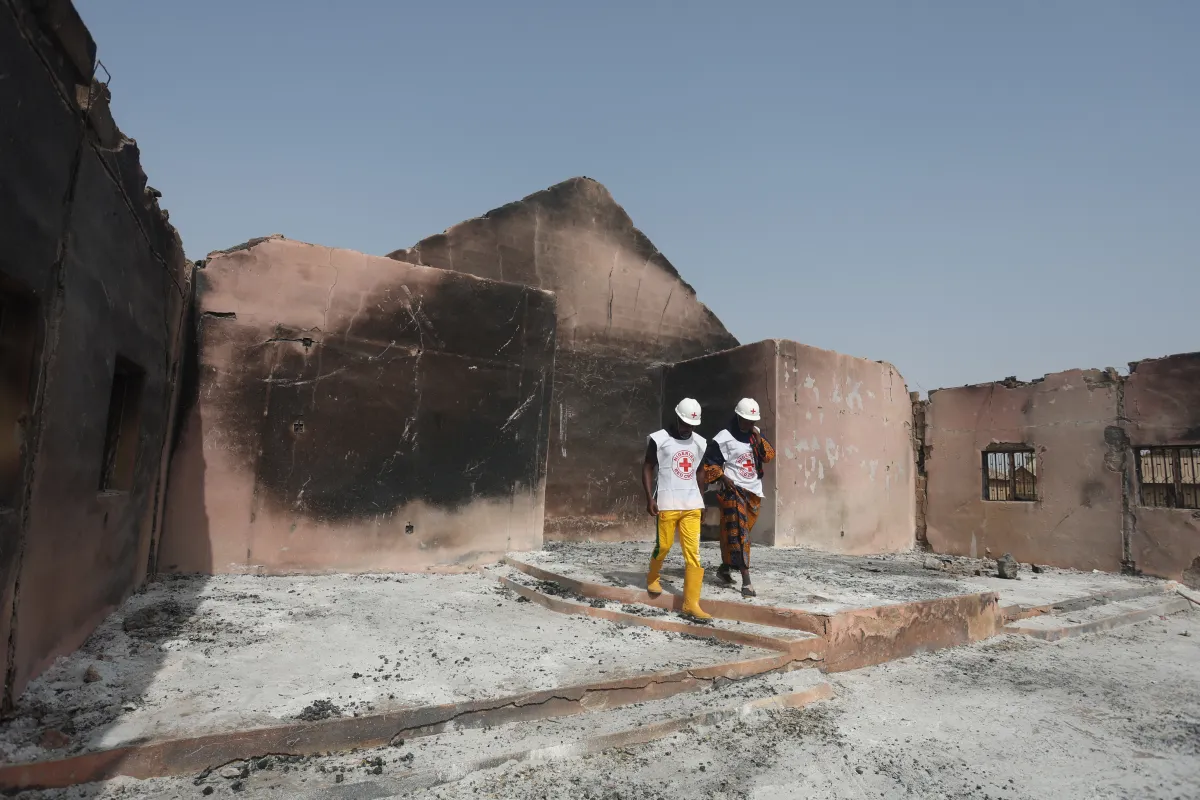
The humanitarian crisis unfolding in Nigeria is staggering in its scale and brutality. According to the Open Doors report, of the 4,849 Christians killed worldwide for faith-related reasons during the reporting period, an overwhelming 3,490 deaths occurred in Nigeria alone – representing nearly 72% of the global total and an increase from 3,100 deaths the previous year. The report details horrific incidents, including the June 2025 massacre in Yelwata, a Christian farming community in Benue State, where ethnic Fulani militants conducted a four-hour attack that left more than 200 people dead, predominantly women and children. The attackers reportedly shot or burned victims to death, with minimal military response to protect the vulnerable community. This systematic violence has created an environment where Christians, particularly converts from Islam living in states governed by Islamic law, face extraordinary risks to their safety and freedom.
While the persecution data is alarming, the situation in Nigeria presents a complex picture that extends beyond a simple religious divide. Experts and residents have indicated that the violence affects both Christians and Muslims, with analysts noting that in the predominantly Muslim northern regions, most victims of overall violence are actually fellow Muslims. The Nigerian government has consistently pushed back against characterizations of the violence as specifically targeting Christians, describing such claims as a “gross misrepresentation of reality.” Government statements emphasize that “terrorists attack all who reject their murderous ideology” and that the security challenges facing the nation cannot be accurately portrayed as a campaign against any single religious group. This position is supported by nonpartisan data sources like the Armed Conflict Location & Event Data Project and the Council on Foreign Relations, which suggest that religiously motivated attacks targeting Christians represent only a portion of the overall violence.
The international response to Nigeria’s crisis has been politically charged, with U.S. President Donald Trump taking a particularly strong stance. In a New York Times interview, Trump threatened “many-times strikes” if the killing of Christians continues, while acknowledging that Muslims are also victims, stating, “I think that Muslims are being killed also in Nigeria, but it’s mostly Christians. But there are others being killed, which I’m very unhappy about also. I don’t want people killed.” This perspective has been echoed by Republican lawmakers like Representative John James of Michigan, who wrote on social media that “The facts are undeniable: 72% of Christians killed globally were murdered in Nigeria. This is targeted, systematic persecution.” Such statements reflect growing pressure on both international bodies and the Nigerian government to address what many see as an unfolding genocide against Christian communities.
Human rights experts provide important nuance to the discourse, highlighting the broader humanitarian crisis affecting multiple faith communities. Bulama Bukarti, a Nigerian human rights advocate specializing in security and development, told CNN that while extremist groups have indeed killed many Christians, “they have also massacred tens of thousands of Muslims.” This perspective underscores the complex nature of Nigeria’s security challenges, which are driven by a toxic mix of ethno-religious hostility, Islamist militancy, weak governance, and organized crime, as identified in the Open Doors report. The violence is particularly severe in northern Nigeria, where the report states “Islamic militants operate with impunity,” creating a humanitarian crisis that transcends religious boundaries while still disproportionately impacting Christian communities in certain regions.
The international community now faces difficult questions about how to respond to Nigeria’s crisis. Trump’s administration has already designated Nigeria a “country of particular concern” for religious freedom violations, and the president has threatened additional military action if the violence against Christians continues. This represents a significant escalation in U.S. involvement in Nigeria’s internal security challenges and raises questions about sovereignty, international law, and effective strategies for combating religious persecution and extremism. As Nigeria grapples with these complex issues, the humanitarian toll continues to mount, affecting communities of all faiths. The country’s future stability depends not only on addressing the immediate security threats posed by militant groups but also on confronting the underlying factors of religious intolerance, ethnic tensions, and governance failures that have allowed such violence to flourish. For millions of Nigerians – both Christian and Muslim – the path forward must include both immediate protection from violence and long-term solutions that promote religious freedom and peaceful coexistence.