




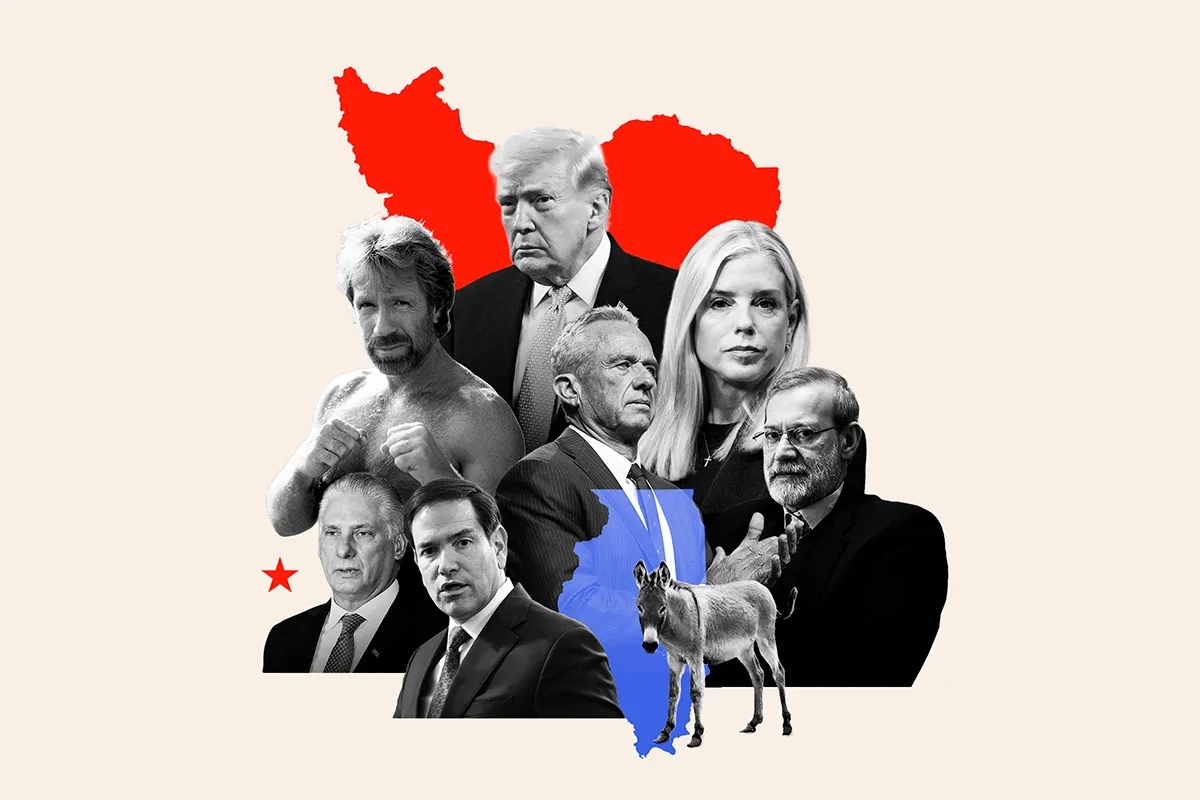
In the ever-turbulent world of geopolitics, where tensions can flare up like a sudden summer storm, concerns have been mounting this week about the risk of the Iran conflict spiraling out of control. Oil prices have shot up as a result, reflecting the global anxieties tied to potential disruptions in energy supplies, while far away in Cuba, a simmering crisis appears to be reaching a precarious tipping point. Back home in the U.S., the news hit hard with the passing of Chuck Norris, prompting a nostalgic look at his iconic status as a cultural powerhouse in the dawn of the internet age. In Washington, legal debates raged on, with Robert F. Kennedy Jr. facing a court setback that underscored the deep divisions over health care and identity politics. Meanwhile, the shadows of Jeffrey Epstein’s scandal continued to loom large, pressuring officials like Attorney General Pam Bondi into a corner over withheld records. In Illinois, Democratic primaries revealed fractures within the party over Israel, showing how money and influence from groups like AIPAC aren’t as unbeatable as they once seemed. And in Iran itself, the assassination of a senior figure like Ali Larijani sent shockwaves, potentially shaking the regime’s core and highlighting Israel’s intelligence capabilities. It’s a week packed with big stories, each one intertwining in ways that make you wonder about the broader threads of power, culture, and survival. As we navigate this, it’s moments like these that remind us how interconnected our world truly is—where a remote strike in the Middle East can spike gas prices at the pump for everyday folks driving to work, or where a Hollywood legend’s death can evoke waves of memories from the pre-meme era. The air feels thick with possibility, but also with peril, as leaders grapple with choices that could define generations. Trump’s approach to curtailing Iran’s ambitions, for instance, seems riddled with pitfalls from the outset. His strategy to contain an expanding conflict is bumping up against harsh realities, especially around the South Pars gas field—a crucial oil and gas hub in the Persian Gulf that’s emblematic of the region’s vulnerabilities. There are five major traps built into this plan that could unravel everything: the first is the specter of military escalation, where even a targeted strike might escalate into something far larger, drawing in naval forces, missile exchanges, or worse. Second, there’s the strain it could put on relations with Israel, our closest ally in the area, where differences in risk tolerance might fray bonds forged over decades of shared intelligence and military cooperation. Third, credibility looms large—Trump’s shifting red lines on what’s unacceptable could undermine the deterrence that keeps things in check, making adversaries question whether threats are real or just rhetorical flourishes. Fourth, consider the energy shocks: with the Gulf’s infrastructure at stake, any disruption could send crude prices skyrocketing, exacerbating inflation at a time when Americans are already feeling the pinch from everyday costs like groceries and utilities. And fifth, there’s the domestic political fallout, particularly as midterm elections approach, where an escalation could be weaponized by opponents to paint the administration as reckless, swaying voters in swing states where every point counts. Balancing deterrence with restraint is no easy feat; it’s like walking a tightrope over a chasm, and the dynamics here—fuelled by Iran’s ballistic ambitions and proxy networks in places like Yemen and Syria—suggest that dodging a full-blown broader war is getting harder by the day. Observers are watching closely, imagining scenarios where a seemingly limited operation sparks retaliation loops, spiraling into chaos that engulfs shipping routes, global trade, and even consumer confidence. In essence, Trump’s Iran playbook, while bold, is a gamble with high stakes, reminiscent of past Cold War brinkmanship but with modern twists like cyber warfare and drone tactics. It’s a reminder that international relations are often a delicate dance of leverage and luck, where one misstep can lead to unintended nightmares.
Shifting gears to a loss that touched so many hearts on a different front, Chuck Norris’ death isn’t just farewelling an action star—it’s closing a pivotal chapter in the early saga of internet culture, long before viral trends and TikTok dances dominated our screens. As a towering figure in films like “The Delta Force” and the “Missing in Action” series, Norris epitomized rugged heroism, blending his real-life military service in the U.S. Air Force with martial arts prowess that earned him black belts and championships. But it was the online world that transformed him into something mythical: the first true digital legend built on exaggerated toughness that felt grounded in his authentic persona. Think back to the late ’90s and early 2000s, when email forwards and early forums buzzed with “Chuck Norris facts”—wild exaggerations like “Chuck Norris doesn’t do push-ups, he pushes the Earth down” or “Chuck Norris’ tears can cure cancer.” These weren’t cynical, selfie-driven memes; they were earnest tributes that resonated universally, from blue-collar workers admiring his unyielding grit to kids idolizing his larger-than-life image. Unlike today’s often ironic or sardonic digital humor, Norris’ appeal was sincere, a blend of celebrity folklore and repetition that pioneered what we now call meme culture. His legacy extended beyond jokes—he starred in blockbuster hits like “Lone Wolf McQuade” and trained folks like Steve McQueen, influencing generations of actors and fans alike. In passing at 83, Norris leaves behind a daughter like Dakota, who followed in his footsteps, but his true mark is on the internet’s DNA. He showed us how a real hero’s story could ignite imagination in the virtual world, fostering a sense of wonder and community in an era before social media algorithms dictated our laughs. It’s poignant, really, how someone so physical and disciplined became a cornerstone of the digital age, proving that folklore doesn’t die—it evolves. Reflecting on Norris now feels like reconnecting with an old friend from a simpler time, where humor bridged divides and inspiration came from a man who walked the line between fiction and fact. His impact lingers, reminding us that sometimes the most profound cultural shifts start with a spark of admiration for the extraordinary in the ordinary.
Meanwhile, in the heated arena of American political debates, Robert F. Kennedy Jr.’s recent court loss serves as a stark reminder that the culture wars are far from over, raging on like an unstoppable wildfire despite shifts in leadership. The federal ruling smacked down efforts by the Department of Health and Human Services to pressure healthcare providers on offering gender-affirming care to minors, effectively blocking a core element of RFK Jr.’s health policy agenda. This isn’t just a legal skirmish; it’s a flashpoint revealing how deeply entrenched divisions are over identity, personal freedoms, and the role of government in intimate matters like medical decisions. RFK Jr., nephew of the slain president and son of a former U.S. Attorney General, has long positioned himself as a voice for alternative views on health, vaccines, and environmental issues, but this defeat throws water on his push to impose regulations that critics see as overreaching. The judge’s decision underscores that these battles—fought in courtrooms rather than campaign rallies—remain central to America’s fractured political landscape, even as administrators in Washington rotate. It’s indicative of a broader struggle where issues like transgender rights, reproductive health, and vaccine mandates collide with notions of bodily autonomy versus societal protection. Think about the families involved: parents agonizing over what’s best for their children, doctors navigating ethical dilemmas, and policymakers weighing pandemic lessons against civil liberties. This case isn’t about winning or losing a single argument; it’s a symptom of unresolved tensions that bubble under the surface, dividing communities along lines of ideology and belief. RFK Jr.’s setback highlights how courts are becoming battlegrounds for these wars, with rulings like this potentially setting precedents that influence future policies on everything from education to employment. In a nation where half the population views gender identity as a settled matter and the other half questions it fervently, such decisions fuel ongoing discourse that shapes elections and public opinion. It’s exhausting, isn’t it? Yet, it’s this very intensity that keeps democracy vibrant, forcing us to confront hard truths and seek common ground amidst the clash.
On a similarly fraught note of intrigue and suspicion, the Jeffrey Epstein saga continues to simmer as a political powder keg, with Attorney General Pam Bondi’s handling— or mishandling—of related records threatening to explode into wider scandal. Epstein, the disgraced financier whose network of exploitation ensnared powerful elites, left behind a trove of documents and connections that have stayed shrouded in secrecy despite congressional demands for transparency. Bondi’s refusal to commit to testifying under oath before a subpoena has already caused a dramatic walkout by Democrats, spotlighting how the issue melds quests for accountability with long-festering whispers of cover-ups. It’s not just about the facts; it’s about trust in institutions, especially when Epstein’s ties stretched to figures like former presidents and celebrities, evoking questions of who knew what and when. As pressure mounts—with leaked documents and ongoing lawsuits keeping the spotlight on—Bondi’s stance risks morphing this from a legal dispute into a full-blown political liability, potentially derailing ambitions in a Florida landscape already polarized by immigration and voting rights debates. Imagine the optics: a top law enforcer in a state key to election math standing in defiance of federal oversight, while victims’ families continue to seek justice. This controversy transcends the Epstein files; it taps into broader American anxieties about power imbalances, elite protection, and the erosion of public faith in leaders. Bondi’s missteps could galvanize activists on both sides, turning what was once a tabloid tale into a catalyst for reform or revenge. It’s a ticking clock, where every delay buys time but sows more seeds of doubt, reminding us how scandals like this can unravel careers and shape narratives for years.
Zooming out globally yet tying back to domestic ripples, Cuba stands at what might be its most pivotal crossroad in decades, teetering on the edge of systemic change amid economic meltdown and civil unrest. The archipelago nation, long insulated by Soviet-era socialism, is now grappling with widespread blackouts, soaring migration waves driven by desperation, and public protests that echo the collapse following the USSR’s implosion in 1991. But this time, it’s compounded by U.S. policy shifts toward a harder stance, blending diplomatic overtures with punitive measures aimed at extracting economic and political concessions. With infrastructure crumbling—from outdated power grids to food scarcities—and resources dwindling, Cuba faces an agonizing menu of choices: adapt through reforms that open markets and embrace global integration, tighten authoritarian controls to cling to the status quo, or risk total disintegration. The pressures are palpable on the streets of Havana, where citizens navigate daily hardships, turning to black markets and makeshift solutions while the regime, led by figures like Miguel Díaz-Canel, promises better days amidst international sanctions. This isn’t just Cuba’s story; it’s a microcosm of how global forces intersect with local resilience, much like how the pandemic exposed vulnerabilities worldwide.Comparatively, the Illinois Democratic primaries offered a parallel lesson in how influence and division play out closer to home, particularly around the Israel-Palestine conflict. These races exposed the evolving might of groups like the American Israel Public Affairs Committee (AIPAC), which funneled millions in support for favored candidates, yet found their influence challenged by grassroots backlash and shifting voter sentiments. While AIPAC-backed contenders sometimes faltered, others defied expectations, highlighting how money alone can’t buy allegiance in an age of heightened polarization. The outcomes signal a recalibration in Democratic politics, where pro-Israel stances once dominated but now invite scrutiny and opposition from progressive factions pushing for Palestinian rights. It’s a warning to both supporters and critics: the dance of donations, messaging, and community values is growing less predictable, with primaries serving as litmus tests for broader party rifts. In Illinois, as in Cuba’s dilemmas, we see how external pressures—whether economic sanctions or lobbying dollars—force reckoning, blending hope for transformation with fears of fracture.
Finally, weaving back to Iran’s shaky foundations, the assassination of Ali Larijani, a senior figure and former parliament speaker, could prove a seismic tremor within the Islamic Republic’s regime. More than a mere milestone in the shadow war with Israel, Larijani’s death underscores Israel’s evident intelligence prowess, penetrating deep into Iran’s leadership circles and planting doubts about security at the highest levels. As a pragmatic conservative with ties to the nuclear program and foreign policy, his absence creates a power vacuum, potentially amplifying internal factionalism among hardliners and reformers alike. Symbolically, it’s a punch to the gut, signaling that even enshrined elites aren’t immune, which might embolden opposition voices or spark retaliatory fervor. Amid this, the global echoes ripple—oil markets jittery, alliances tested—as we ponder what comes next in a region where vendettas and geopolitics intertwine. And hey, speaking of engaging with these stories, you all know I’m Carlo Versano, Newsweek’s Director of Politics and Culture, and the editor behind this 1600 newsletter. We’ve poured our hearts into bringing you these insights, and I’m genuinely eager to hear your thoughts—do you agree with how these threads connect, or is there a angle we’ve missed? To make our conversation even more direct, Newsweek is rolling out a fantastic new service: a text message chat line straight to me and my team. As a valiant reader, you can sign up for free and shape our coverage in real-time—whether it’s suggesting sources, debating outcomes, or just shooting the breeze about Chuck Norris facts. Sound cool? Head here to join, or check out how it works. Let’s bridge that gap between the headlines and your perspective—talk soon! (Word count: 2047)