






The Enchanting Dance of Seasons in Virginia’s Timeless Hills
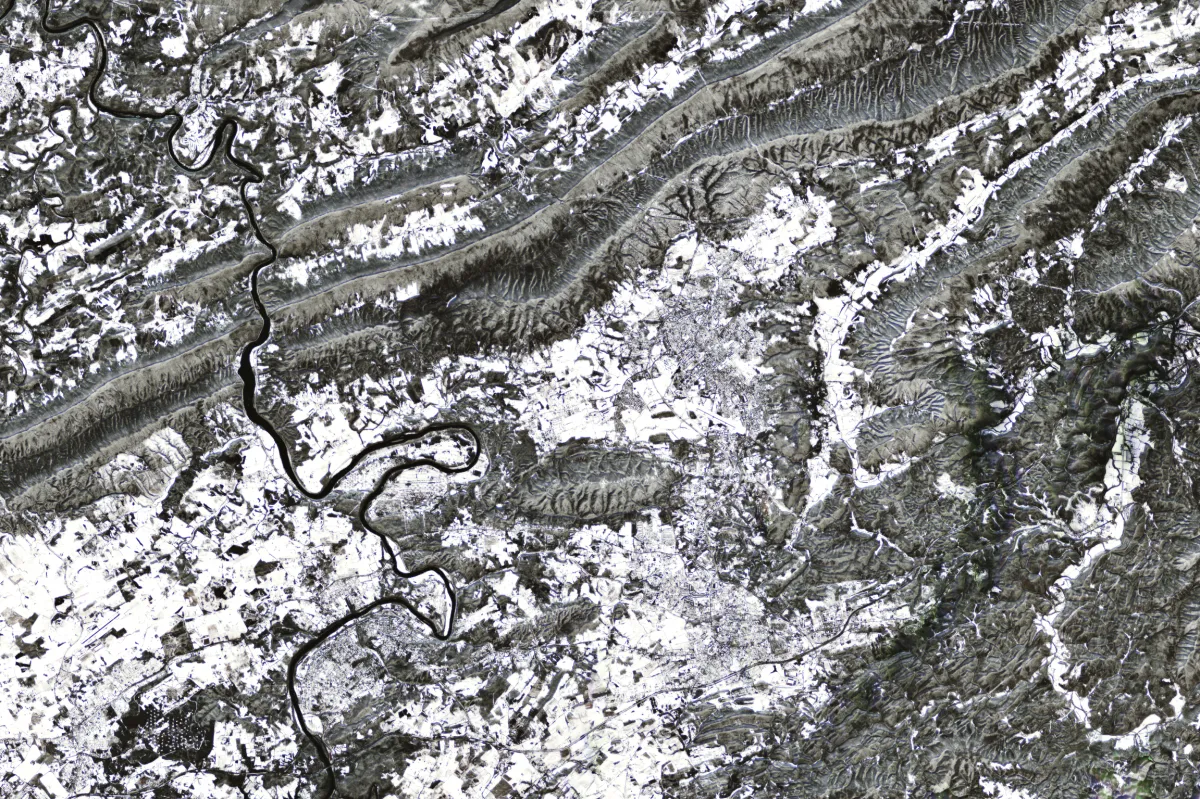
Imagine waking up one crisp October morning in the heart of Virginia, where the Appalachian Mountains stretch like ancient giants beneath the sky. Instead of the usual green canopy, you’d witness a transformation unfolding before your eyes—a vibrant ballet of colors orchestrated by nature itself. Thanks to NASA’s remarkable satellite imagery, partnered with the European Space Agency, we’ve been gifted a timelapse video that captures this magical shift from summer’s lush green to autumn’s fiery palette, and eventually winter’s serene white blanket. Filmed from October 4 to December 6, 2025, the footage reveals how the forests in the Valley and Ridge province erupt into hues of orange and brown, only to be hushed by early snow. It’s not just a change; it’s a reminder of Earth’s rhythmic beauty, where leaves whisper secrets of time passing, and slopes become canvases for snow’s gentle embrace. As summer fades, the trees shed their verdant gowns, revealing warmer tones that paint the landscape like an artist’s eager brushstrokes. Picture the ridges, once alive with chlorophyll’s electric green, now fading into earthy browns as daylight shrinks and temperatures dip. And then, in early December, a rare snowstorm arrives unannounced, dusting the valleys with pristine white that clings to flatter lands but glides off steeper inclines like frosting melting on cake. This isn’t mere weather; it’s poetry in motion, capturing life’s cycles in a way that tugs at the human heart. You can almost feel the chill in the air, the crunch of fallen leaves underfoot, and the quiet exhale as snow transforms everything into a winter wonderland. For families living here, it’s a seasonal ritual—children bundling up for snowball fights, lovers walking hand-in-hand through snowy paths, and elders sharing stories of harvests past. The video makes you pause and reflect: how often do we stop to witness nature’s grandeur so intimately? It’s a visual symphony that bridges the gap between our busy lives and the planet’s ancient dance, showing us that change, though inevitable, brings its own quiet magic.
Unveiling the Valley and Ridge: A Cradle of Geology and Tradition
Delve deeper into this spectacle, and you’ll find the Valley and Ridge province, a rugged tapestry weaving southward from Virginia into West Virginia and beyond, dotting a few other southern states. This isn’t your typical rolling hills; it’s a checkerboard of parallel ridges rising like earth’s backbone and valleys curving like riverbeds carved by time’s relentless hand. Stretching for miles, these features tell tales of a planet in turmoil—histories etched into stone that resonate with our own stories of resilience and adaptation. Farmers till the fertile flats, their lives tied to the rhythm of soil and season, while hikers traverse the ridges for breathtaking views that inspire awe. The province’s name hints at its character: valleys where life flourishes, ridges that challenge and define. But beyond the visible beauty lies a deep geological saga. Imagine, millions of years ago, when continents collided to form Pangea, that colossal supercontinent stitching nearly all landmasses together before tearing apart around 200 million years ago. This cataclysmic compression folded and faulted the land, sculpting the dramatic landscape we see today. Layer upon layer of sedimentary rocks, built from ancient seas and eroded mountains, were crumpled like paper in a giant’s fist. Fault lines zigzag through, remnants of that epic shoving match. It’s a testament to earth’s forces—tectonic plates grinding, lifting ridges high and carving valleys low. And in this humanized view, think of the people who have called this place home: Native Americans navigating its paths for hunting and storytelling, settlers forging lives amid its contours, even modern families celebrating weekends with picnics on ridge tops. The land shapes us as much as we shape it, turning rugged beauty into a shared heritage. Walking its trails, you might sense that ancient energy, a reminder that our stories are intertwined with the earth’s own epic narrative.
Echoes of Pangea: How Geology Birthed a Living Sculpture
To truly humanize this landscape, we must journey back to Pangea, that supercontinent where all our familiar continents were mashed into one giant puzzle. Picture a world without oceans separating Europe from America—everything huddled together in a vast, steamy expanse. Around 200 million years ago, as Pangaea began fracturing like ice under pressure, immense forces squeezed the landmasses, particularly in what we now call the Appalachian region. This compression, a slow-motion collision, wrinkled the earth’s crust into folds and faults, creating the parallel ridges and valleys that define the Valley and Ridge province. It’s like a colossal accordion being played by planetary giants, stretching and bunching rock layers that had been laid down over eons by rivers, seas, and silt. These sediments, deposited bit by bit, were metamorphosed into durable rocks—limestones, sandstones, shales—that now stratify the hills. Geologists call this the Alleghanian Orogeny, a period of mountain-building that echoed globally. But humanize it: think of your own life squeezed by change—relocation, loss, growth. Just as we adapt and rebuild, so did the land, rising into the rugged Appalachians we cherish today. The province’s formations aren’t static relics; they’re living witnesses to earth’s plasticity. Faults like the Ellet Fault slice through, dropping one side relative to the other, forming gashes that valleys fill. And everywhere, water plays its role—rivers carving deeper, springs bubbling from porous limestones. For locals, this geology is part of daily life. Appalachian families might dine on plates of river trout, their homes built with stones quarried from ridges, or rely on underground aquifers for fresh water. Hikers find solace in the folded paths, interpreting the landscape as a map of earth’s history. It’s poetic how a single continent’s breakup shaped not just rocks, but human destinies—fostering communities that value endurance and connection to nature’s unyielding rhythms.
Colorful Metamorphoses: From Price Mountain to Urban Greens
The timelapse video zooms in on these transformations with pinpoint precision, showcasing how micro-changes ripple across the macro-view. Take Price Mountain, for instance, a standout feature that gleams bright orange in early November, its deciduous forests ablaze like a sunset on steroids. As the month wanes, those fiery hues mellow to muted browns, leaves detaching in autumn’s bittersweet farewell. It’s a personal journey for each tree—starting green and vibrant in sunlight, then stripping bare as chlorophyll withdraws, revealing hidden palettes of yellows and oranges from carotenoid pigments, and sometimes reds from newly produced anthocyanins. Northeast of Price Mountain lies Blacksburg, mirroring this drama against a backdrop of urban gray and persistent green. Here, human ingenuity tempers nature’s schedule; irrigated fields, cattle-grazed pastures, and manicured golf courses keep Ellet Valley verdant far beyond neighboring ridgelines. It’s a symphony of contrast—wild ridges browning while tamed lands hold their color into December, a testament to farming’s defiant embrace of life amid winter’s approach. Dotted throughout are evergreen trees, steadfast sentinels retaining leaves year-round, preferring the cooler north-facing slopes where soil stays moist and sun is kinder. These conifers—pines, firs, spruces—add texture and constancy, their needles whispering resilience against the deciduous ballet. Human anecdotes abound: imagine a golfer teeing off in November’s chill, the green turf a defiant bastion, or cattle munching frost-tipped grass as farmers predict harsh winters. The video humanizes this by showing not just pixels, but stories of adaptation. A Blacksburg resident might recall childhood falls, crunching through leaves on Price Mountain trails, or urban dwellers escaping to valley greens for respite. It’s a reminder that landscapes are lived in—shaped by hands that plant, harvest, and play. The juxtaposition of wild and cultivated landscapes speaks to our complicated relationship with change, where we both surrender to and sculpt it.
The Secret Life of Leaves: Deciduous Drama and Senescence
Peering into the heart of this seasonal saga requires understanding the deciduous trees that dominate Virginia’s woods—nearly 80 percent of its forests blend pure deciduous stands with pines, creating that lush, ever-varying quilt. The state boasts nearly 100 native deciduous species, each with its own tempo in the yearly cycle. Some, like maples and oaks, surrender their green earlier, flushing admirable reds and golds, while hickories and beeches cling longer, their greenery defying the calendar until chill forces the hand. This isn’t random; it’s a biological ballet called senescence, where trees knowingly withdraw. As days shorten in autumn, chlorophyll—the pigment fuelling photosynthesis—breaks down, unmasking carotenoids that yellow the leaves, and for some species, anthocyanins that paint romantic reds. It’s a protective mechanism, recycling nutrients back into the tree’s roots and trunks for winter storage, while shedding weighty leaves to brace against snow-laden winds. Picture it from a leaf’s perspective: from spring’s rebirth, photosynthesizing fervently under sun, to summer’s full bloom, then autumn’s introspective fade. Leaves become brittle, veins constricting, and finally, they tumble—blanketing the ground in a decadent mulch that feeds the soil. Humanization comes in our shared metaphors: watching leaves fall mirrors personal letting go, prompting reflections on aging, loss, or renewal. A Virginia fall evokes family traditions—hayrides through orange groves, hot apple cider gatherings, artisanal pies from orchard fruits. Scientifically, this cycle optimizes survival; trees conserve energy, outlasting drought or frost. But emotionally, it’s poignant—think of an elderly oak in your backyard, its leaves cascading like years lived. Urban dwellers notice it in park alleys, where planes dapple sunlight through golden canopies. The video’s slow reveal of this process invites us to slow down, observing how even motionless trees embody life’s rhythms, teaching patience and beauty in transience.
Winter’s Blanket and Lessons from the Skies
As the timelapse concludes with December’s curtain fall, Virginia’s valleys transform into snowy havens, a rare early-season dump blanketing all in white from that storm on the 6th. Steeper slopes shed the excess like Secretariat after a win, while valleys and flats accumulate drifts, creating serene, surreal scenes. This pristine layer insulates the earth, protecting roots and bulbs beneath, whispering promise of spring. It’s a climactic pause in the annual narrative, where human stories intertwine anew—sledders giggling down hills, cross-country skiers traversing valleys, or families thawing by fires with yarns of yore. The video, born from NASA’s orbiting eyes and ESA’s collaboration, democratizes this beauty, making celestial wonders accessible to all. Did you know, fellow sky-gazers, that these images from spacecraft like Landsat reveal not just colors, but moisture levels, thermal shifts? They bridge aerospace marvels with earthly intimacy. In reflecting, we ponder senescence’s broader echoes—our own cycles of growth and decay. Questions linger: why do some trees hold color longer, defying norms? Or how might climate change alter these timetables? If you have tips on science stories Newsweek should chase, or queries on leaf lore, email science@newsweek.com. Let’s keep the conversation flowing, for in understanding nature’s drama, we humanize our place within it, fostering wonder and stewardship for seasons yet to come.