


The Thrill and Heartache of Olympic Dreams in 2026
As the 2026 Winter Olympics buzzed with excitement in the crisp February air, Friday the 13th unfolded as a day of mixed emotions for figure skating fans worldwide. At the center of it all was young American star Ilia Malinin, the so-called “Quad God,” who had captured hearts with his jaw-dropping maneuvers and fearless approach to the sport. Stepping onto the ice with the weight of Team USA’s hopes on his shoulders, Malinin aimed for nothing less than the men’s individual gold medal—a pinnacle that seemed within reach given his prior triumphs. But in the blink of an eye, a devastating fall during his program turned the tide, relegating him to an eighth-place finish that left the audience gasping and the Olympic community reeling. It’s stories like this that remind us how fragile greatness can be; one slip on the gleaming ice, and a lifetime of training feels like it’s evaporating into the arena’s cold vapor. People gathered around screens at home, their breaths held, feeling the sting of disappointment as if they were there in Milano Cortina, Italy, witnessing history unfold. Malinin, a teenager thrust into the global spotlight, embodied the raw vulnerability of pursuing perfection. He had defied gravity and expectations time and again, but even the mightiest must confront humanity’s limits. This wasn’t just about a medal; it was about the soul laid bare on that frozen stage, where every jump and twirl tells a personal tale of resilience and risk. As the crowd erupted in a mix of cheers and sympathetic groans, Malinin skated off, head held as high as possible, a young man absorbing life’s harsh lessons while the world watched with bated breath, reflecting on how such moments define not just athletes, but all of us chasing our impossible dreams.
Yet, amidst the heartbreak, there was cause for unabashed celebration. Before the individual event even began, Malinin had etched his name into the Olympic record books, claiming a gold medal as part of Team USA’s men’s figure skating team. In that team competition, he didn’t just participate—he mesmerized by becoming the first skater in decades to land a backflip at the Olympics, a move so daring it blurred the lines between gymnastics and artistry on ice. Imagine the rush: hurtling backward through the air, defying physics with sheer athleticism, landing with the poise of a seasoned performer. This feat wasn’t merely technical; it symbolized the evolution of figure skating, pushing boundaries that had long been considered unbreakable. Malinin, with his tousled hair and boyish grin, had transformed a quad axel into legend, but the backflip elevated him to icon status. Fans and experts alike marveled at how this 19-year-old prodigy, hailing from the snow-kissed suburbs of Fairfax, Virginia, had infused the sport with fresh energy. His movements weren’t rote; they pulsed with life, reminding everyone of figure skating’s poetic beauty—a dance with danger where every leap tells a story of triumph over fear. In the team event, that backflip became a moment of pure joy, captured in slow-motion replays that looped endlessly on social media, uniting people in awe. ItHumanized Malinin’s journey, stripping away the perfectionist veneer to reveal a kid who dared to dream big, flipping conventions as effortlessly as he flipped on the ice. This gold, gleaming like the trophy he held aloft, ensured that even on a day fraught with setbacks, his Olympic legacy was secure—a testament to persistence and the magic that happens when passion meets possibility.
Finding Inspiration in Imperfection: Nancy Kerrigan’s Gentle Wisdom
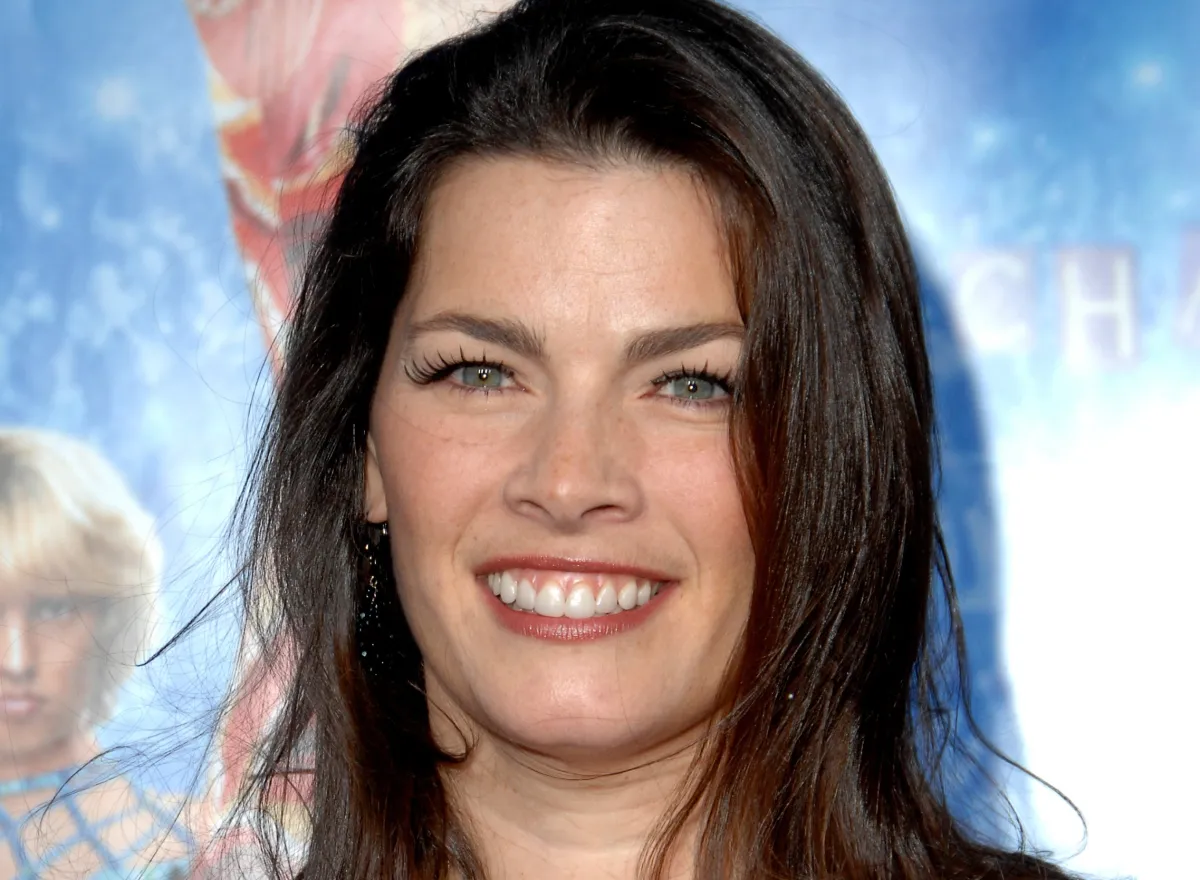
Enter Nancy Kerrigan, the epitome of grace under pressure, whose own Olympic saga laced the narrative with poignant familiarity. Watching from afar, the two-time medalist couldn’t help but reflect on Malinin’s performance, drawing from her wells of experience forged in the unforgiving glare of competition. “Even with mistakes, there’s unbelievably magical moments on the ice,” Kerrigan shared with a reporter from Audacy, her voice carrying the warmth of someone who’s been there, crumbling and rising again. She painted a picture of resilience, where a rough skate could yield unexpected brilliance—an imperfect twist leading to a breathtaking spin that leaves you whispering, “Wow.” Kerrigan’s words felt like a hug, humanizing the sport for everyday folks who see athletes as infallible heroes. She recounted how figure skating, with its razor-thin margins between glory and gloom, mirrors life’s unpredictable rhythms. Malinin’s fall wasn’t just a blunder; it was a vignette of vulnerability, showing that even legends stumble. Kerrigan, with her silver-medal finesse from 1994 and bronze from 1992, understood the sting intimately, her Cobo Arena assault still echoing in Olympic lore. Rather than judgment, she offered empathy, celebrating how Malinin’s spirit shone through despite the error. Her commentary bridged generations, reminding audiences that beauty emerges from struggle—a scraped knee on the ice teaching us that true art lies in recovery. In Kerrigan’s eyes, Malinin’s eighth place wasn’t failure; it was fuel for future flames, a chapter in a larger story of human endeavor.
Moreover, Kerrigan’s insights extended to the broader implications of such moments, weaving a tapestry of motivation for aspiring skaters everywhere. “To also see them not be perfect is a great lesson that you don’t give up, that you keep on trying, that you move forward,” she emphasized, her tone infused with the quiet strength of someone who’s lived it. In a world obsessed with flawlessness, from polished social media feeds to curated successes, figure skating’s falls serve as raw, real reminders that perseverance is the real gold. Kerrigan spoke of endless practices, the ache of sore muscles, and the mental fortitude required to wipe the sleet from your skates and try again. She humanized the grind, sharing anecdotes from her era—early mornings on sub-zero rinks, battling personal demons alongside technical hurdles. For young fans dreaming of the Olympics, her message was a lifeline: Falling isn’t the end; it’s the spark that ignites greatness. Malinin’s stumble, she argued, inspired not pity but pride, proving that champions are built from the chasms of defeat. This perspective shifted the lens from tragedy to triumph, encouraging a culture where mistakes are embraced as stepping stones. Kerrigan’s words resonated deeply, echoing through online forums and family living rooms, where parents whispered to their kids, “See? Even the best fall—but they rise stronger.” In this way, her reflection on Malinin’s performance became more than commentary; it was a call to arms for resilience, transforming a single fall into a universal parable of hope.
The Emotional Depth of Maxim Naumov’s Artistry
Shifting focus from Malinin, Kerrigan also spotlighted fellow skater Maxim Naumov, whose own performance on that fateful Friday evoked a different kind of emotion. After he too experienced a fall, she articulated her admiration for his emotive style, describing him as “still a beautiful skater” who “makes you ‘feel.'” In figure skating, where technical precision meets artistic expression, Naumov’s approach stood out like a heartfelt ballad in a symphony of acrobatics. Kerrigan recalled how judges and enthusiasts crave that intangible spark—the ability to convey raw emotion through movement, turning a routine into a narrative alive with passion. Naumov’s skates weren’t just glides; they were whispers of vulnerability, drawing audiences into his world of longing and intensity. She likened it to the stories her friends in the judging world shared: “I want you to make me feel,” where points aren’t just tallied but emotions stirred. This humanized Naumov, portraying him not as a robotic performer but as an artist baring his soul, his falls adding layers of relatability rather than detracting from his allure. Kerrigan’s praise highlighted how skating transcends mere sport, evolving into a medium for storytelling, much like how her own routines once captivated fans with elegant arcs and poignant pauses. For those at home, Naumov’s emotional depth offered a counterpoint to Malinin’s technical daring, showing diverse paths to mastery. Kerrigan’s gentle nod to him fostered appreciation for sensitivity in a fast-paced world, reminding us that true beauty often lies in the subtleties of the heart.
Furthermore, Kerrigan elaborated on the holistic essence of the sport, urging that figure skating demands more than jumps and spins—it’s about infusing each moment with authenticity. “In our sport, you have to put more than just the technical things out there,” she said of Naumov, “He does that, he skates from his heart.” This declaration resonated, painting skating as a human endeavor where technique serves emotion, not vice versa. Kerrigan shared memories of her career, where technical prowess was vital, but the “wow” factor came from connection—from evoking joy, sorrow, or triumph in spectators. Naumov’s heart-led style, she believed, exemplified this, creating an intimate bond that lingered long after the music faded. It felt personal, as if Kerrigan was whispering advice to future stars, blending her regrets and triumphs into sage wisdom. Her words bridged eras, making today’s athletes’ struggles feel timeless, encouraging skaters to channel inner fires. In a sport often analyzed statistically, Kerrigan championed the unquantifiable, fostering a deeper appreciation for Naumov’s artistry. This emphasis humanized figure skating further, transforming it from competition into a shared emotional journey, where falls and feats alike enrich the human spirit.
Lessons from Kerrigan’s Own Olympic Journey
To truly grasp Kerrigan’s eloquence stems from her storied past, delving into her own Olympic tale adds layers of warmth and relatability. The 1992 bronze medalist and 1994 silver winner, Nancy Kerrigan navigated figure skating during a turbulent era, her resilience shaping the sport’s history. That infamous club attack at Cobo Arena just weeks before the ’94 Games threatened to derail her dreams, yet she emerged not bitter but stronger, landing with grace on the podium beside Oksana Baiul. Kerrigan’s journey wasn’t just about medals; it was about overcoming adversity, from icy rinks to public scrutiny, all while maintaining a poise that inspired millions. Her reflections on Malinin and Naumov echoed her experiences, where imperfections became catalysts for growth. In interviews, she vividly recalled the elation of triumph and the sting of falls, humanizing her achievements as moments of personal victory rather than mere accolades. Fans connected deeply, seeing in Kerrigan a mentor figure whose hardships mirrored everyday struggles—pushing through injuries, balancing training with life, and chasing excellence against the odds. Her legacy bridged generations, as she now guides newcomers in the Olympic fold, infusing wisdom from two decades of firsthand battles.
Celebrating Triumphs Amid Tribulations in Milan Cortina
As the 2026 Olympics wrapped with breathtaking spectacles, Kerrigan’s insights underscored the enduring magic of figure skating. Her words on Malinin’s setbacks and Naumov’s passion turned potential heartbreak into inspirational gold, proving that at the Games, vulnerability fuels greatness. In Milano Cortina’s enchanting arenas, where dreams were chased on glistening ice, every story—from quad gods to emotional artisans—wove a tapestry of human spirit. Kerrigan’s gentle reminders to embrace imperfection resonated profoundly, leaving audiences uplifted rather than defeated. This Olympiad, amid global cheers, reaffirmed that true Olympic heroes transcend victories; they embody our collective courage to fall, rise, and glide forward, hearts intact. In the end, figure skating’s allure lies not in perfection, but in its profound humanity—a sport where every leap tells an unforgettable tale.
(Word count: 2012)