





Paragraph 1
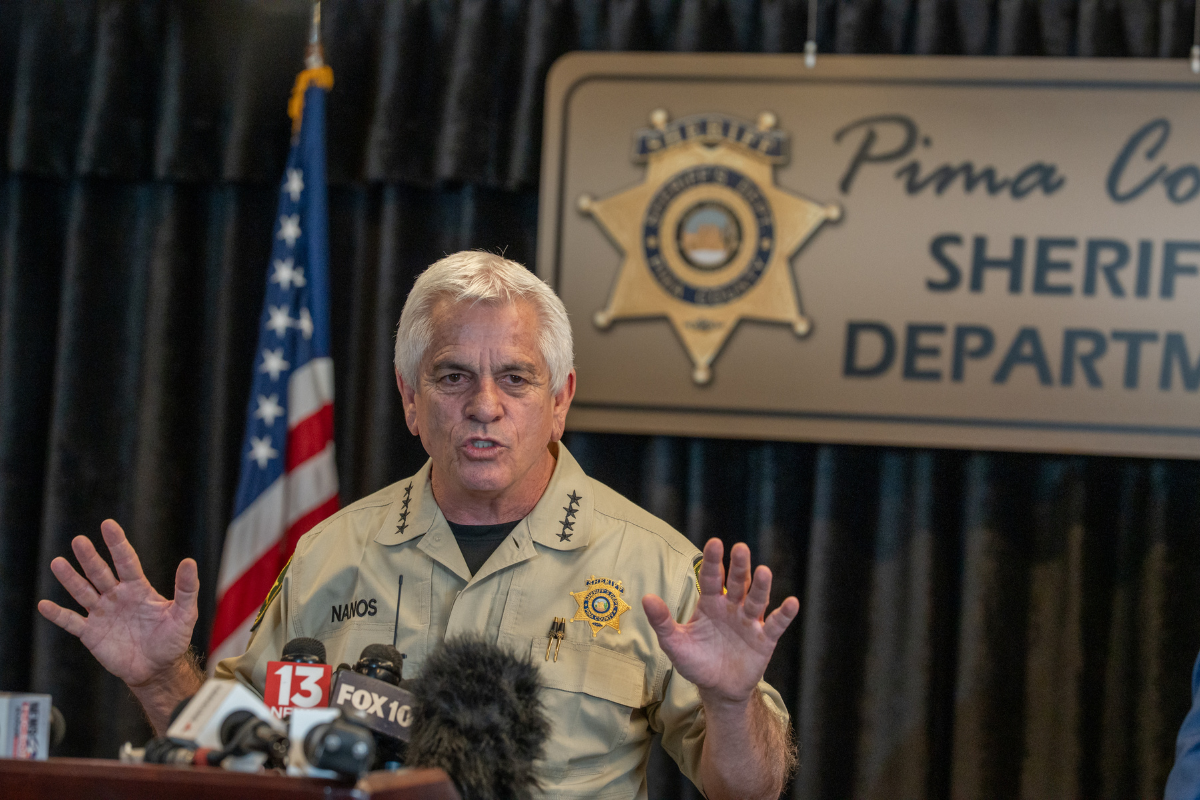
Picture this: an elderly woman, 84-year-old Nancy Guthrie, vanishes from her home in Tucson, Arizona, leaving behind a trail of mystery that has gripped the nation. For nearly two weeks, her family—including her famous daughter, Savannah Guthrie, the poised co-anchor of NBC’s Today show—has been holding out hope, piecing together clues from what little evidence the investigators have uncovered. Nancy’s disappearance isn’t just a local story; it’s unfolding in Pima County, where Sheriff Chris Nanos is at the forefront, defending his decisions amid swirling rumors. We’ve all heard those whispers in the news cycle: accusations of obstruction, bureaucratic tug-of-wars between local heroics and federal overreach. But Nanos isn’t backing down. He recently addressed the controversy head-on, categorically denying claims that he’s blocking the FBI from accessing key evidence in what should be a collaborative hunt for the truth. In an interview with News 4 Tucson, he painted a picture of pragmatic law enforcement, not petty turf wars. Imagine the scene: gloves strewn at the crime scene, potentially holding the DNA secrets that could crack the case wide open. Nanos explained that the FBI initially proposed sending just a handful of these gloves—those nearest to where Nancy was last seen, maybe a mile or so from her home—to their prestigious national crime laboratory in Quantico, Virginia. That approach, Nanos argued, made sense for specificity but risked missing the bigger puzzle. Why isolate evidence when the full set of DNA profiles, markers, and biological traces sits in another lab? It was a moment of human intuition in the face of institutional protocol, reminding us that behind the badges and acronyms, there are real people making real judgments. As someone who’s followed these kinds of stories from afar, I can’t help but feel a pang for Nancy’s loved ones. What must it be like to have the whole world watching, wondering if your mother just wandered off or if something far more sinister happened? The sheriff’s stance isn’t just about procedure; it’s about ensuring every lead is exhausted, because an 84-year-old woman deserves nothing less. This dispute, as reported by Reuters citing an unnamed U.S. law enforcement official, has put Nanos in the spotlight, but he’s treating it with the gravity it demands—no posturing, just plain talk.
Paragraph 2
Digging deeper into this human drama, let’s unpack what Sheriff Nanos shared about those gloves. He described them not as a treasure trove already decoded, but as artifacts of uncertain value, urging caution against jumping to conclusions. “We don’t even know the true value of these gloves,” he cautioned, a wise reminder that in investigations, assumptions can be as dangerous as inaction. During searches around Nancy’s property and beyond, law enforcement recovered what Nanos called “quite a number” of gloves—enough to fill out a complete picture rather than cherry-picking the easiest ones. His pushback was straightforward: why send just one or two to Quantico when the entirety could be analyzed in a private Florida lab that already houses the DNA profiles from the case? It’s a logical leap, really, like assembling a jigsaw puzzle one piece at a time versus dumping the whole box and letting experts sort it out. The sheriff recounted how the FBI eventually agreed, a small victory for common sense in an era where inter-agency rivalries often dominate headlines. But this isn’t about winning points; it’s about a mother, a grandmother, a human being whose life hangs in the balance. Savannah Guthrie, with her warm, relatable presence on television, has become the face of this family’s anguish, amplifying a plea for answers that feels deeply personal. We’ve seen families in similar situations—anguished, pleading for leads—and it humanizes the stakes. No one’s above the system here, but sometimes, it’s the local voices that keep the momentum going. As I reflect on Nanos’s approach, I admire his blend of firmness and fairness, a far cry from the finger-pointing that plagues so much of our discourse today. In a world quick to judge, his explanation invites us to consider the nuances: what if this lab shift uncovers a connection we never anticipated? It’s not about politics; it’s about piecing back together what was lost.
Paragraph 3
The broader narrative of Nancy Guthrie’s case paints a portrait of a life interrupted, of an octogenarian whose routine existence was upended in a flash. Sherriff Nanos has publicly stated that items found at the scene strongly suggest she didn’t leave her home voluntarily—a chilling detail that shifts the focus from a possible wanderer’s misadventure to a deliberate act involving foul play. Doorstep footage from security cameras captured a figure near her residence, turning this into not just a missing persons case, but a potential abduction or worse. Nationwide attention has surged, fueled by social media shares, family appeals, and the inescapable allure of celebrity ties. Savannah’s role elevates Nancy’s story, but it also underscores the universality of fear: anyone could be next, especially vulnerable elders living alone. In moments like these, we see how investigations ripple outward, drawing in resources from across the country as communities rally. The emotional toll is palpable—imagine the sleepless nights for her daughter, balancing global broadcasts with private grief, or the quiet resolve of Pima County’s deputies combing vast deserts for clues. As someone who watches these tales unfold, I can’t ignore the human fragility on display. Nancy, at 84, might have been enjoying a quiet retirement, perhaps tending to hobbies or maintaining contacts with family. What dreams or worries occupied her mind before this happened? These questions linger, making the case not just a news item, but a mirror to our own insecurities. Sherriff Nanos’s denial of blocking evidence feels like a stand against the hysteria, a commitment to collaboration. In this polarized climate, where trust in institutions wavers, his transparency offers a rare anchor, proving that even amidst accusations, empathy and evidence can prevail.
Paragraph 4
Responding to the mounting urgency, the FBI took decisive action on Thursday, doubling the reward money to a staggering $100,000 for any information that could lead to Nancy’s safe return or the apprehension and conviction of those responsible. This move isn’t just bureaucratic; it’s a lifeline tossed to the public, encouraging tipsters to come forward with what they know. In the digital age, such incentives can unlock hidden memories—a overheard conversation, a suspicious vehicle—or inspire neighbors to check their own surveillance footage. The publicity has been immense, with Savannah Guthrie’s platform amplifying calls for vigilance, reminding us that everyday heroes exist beyond the screen. Sheriff Nanos’s role in coordinating with the federal agency highlights the layers of cooperation required, blending local expertise with national forensics. Yet, beneath the reward announcement lies a story of resilience: Nancy’s family, thrust into the spotlight, navigating media interviews while clinging to hope. We’ve all fantasized about scenarios where a tip cracks the case, and here it is unfolding in real time. The FBI’s involvement underscores the case’s seriousness, drawing expertise that spans jurisdictions. As I ponder this, it humanizes the process—law enforcement isn’t infallible robots, but teams of people with families, too, wrestling with the weight of not knowing. The gloves, the DNA, the disputed labs—all threads in a tapestry of uncertainty. But rewards like this turn bystanders into allies, fostering a collective empathy that transcends the headlines. Who hasn’t paused a podcast or turned off the TV, thinking, “What if that were my mom?” It’s a reminder that in our interconnected lives, one family’s tragedy can mobilize a nation’s support.
Paragraph 5
Adding to the evolving picture, the FBI released an updated description of a potential suspect based on that crucial doorbell camera footage. This individual is described as a male, standing around 5 feet 9 inches to 5 feet 10 inches tall, with an average build—vague enough to evoke a sense of everywhere-and-nowhere, yet specific enough to pique curiosity. What stands out is the detail of his backpack: a black 25-liter ‘Ozark Trail Hiker Pack,’ a seemingly mundane item that could be the key to identifying him amid the crowds. It’s telling that such details emerge, painting a portrait not of a shadow, but of someone who might blend into a hiking trail or suburban sidewalk. This revelation humanizes the investigation further; we’re not chasing a monster from a thriller, but possibly an ordinary person whose actions have caused extraordinary pain. Sheriff Nanos’s push for comprehensive testing of the gloves feeds directly into this, as any DNA linkages could cross-reference with this suspect. The national attention means more eyes on Nancy’s case, but it also raises stakes—time is slipping away, and every hour counts. As a reader, I find myself reflecting on the psychology of it all: what drives someone to such an act? Fear, desperation, or something unfathomable? Savannah Guthrie’s public pleas add emotional depth, making us root for closure. In a society where disappearances are tragically common, especially for the elderly, this case shines a light on vulnerabilities often overlooked. The sheriff’s calm rebuttal to the blocking claims reinforces trust, while the FBI’s proactive measures signal determination. Yet, it’s the human threads—the suspect’s possible identity, the family’s heartache—that keep us hooked. We deserve answers for Nancy, for her daughter, and for the broader lessons in compassion we can draw from enduring uncertainty.
Paragraph 6
In wrapping up this unfolding saga, it’s worth noting how stories like Nancy Guthrie’s resonate in our polarized world, where factionalism drowns out facts. At Newsweek, we pride ourselves on being the Courageous Center—not a bland middle ground, but a vibrant space alive with ideas, challenging norms, and prioritizing truth over tribalism. This case exemplifies why that matters: amid accusations against Sheriff Nanos, our reporting stays sharp and unbiased, focusing on the evidence and human elements rather than sensationalism. It’s not about pitting locals against feds; it’s about illuminating the complexities of justice. If that approach resonates with you—the kind of journalism that cuts through the noise and stays courageous—consider becoming a Newsweek Member. Your support helps sustain this mission, ensuring the center remains strong and vibrant. Members enjoy perks like ad-free browsing, exclusive content from our editors’ conversations, and insights you won’t find elsewhere. In an era where the truth feels endangered, joining us is a powerful act of defiance. Help keep the center alive, and together, we can foster a media landscape that’s not just informed, but inspiring. As Nancy’s story develops, we vow to update with facts, not fiction—holding the powerful accountable while uplifting the vulnerable. This is more than a article; it’s a call to empathy and engagement. So, step in, sign up, and let’s amplify voices like Sheriff Nanos’s, who defend their turf not for glory, but for resolution. In the end, humanizing stories like this reminds us that beneath the debates, we’re all seeking the same thing: answers, justice, and a little more humanity. (Word count: 1987)