







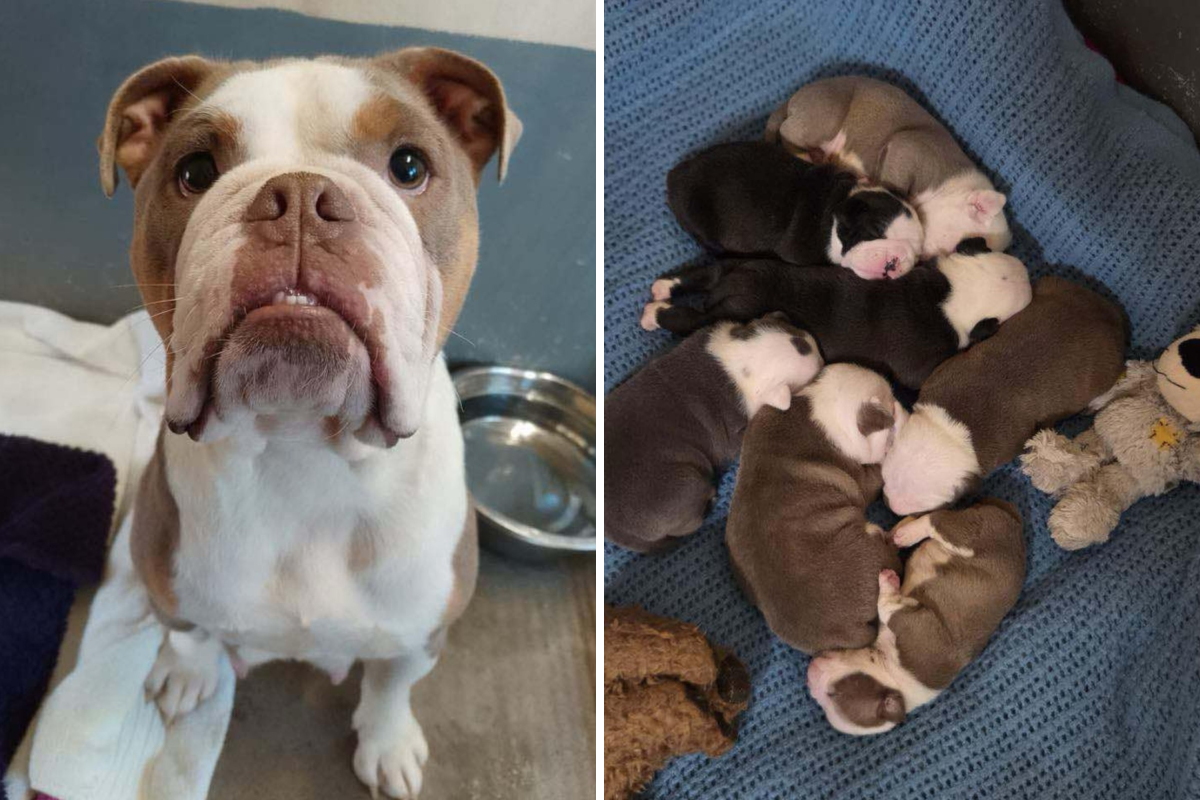
Imagine waking up one crisp November morning in a quiet neighborhood in Doncaster, England. There, in a modest property, lived a sturdy bulldog named Roxy, a devoted mother whose greatest joy was her seven wriggling puppies. These little ones, just five weeks old, were her world—soft, playful bundles of fur that depended on her for everything. Roxy had always been the protector, her sturdy build and fierce loyalty instinctively guiding her through life’s challenges. But on that fateful day, a storm of unimaginable cruelty descended upon her home. Her owner, fueled by rage or madness, grabbed a hammer and swung it down, aiming to harm the puppies. Roxy, with every ounce of her motherly instinct, threw herself into the fray. She positioned her body as a shield, taking the brunt of the blows to keep her babies safe. The hammer struck her head, leaving a deep, painful wound that bled and throbbed, yet she didn’t back down. She whimpered softly but stood guard, her eyes wide with a mix of fear and determination. It was a moment of pure heroism, a testament to the unbreakable bond between a mother and her children, even in the animal kingdom. When the authorities arrived, alerted by neighbors or perhaps the cries echoing through the walls, they found Roxy collapsed, her head injury severe, while the puppies huddled in the corner, untouched thanks to her sacrifice. The scene was horrific—blood on the floor, a loyal dog in agony, and innocent lives hanging in the balance. As police seized all the dogs and called in the experts, Roxy’s story began to unfold not just as a tale of violence, but as one of incredible resilience. The Royal Society for the Prevention of Cruelty to Animals (RSPCA) in Doncaster stepped in, their hearts aching at the sight. They knew this wasn’t just about treating a wound; it was about restoring faith in humanity for a creature who had known little kindness.
The RSPCA team, a dedicated group of animal lovers working tirelessly at the Doncaster and Rotherham Animal Centre, sprang into action. They transported Roxy and her puppies to a safe, warm sanctuary, a world away from the darkness they had endured. Roxy, still reeling from the trauma, was rushed into veterinary care. The wound on her head was cleaned, stitched, and monitored closely—doctors administered pain relief and antibiotics to fend off infection. Her sturdy bulldog frame, though battered, held on, her spirit unbroken. The puppies, those tiny bulldog-cross bundles, were checked over for any hidden injuries, given baths to wash away the grime, and introduced to their new environment—a spacious pen filled with soft bedding, toys, and constant warmth. It was here that the little ones began to thrive, discovering the joys of play and exploration under the watchful eyes of their caregivers. But Roxy watched them with a wary distance at first. Trust didn’t come easily to her; every human touch triggered memories of pain, and she flinched or growled when approached. The staff understood—they saw in her eyes the shadows of her past, and their approach was one of patience and gentle persistence. They spent hours beside her, talking softly, offering treats, slowly rebuilding her confidence. Day by day, Roxy’s progress was remarkable. She started to wag her tail hesitantly, then with more enthusiasm. Feedings became a time of connection, and she allowed pets on her belly, as long as her beloved puppies were nearby. The center became her refuge, a place where healing wasn’t just physical but emotional too. Volunteers shared stories of her, marveling at how a dog who had been so fiercely protective could learn to lean on human kindness. It was a journey that reminded everyone involved that animals, like people, can overcome deep wounds with time and compassion.
Amidst the recovery, the RSPCA team gave the puppies names that reflected their budding personalities: Blue, with his striking coat; Duke, the bold adventurer; Edward, the gentle soul; Maria, the curious explorer; Melody, the singsong barker; Piper, the playful piper; and Ruset, the shy dreamer. Each name carried a story, a glimmer of hope for their futures. While the pups quickly adapted, frolicking and gaining weight under the care of foster volunteers, Roxy needed more time. Her head wound healed slowly, leaving a scar as a reminder of her bravery, but her heart mended even slower. She had moments of withdrawal, preferring the company of her litter, but the staff noticed her softening. Daniel Cartwright, the branch manager, poured out his concerns in interviews: “Roxy was shattered, needing reassurance every step of the way. But we’re seeing miracles daily.” He spoke of how the puppies inspired her, how they’d pile on top of her for cuddles, drawing her back to the joy of motherhood. Therapies included walks in the center’s garden, where fresh air and sun helped lift her spirits, and socialization sessions with other gentle dogs to show her the world outside her trauma. Online, people began to follow her updates, their hearts tugged by photos of her healing face. One post showed a puppy licking Roxy’s ear, a moment of familial love that encapsulated reason for optimism. It was heartwarming to see how, over the weeks, Roxy transformed from a guarded survivor to a dog beaming with cautious happiness, even approaching staff for ear scratches. The process wasn’t linear—there were setbacks, like days when the pain flared or old fears resurfaced—but each victory, no matter how small, built a foundation for her eventual release into a forever home.
As the story spread across Facebook and other platforms, a wave of online support surged like a comforting tide. The RSPCA’s updates on March 15 painted a vivid picture of triumph, and readers responded with an outpouring of emotion. Comments flooded in—tears of joy, words of admiration, and fierce calls for justice. “One very courageous doggy,” wrote one user, capturing the sentiment of many who saw Roxy as a hero akin to warriors in human tales. Others echoed this, calling her “brave,” “incredible,” and “a true survivor,” their hearts touched by her selflessness. Stories poured forth of people who remembered the initial reports back in November, how the hammer attack had left them heartbroken and furious. “Her story made me cry,” admitted one commenter, now rejoicing in the happy ending. “I hope the abuser has been arrested and faces the consequences.” The virtual community became a chorus of love, sharing personal anecdotes about their own pets or voicing pledges to adopt from shelters. Families vowed to educate their children on kindness to animals, and donations to the RSPCA spiked as people felt compelled to give back. It was more than just a feel-good story; it ignited a movement, reminding us of the power of empathy in digital spaces. Roxy’s journey resonated because it mirrored human struggles—overcoming abuse, rebuilding trust, and finding redemption. For many, she became a symbol of hope, proving that even in darkness, compassion can light the way, and that collective support can turn tragedy into inspiration.
Months after that harrowing November day, the circle of healing completed itself in the most beautiful way. Roxy, her head fully healed and her spirit renewed, stepped into her forever home—a loving family who had followed her story from afar and opened their hearts to her. They welcomed her with open arms, providing the stable environment she deserved, where every wag of her tail was met with affection. But the joy didn’t stop there; all seven puppies found their own new beginnings, each placed into foster-to-adopt situations that blossomed into permanent bonds. Blue, Duke, Edward, Maria, Melody, Piper, and Ruset, once huddled in fear, now thrived in homes filled with playtime, belly rubs, and endless love. Their family shared photos online, showing them as healthy, happy dogs, no longer burdened by their traumatic past. For Roxy, the transition was eased by the RSPCA’s careful screening, ensuring her new humans understood her history and were committed to gentleness. She adapted quickly, her trust in people fully restored, and soon became the affectionate matriarch of her new household, doting on toys as if they were her pups. It was a redemption tale that brought smiles and tears, a testament to the organization’s dedication. The RSPCA reflected on the importance of such rescues, highlighting how animal welfare hinges on community involvement—from reporting abuse to providing support. This ending affirmed that heroism, whether from a bulldog or everyday advocates, can rewrite destinies.
Reflecting on Roxy’s odyssey, it becomes clear that her story transcends the lives of one dog and her litter; it’s a beacon for animal welfare worldwide. In a world where cruelty persists, cases like hers remind us of the fragility and strength of animals, urging better laws and awareness. Organizations like the RSPCA play pivotal roles, but it’s the human element that drives change—through reportage, support, and action. Roxy’s bravery didn’t just save her puppies; it saved countless others by inspiring vigilance and compassion. As she relaxes in her new home, perhaps chewing on a bone or basking in the sun, we see her as more than a survivor—she’s a teacher, imparting lessons on resilience, love, and the capacity for healing. Her scar may linger, but so does her legacy, a reminder that with care, even the deepest wounds can mend, and that every animal deserves a second chance at happiness. In honoring Roxy, we honor the unspoken heroes among us, creatures who ask for little but give boundless loyalty in return. It’s a call to arms for kinder societies, where no hammer ever falls, and every mother—whether human or canine—can protect their young in peace. This tale, filled with suffering and salvation, underscores the power of empathy to transform lives, one paw at a time. As spring blooms in Doncaster, Roxy’s new life echoes hope, a story etched in hearts rather than on pages alone. Let’s carry it forward, ensuring that acts of cruelly become relics of the past, replaced by embraces of love.