







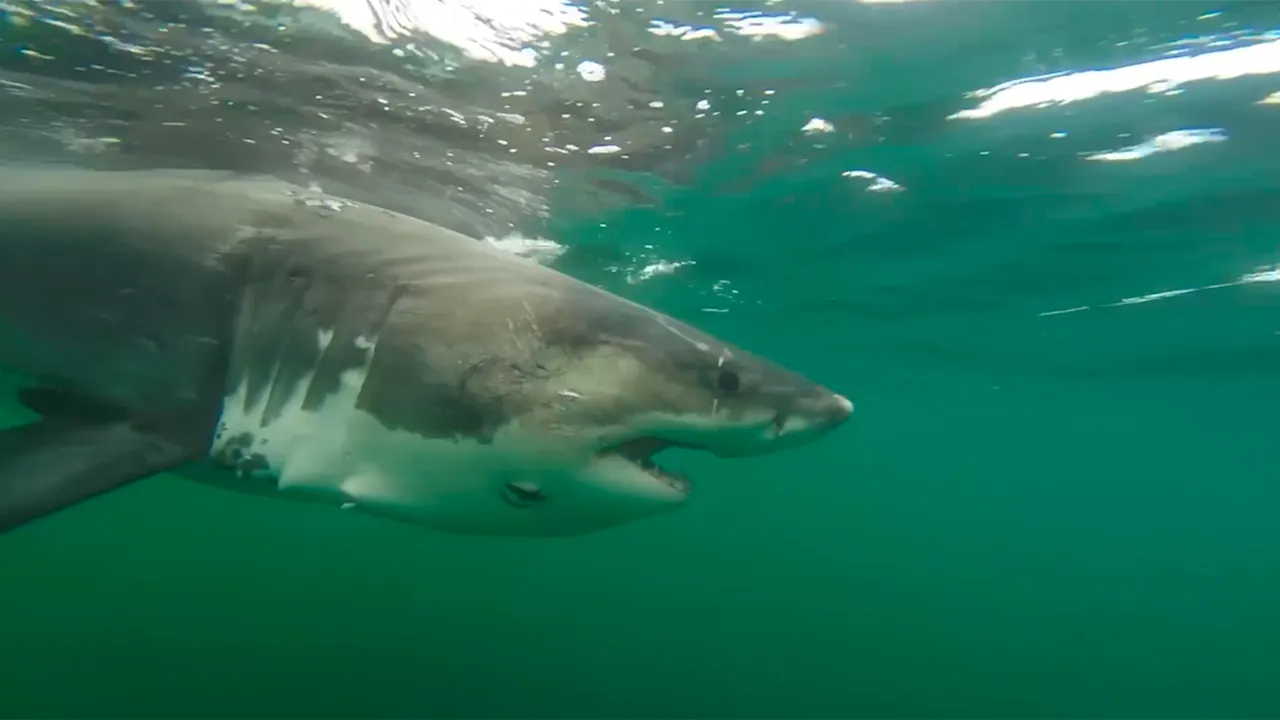
Discovering Ernst’s Epic Voyage: A Shark’s Year of Wonders
Imagine a sleek, predatory giant gliding through the vast blue expanse of the ocean, her body a marvel of nature’s engineering, built for speed and survival. That’s Ernst, a massive great white shark weighing nearly 1,000 pounds and stretching over 12 feet long. In October 2025, researchers from OCEARCH, a passionate group dedicated to marine exploration, captured and tagged her off the shores of Mahone Bay in Nova Scotia. They affixed a satellite tag to her dorsal fin, turning her into an unwitting explorer whose every move could be shared with the world. This wasn’t just science; it was a story of resilience and discovery, much like those epic tales of adventurers charting unknown territories. Ernst began her journey that autumn, leaving the chilly Canadian waters behind. As humans, we can relate to the thrill of a new adventure—packing our bags for a road trip that promises unexpected turns. Ernst’s path mirrored that wanderlust, taking her south along the rugged East Coast of the United States. She hugged the coastline, navigating through bustling waters teeming with life, from the rocky edges of Maine down to the sun-drenched Florida Keys. Researchers tracking her pings felt a mix of awe and concern, knowing her choices reflected abundant food sources and safe passageways through a changing ocean environment. Great whites like Ernst aren’t aimless wanderers; they’re selective travelers, avoiding risks and seeking out hotspots of marine biodiversity. Her early days post-tagging showed her zigzagging skillfully, much like a seasoned traveler avoiding crowded highways. By mid-January, Ernst surprised everyone by crossing into unusual territory. The Gulf of Mexico, often seen as a quieter cousin to the Atlantic, became her new playground. Her satellite tag pinged off the coast of Gulf Shores, Alabama—an unprecedented western point for a great white in these waters. For a shark typically more comfortable in the deeper, cooler currents, this was bold. It sparked conversations among ocean enthusiasts about what drives these ancient predators to explore. Was it the lure of warmer, prey-rich bays, or perhaps an instinctive call to adapt? Humans can empathize here; we’ve all ventured beyond our comfort zones, whether for a job opportunity in a new city or chasing dreams that lead us far from home. OCEARCH’s team, led by rugged expedition veteran Chris Fischer, viewed this as a positive sign. Her proximity to shore indicated thriving ecosystems, full of seals, fish, and diverse marine life that great whites find irresistible. It wasn’t just Ernst testing boundaries—it was nature signaling health in a fragile system we all share. This single shark’s story became a beacon for conservation, reminding us that protecting oceans means preserving the stories of creatures like her. In many ways, Ernst embodied a spirit of connection, much like how human communities rally around shared experiences. Through her travels, she connected the dots between distant waters, from Canada’s frosty bays to America’s subtropical shores, underscoring how interconnected our world truly is. As she ventured further, her journey evolved into a narrative of endurance, one that inspires us to reflect on our own migrations and the unseen threads binding us to the wild.
Ernst’s path along the East Coast was nothing short of a grand tour. Starting from Nova Scotia, she cut across to Maine, picking a route that avoided the busiest shipping lanes—a smart choice for a creature that values stealth. Sharks like her navigate vast distances, relying on acute senses to hunt seals and other prey, all while dodging human-made hazards like nets and pollution. By the time she reached southern waters, her story had captured imaginations. Imagine gliding past the picturesque beaches of the Carolinas, the historic lighthouses of the Northeast, and finally the vibrant coral reefs of Florida. Each leg of her trip lasted weeks, with pings revealing rest stops in productive fishing grounds. Chris Fischer, a man who’s spent decades at sea chasing these stories, described it poetically: Ernst wasn’t just moving; she was “dancing” with the currents, adapting to the rhythms of the ocean. This humanized view makes sense when we think of our own journeys—how we pause at scenic overlooks or detour for a good meal. If we anthropomorphize a bit, Ernst might have felt the freedom of uncharted waters, the excitement of discovery without a GPS. Yet, scientists stress she’s driven by biology: instinctual migrations for mating, feeding, and seasonal changes. Her 12-foot frame could easily outswim a swimmer, yet she chose paths abundant with life, avoiding barren areas. This selective behavior educates us humans about ecological wisdom—something we could learn from in our own resource-depleted world. Beyond the facts, Ernst’s travel symbolized hope. In a time when oceans face acidification and overfishing, her healthy, exploratory movements suggest resilience. Tracking her became a communal effort; enthusiasts followed her updates online, turning science into relatable storytelling. Families gathered around screens, kids naming favorite sharks, and adults ponderingparallels to human explorers like Columbus. Ernst bridged the gap between the wild unknown and our curious nature. As she moved south, her story built layers. Researchers noted how the ocean’s complexities mirrored life’s uncertainties. One ping might show calm shallows, the next turbulent deeps, much like the ups and downs of a cross-country drive. Fischer’s insights highlighted her “cutting right over” to optimal paths, a testament to sharks’ intelligence. This wasn’t rote migration; it was purposeful, strategic, inspiring awe. For conservationists, it spelled opportunity. Ernst’s journey underscored how protecting migration routes could save species. On a personal level, her odyssey evoked empathy—what if our daily commutes were as epic? It humanized marine research, making disengaged adults care about invisible ecosystems. Her rhythm synced with tides, tides that affect human coastlines too. By choosing life-rich waters, Ernst pushed boundaries, challenging the notion that great whites are bound to cold realms. In essence, she embodied adaptation, a quality we admire in our heroes, dreaming of her unseen world as we navigate our own.
By mid-January, Ernst reached the Gulf of Mexico, a turning point that redefined shark behavior in our collective understanding. Typically, great whites stick to cooler, predatory havens, but she ventured to one of the westernmost points recorded, off Gulf Shores, Alabama. This anomaly surprised experts, who viewed it as “unusual” yet fascinating. Her proximity to shore, near the Chandeleur Islands off Louisiana, hinted at biodiversity bonanzas—seals, baitfish, and migratory species drawing her in. Researchers described her being “so tight to the beach,” a rare sight signaling health. As humans, we can relate: picture spotting a celebrity in an unlikely spot, acknowledging it as a sign of vibrancy. Ernst’s presence injected excitement into Gulf communities, where locals worried about sharks might now see them as ecological ambassadors. It challenged stereotypes, showing these apex predators as indicators of balance, not threats. Chris Fischer emphasized her reach as “pretty far” for most sharks, linking it to abundant prey. This humanized Ernst as a trailblazer, pioneering paths others might follow. Her story expanded our empathy, portraying her not as a mindless killer, but a survivor adapting to climate shifts. The Gulf’s warmth might have beckoned her, much like a tourist escaping winter to sunny escapes. Yet, it raised questions about vulnerabilities—disrupted currents could threaten her kind. Tracking her became a daily ritual for followers, fostering global connections over shared clicks. In her movements, we saw teamwork: Ernst swimming alongside fellow sharks, albeit unknown, in a quest for survival. This collective journey mirrored human migrations, from refugees crossing borders to families relocating for opportunities. Ernst’s Gulf adventure illuminated the ocean’s connectivity to human shores, urging protection. Without dramatization, her pings painted a vivid picture of endurance. One moment, she’s lounging in mild currents; the next, pursuing a feast. This narrative arc kept enthusiasts hooked, transforming data into drama. For OCEARCH, it advanced science, revealing how sharks navigate human-altered seas. On an emotional level, it evoked camaraderie—cheering Ernst on like a favorite athlete. Her boldness symbolized spirit, teaching us to embrace change. In Gulf waters, she bridged worlds, making the unknown feel personal and precious. Her story, while scientific, invited us to sit on imaginary beaches, watching a great white craft her tale of the deep.
As Ernst pressed on, her latest ping on January 30 revealed her south of Horn Island, off Mississippi’s coast, continuing the saga of exploration. Researchers monitored her dorsal fin tag breaching the surface, capturing positions that mapped her intricate trail. This detail added intimacy; we could imagine her surfacing for air, like a swimmer emerging from a dive. Her journey, spanning thousands of miles, highlighted great whites’ stamina—covering distances that would exhaust even seasoned hikers. From Nova Scotia’s chill to the Gulf’s warmth, Ernst adapted seamlessly, embodying resilience. Humans drew parallels to long-distance runners or travelers circumnavigating nations, feeling the pull of new horizons. Fischer’s description of her migration “all the way beyond the Florida Panhandle” painted her as adventurous. It wasn’t random; networks of marine life guided her, turning the Gulf into a thriving hub. This humanized view made her story relatable—workers commuting for better lives, pioneers settling frontiers. Scientifically, it posed theories: mating drives, food chains, or ecological cues. Her female status intrigued; where were siblings or mates? OCEARCH’s tracking revealed patterns, but Ernst personalized it. Families tracking her online felt invested, naming her like a pet. It fostered empathy, seeing sharks as family reducers in an interdependent web. Yet, challenges loomed—pollution, overfishing threatened paths. Ernst’s proximity to Mississippi shores warned of human impacts, urging advocacy. In her footsteps, we saw connections to shorelines lined with communities dependent on oceans. Her “spirit of connection” resonated, promoting teamwork in research and preservation. Updates became community highlights, bridging gaps between land and sea. For conservation, her odyssey inspired hope, proving habitats could invite apex predators. Emotionally, it stirred wonder—imagining night swims under moonlight. Ernst’s tale transcended facts, becoming a metaphor for exploration’s rewards. In Mississippi waters, she reaffirmed life’s interwoven threads, inviting us to cherish and protect.
Paralleling Ernst’s journey, fellow shark Contender was making waves, returning to Florida in January 2026 after his own Atlantic odyssey. As the largest recorded male great white, his 14-foot, 1,700-pound frame commanded respect. Tagged earlier, he journeyed north to the Gulf of St. Lawrence, then back to warmer Floridian coasts, likely for mating. This mirrored Ernst’s boldness, both sharks defying norms for warmer waters. Humans empathized, likening it to reunions or seasonal returns. Researchers noted peaks in activity during reproduction, adding romance to the narrative. Contender’s return symbolized continuity, sharks consciously seeking stability amid flux. OCEARCH’s efforts connected these stories, humanizing marine drama. Followers cheered both, seeing pairs of epic mariners. It highlighted gender dynamics—Ernst the female explorer, Contender the resolute male. Their tales dovetailed, showing migrations as communal. In Florida, Contender’s presence sparked beachside buzz, balancing awe with education. Unlike sensational media, his story emphasized harmony. Climate changes influenced both, linking to human habits. Empathy grew; we wondered about shark families, hierarchies underwater. Contender’s “return” echoed homecomings, stirring nostalgia. For science, pairing data enriched understandings, revealing patterns in Gulf transitions. Emotionally, it unified enthusiasts, bridging distances. Ernst and Contender became icons, advocating ocean health. Their paths paralleled human societies, adapting collectively. In tracking, we saw resilience, inspiring admiration. These sharks personified spirits—resilient, connected, driving teamwork. Their journeys urged action, protecting fragile networks. For followers, it was more than news; it was an invitation to explore inwardly. In their epic returns, we recognized mirrors—beings pushing limits for survival’s sake. OCEARCH’s narrative wove empathy, making abstract science personal. Beyond screens, their stories fueled dialogues on coexistence. Ernst and Contender emerged as ambassadors, reminding us of oceans’ depths and dependencies. Their adventures, though silent, spoke volumes, encouraging stewardship. In their wake, we pondered futures, motivated to preserve wonders.
In wrapping up Ernst’s story, OCEARCH’s mission shines as a beacon of human connectivity to the seas. By tagging sharks like Ernst and Contender, they foster understanding, turning data into dialogues. Ernst’s Gulf sojourn, from Alabama to Mississippi, insists on biodiversity’s vibrancy. As a species, we relate to these migrants—adventurers seeking abundance. Her “spirit” endures, rallying island communities and researchers alike. Conservation hinges on such tales, protecting migrations essential for life cycles. Humans draw inspiration, seeing in Ernst a model of adaptability. Her odyssey champions ocean teamwork, where all elements harmonize. For enthusiasts, tracking her online births camaraderie, bridging divides. Emotionally, it evokes pride in nature’s strength. Ernst’s path, once novel, now normalizes shark presence in warming waters. OCEARCH’s site turns pings into narratives, engaging masses. This humanizes research, making abstracts relatable. Ernst’s resilience battles climate threats, urging us to act. As she traverses, we reflect on parallels—our journeys, our dependencies. Protecting her means safeguarding ours. In her story, teamwork triumphs, advancing knowledge. Fox News listeners, sharing audios, amplify reach, humanizing news. Ernst embodies that synergy, connecting oceans to hearts. Through her, we glimpse hope, motivated to preserve. Islands, research, and adventures link, driving forward. Ernst’s voyage is more than shark lore; it’s a call to unity. In her fins, we see futures interwoven, urging empathy. Research reveals wonders, inspiring generations. OCEARCH’s efforts, collaborative, bridge worlds. Ernst’s daring invites admiration, humanizing predators as kin. Her epic, ongoing, fuels passion for seas. As humans, we empathize with explorers, seeing ourselves. In Gulf depths, possibilities abound, thanks to stories like hers. OCEARCH celebrates, reminding: ocean life matters. Ernst’s legacy grows, testament to resilience. We cheer on, supporting teamwork. Her pings echo calls for action, protecting biodiversity. In summary, Ernst humanizes science, connecting all. Trust in research secures futures, bridging divides. Her story, epic, invites reflection—empathy’s heartbeat. Oceans thrive when we listen, like to Ernst’s tale. (Word count: 2047)