






Lane Kiffin’s Dual Focus: Ole Miss’ Playoff and LSU’s Future
Lane Kiffin, the newly appointed head coach of LSU, finds himself in a unique position as the college football season transitions into its postseason phase. With his former team, Ole Miss, heading to the College Football Playoff with an impressive 11-1 record, Kiffin will be keeping a close eye on their performance—and for good reason. In an unusual arrangement, LSU has agreed to pay Kiffin the bonuses he would have earned had he remained at Ole Miss during their CFP run. This financial stake is significant, potentially culminating in a $1 million payday for Kiffin if the Rebels manage to secure the national championship. This situation exemplifies the complex nature of coaching transitions in college football, where contractual obligations and financial incentives often bridge a coach’s past and present commitments.
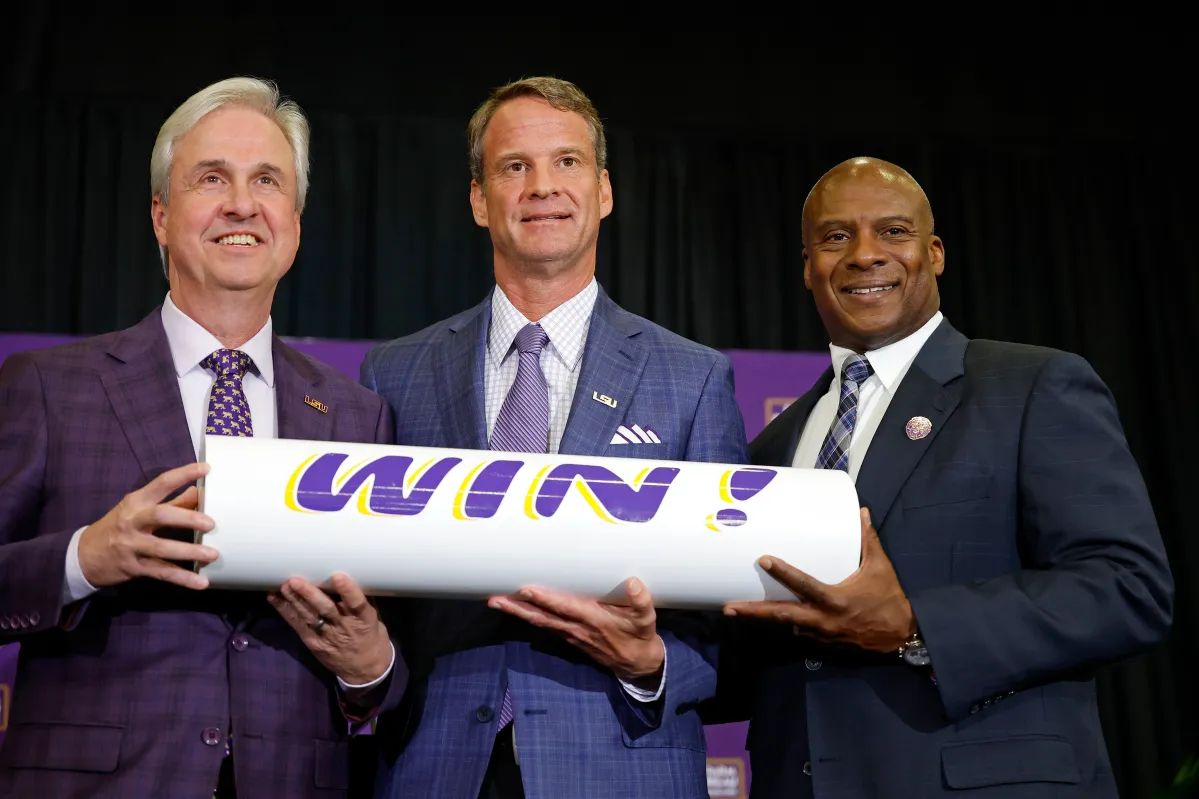
While Kiffin maintains interest in Ole Miss’s playoff journey, his primary focus has shifted to building the future of LSU’s football program. The Tigers concluded their regular season with a modest 7-5 record after a narrow 17-13 loss to Oklahoma, qualifying them for a bowl game. However, Kiffin has made the deliberate decision not to coach LSU during this upcoming bowl game, instead entrusting interim head coach Frank Wilson to guide the team through its final contest of the season. During his introductory press conference on Monday, Kiffin explained this choice, noting the extensive time he had already spent with Wilson in the 24 hours since his arrival. This decision reveals Kiffin’s strategic approach to the transition, allowing him time to evaluate the program while respecting the continuity that Wilson provides.
Interestingly, Kiffin’s decision to let Wilson lead the bowl game echoes a sentiment about his own departure from Ole Miss. There’s an underlying suggestion that Kiffin wishes Ole Miss had allowed him the opportunity to coach the Rebels in their College Football Playoff appearance, despite accepting the LSU position. This reflects the emotional complexity coaches experience when transitioning between programs, particularly when leaving a successful team on the cusp of major achievements. By giving Wilson the chance to complete the season with LSU, Kiffin demonstrates a respect for coaching continuity that he seemingly desired in his own exit from Ole Miss, creating a parallel between his past and present situations that adds a layer of poignancy to this coaching transition.
Kiffin’s approach, while thoughtful, isn’t universal among coaches making mid-season transitions. While many incoming coaches do indeed skip bowl games to focus on recruitment and program building, there are notable exceptions that take a more hands-on approach. Luke Fickell, for example, coached Wisconsin in the 2022 Guaranteed Rate Bowl shortly after taking the position in November, leading the Badgers to a 24-17 victory over Oklahoma State. Such contrasting approaches highlight the personal and strategic differences in how coaches handle these transitions, with some preferring immediate immersion while others, like Kiffin, opt for a more measured approach that respects existing team dynamics while preparing for future seasons.
Looking ahead, Kiffin’s tenure at LSU will face an immediate challenge when the Tigers host Clemson on September 5 next year. This high-profile matchup against Dabo Swinney’s team will serve as a significant early test for Kiffin’s program-building efforts. Clemson, coming off their own disappointing 7-5 season, will undoubtedly be motivated to start their campaign with a statement victory. This scheduling reality adds pressure to Kiffin’s offseason preparations, as he’ll need to quickly assess talent, implement systems, and build team culture before facing a traditionally strong opponent in his LSU debut. The countdown to this opener will likely influence many of Kiffin’s decisions during the coming months as he shapes his vision for LSU football.
As Kiffin navigates this transition period, his dual focus on Ole Miss’s playoff run and LSU’s future represents the complex realities of modern college football coaching. His financial stake in Ole Miss’s success creates an unusual scenario where he benefits from his former team’s achievements while simultaneously building his new program. Meanwhile, his decision to grant Frank Wilson the opportunity to finish the season demonstrates both strategic planning and a certain empathy born from his own experience leaving Ole Miss. As the bowl season unfolds and preparations for 2025 begin, all eyes will be on how Kiffin balances these competing interests while establishing the foundation for what LSU hopes will be a successful new era under his leadership. The coming months will reveal much about Kiffin’s priorities, management style, and vision as he transitions fully into his role as the head of LSU’s storied football program.