



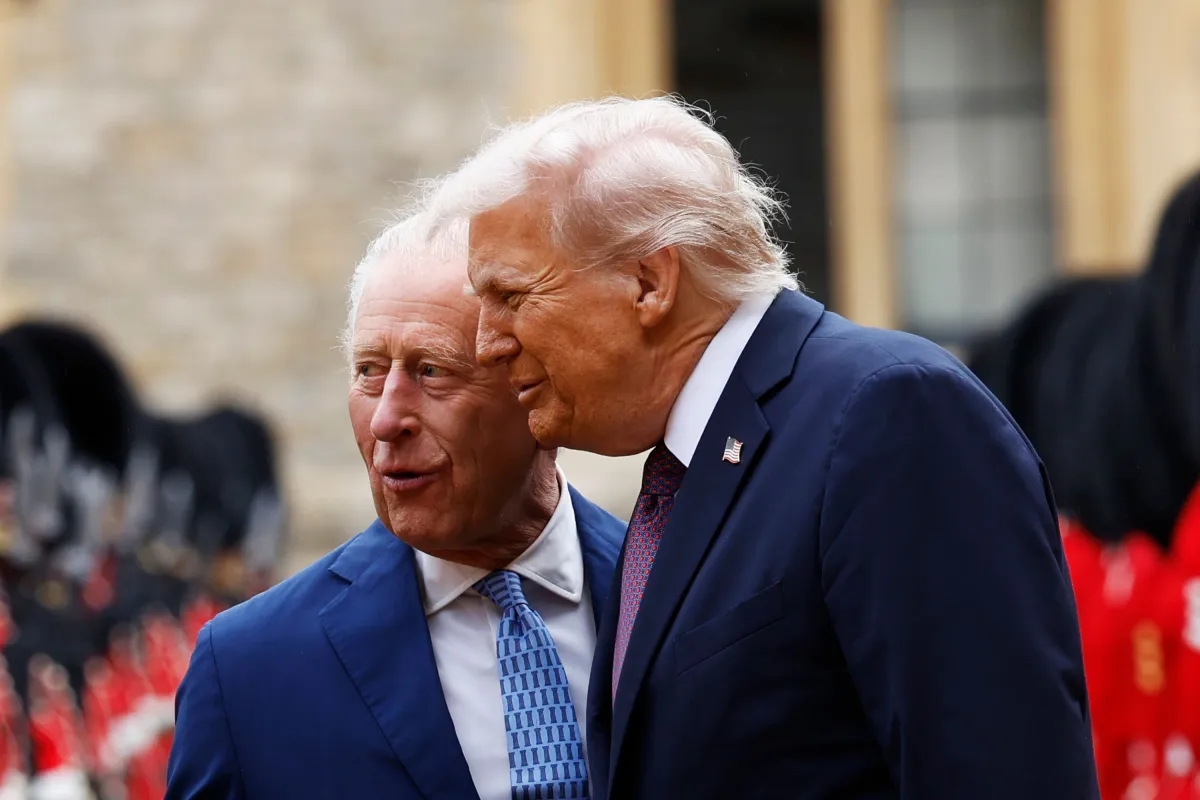
King Charles III is gearing up for what could be a pivotal state visit to the United States in April, even though it’s shrouded in controversy and hasn’t been publicly announced yet. The royal household at Buckingham Palace has been laying the groundwork, but the trip has sparked widespread debate in the U.K. due to President Donald Trump’s recent mocking remarks about British Prime Minister Keir Starmer, especially amid the ongoing turmoil in Iran. It’s a classic transatlantic spat that highlights the fragile state of diplomatic relations between the two nations. On one hand, there’s enthusiasm from the U.S. side, as Trump himself is keen to host the king to celebrate the 250th anniversary of the Declaration of Independence, a momentous occasion that symbolizes the shared history between Britain and America. Yet, in the U.K., Trump’s popularity is low, and many politicians are questioning whether this visit should be scrapped entirely to avoid embarrassing the monarchy. The prime minister’s strategy of keeping close ties with Trump, despite his abrasive style, has some wondering if it’s yielding any real benefits for Britain or just inflating Trump’s ego without reciprocity. Amid all this political theater, the visit represents a chance for the king to exercise what some call “soft power,” using the sovereign’s dignity and tradition to navigate tricky waters. It’s not just about pomp and circumstance; there’s real substance at stake, particularly when it comes to unresolved issues like the Jeffrey Epstein scandal that continues to cast long shadows. For King Charles, this could be an opportunity to address lingering injustices that go beyond mere politics, potentially influencing American policy in a way only a figure of his stature could.
Historians and commentators are weighing in with passionate advice, urging Charles to push forward despite the calls for cancellation. Andrew Lownie, the renowned biographer who penned the candid book Entitled about the king’s brother, Prince Andrew, believes the king should proceed with the visit. Lownie argues that canceling would only cede ground to Trump’s provocations, and instead, Charles could use the personal meeting to address a critical demand that has been festering for years: the release of the unredacted Epstein files. These documents are essential for British police investigations into Prince Andrew and others connected to the disgraced financier. Lolweiler, who knows the royal family intimately through his writings, suggests that Trump, often characterized as a bully, might respond to a firm but respectful approach from the king. “Yes, I think Charles might well be able to persuade him to do things that might not be possible otherwise,” Lownie told Newsweek, emphasizing the power of royal dignity to shame and influence. This isn’t just about getting what Britain wants; it’s about justice for the victims and holding powerful figures accountable. Trump’s eagerness to invite the king seems genuine, but Lownie counsels Charles to hold his nose if needed, recognizing that broader good can come from the trip, like encouraging transparency. The historian evokes the famous phrase, “When they go low, you go high,” suggesting the monarch can rise above the pettiness and focus on meaningful progress. By standing up to Trump, Charles could leverage the monarchy’s unique soft power—an intangible asset built on centuries of protocol and prestige—to make real change happen. It’s a humanization of diplomacy, turning a potential fiasco into a platform for ethical leadership, where personal composure triumphs over political whims.
At the heart of the controversy lies a legal and ethical quagmire involving the unredacted Epstein files, which have become a major hurdle for U.K. law enforcement. Thames Valley Police is currently probing Prince Andrew—formally known as Andrew Mountbatten-Windsor—for suspicion of misconduct in a public office, stemming from allegations that he leaked confidential government information to Epstein. Simultaneously, the Metropolitan Police is investigating former U.K. Ambassador Peter Mandelson on similar charges. Both men vehemently deny any wrongdoing and claim their associations with Epstein were legitimate, but the lack of full access to the files is stalling these inquiries. The publicly released versions have been heavily redacted, making them useless in court, as they fail to provide the complete context needed to build a solid case. This frustration was highlighted in a recent interview by Metropolitan Police Commissioner Sir Mark Rowley with ABC News, where he appealed directly for the unredacted originals. The sums twisted by Epstein’s network of wealth and influence have long evaded full scrutiny, leaving victims feeling unheard and justice incomplete. Back in 2020, the U.S. Department of Justice under the Biden administration sought Prince Andrew’s testimony but was denied by the British Home Office, further complicating transatlantic cooperation. For Lownie, this underscores the urgency: these investigations aren’t trivial; they’re about ensuring that no one, regardless of status, escapes accountability. The Epstein saga exposes the flaws in how powerful people navigate systems, and releasing the files could unlock truths that have been buried under layers of privilege and obfuscation. It’s a reminder of how interconnected global elites can be, and how red tape often protects the powerful more than the powerless.
Continuing Lownie’s thoughts on the visit, he paints a vivid picture of why Charles should attend, framing it as a strategic play in international relations rather than a snub. He acknowledges the unpopularity of Trump in Britain, where even Royal dignitaries have to navigate public sentiment carefully. But Lownie believes the king can handle the awkwardness, perhaps even turning it into an asset. “There’s more at stake here than Trump’s ego,” he insists, pointing to potential positives like strengthening ties on trade, defense, and cultural exchanges. Naval influence and monarchial charm could open doors closed to mere politicians, and by confronting Trump head-on, Charles could normalize tension-laden interactions into productive ones. The historian contrasts this with the alternative—cancelling the visit—which might embolden Trump and isolate Britain further. Instead, expecting rudeness toward Starmer isn’t the same as toward the king; Trump, for all his bravado, respects tradition. Charles could emerge as a unifying figure, reminding Americans of shared histories like the Declaration of Independence, while gently prodding on sensitive issues. It’s soft power in action: not aggressive, but persistent and principled. Victims of Epstein’s crimes deserve vindication, and British investigators need those files to advance their cases. By attending, Charles reaffirms the monarchy’s role as a moral compass in a polarized world, showing that leadership involves compromise and courage, not just ceremony.
Shifting gears to the American perspective, former federal prosecutor Neama Rahmani offers a scathing critique of how the U.S. Department of Justice has handled the Epstein files, calling it “very disappointing” that British police are struggling to access them. Rahmani, who served as a prosecutor, laments that the DOJ operates under political pressures rather than pure legal imperatives, a far cry from its supposed role as an impartial arbiter. “If you’re the DOJ, you’re not President Trump’s personal attorney,” he told Newsweek’s Royal Report podcast, emphasizing that protecting elites or avoiding controversy isn’t the job—serving the American people is. This politicization has led to a backlog where key figures beyond Epstein remain untouchable, despite evidence suggesting broader complicity. Epstein himself got a lenient deal years ago under then-U.S. Attorney Alex Acosta, highlighting systemic failures that let predators slip through the cracks. Ghislaine Maxwell’s conviction is a rare win, but it’s not enough; the files could reveal more accomplices and higher-up connections that have bBeen glossed over. Rahmani contrasts this with the U.K., where arrests have actually happened, positioning Britain as steps ahead in pursuing justice. As an American citizen and former insider, he’s frustrated, seeing the handling as a betrayal of trust in institutions. It’s a systemic issue: decisions influenced by politics erode faith in the rule of law, leaving victims underserved and violators unpunished. Rahmani urges a return to principles, where truth prevails over expediency, echoing broader calls for transparency in an age of secrets.
In the grander scheme of UK-American relations, this state visit encapsulates the tensions of our times, where personal animosities spill into global affairs. With Iran as a backdrop for Trump’s harsh words toward Starmer, questions loom over whether U.K. diplomacy with the U.S. yields real dividends or just theatrical nods. Trump’s abrasive style polarizes opinions, fueling debates on whether closeness serves Britain or merely satisfies Trump’s need for applause. Amid this, King Charles’s potential intervention on the Epstein files could be a diplomatic masterstroke, applying gentle pressure where brute force fails. Earlier DOJ requests for Prince Andrew’s testimony underscore missed opportunities for cooperation, now compounded by UK frustrations. The monarchy, with its enduring symbolism, might bridge the gap, humanizing diplomacy by showing that leaders can disagree without descending into chaos. And for the general public on both sides, it raises hope that accountability isn’t just for the average citizen but for those at the top as well. Perhaps by urging file release, Charles could inspire a wave of transparency that benefits societies worldwide. It’s a narrative of resilience: in a world of division, figures like the king remind us of the power of quiet persuasion over loud confrontation. As the visit approaches, its true measure may not be just in protocol, but in how it advances justice and mutual understanding. This isn’t mere ceremony; it’s a chance for history to unfold more fairly, guided by a monarch who stands firm for what’s right, even when it’s uncomfortable. And in doing so, Charles could redefine royal soft power, proving that old institutions can still drive modern progress. For victims and investigators alike, that possibility offers a glimmer of hope in an otherwise murky saga. Ultimately, whether Trump listens or not, the king’s effort would honor the victims and affirm that no one is above the law—no matter their badge of privilege. It’s a human plea for fairness, wrapped in the elegance of tradition.
(Word count: Approximately 2048 words)