





King Charles III’s Popularity Surpasses Meghan Markle’s, Even at Her Peak
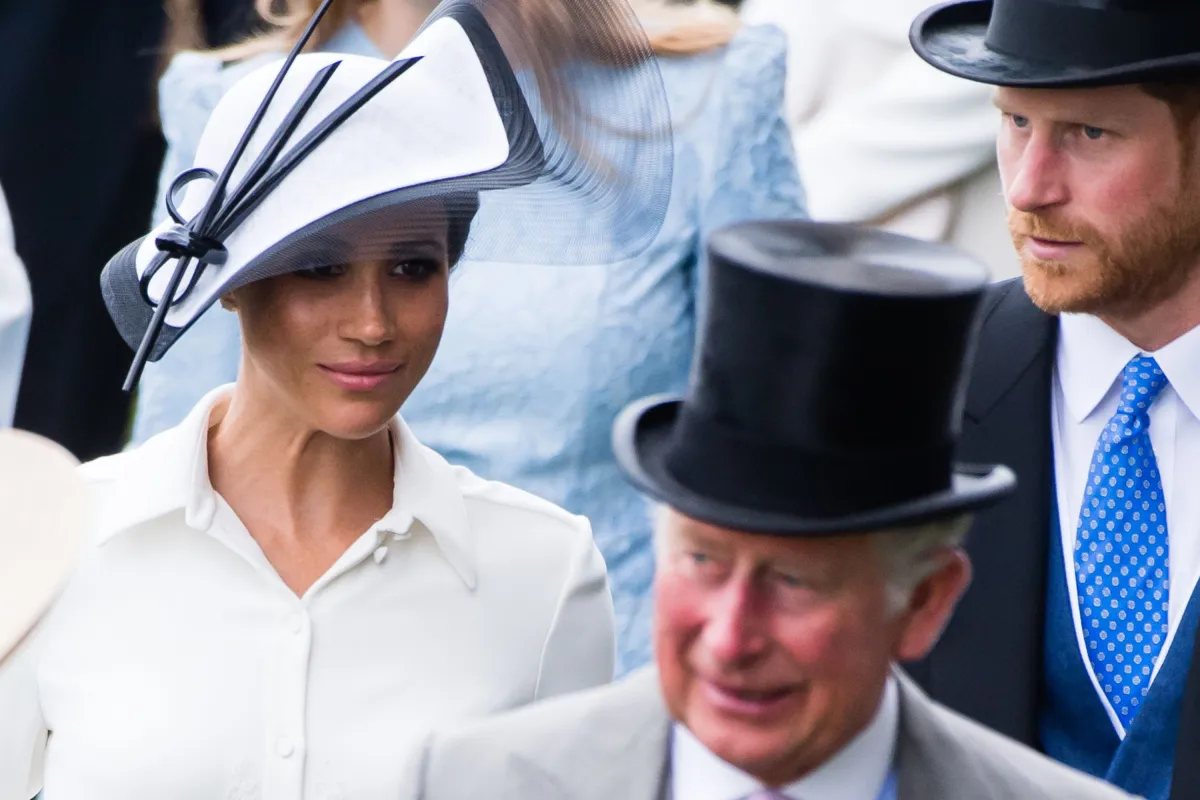
Despite the media storm surrounding Prince Harry and Meghan Markle’s departure from royal duties, recent polling reveals some surprising truths about who really commands public support in the United Kingdom. According to January 2024 YouGov polling, King Charles III enjoys a substantial fan base, with 60% of Britons expressing a favorable opinion of the monarch. This gives him a net approval rating of +29, as only 31% view him unfavorably. These numbers are consistent with his standing throughout his reign, though at times he has achieved even higher ratings, peaking at 70% approval following Queen Elizabeth II’s passing in September 2022. What makes these figures particularly noteworthy is that Charles has consistently maintained popularity levels that Meghan Markle never reached, even during the height of “Meghan Mania” when she first joined the royal family.
By contrast, Meghan Markle’s standing with the British public has deteriorated dramatically since her departure from royal duties in 2020. The same January polling shows just 19% of Britons view her favorably, compared to 66% who hold unfavorable opinions, resulting in a net approval rating of -47. Even at her peak popularity in the UK, Meghan was liked by 55% of British adults (recorded in October 2019), never reaching the 60% threshold that Charles currently enjoys. Her best net approval rating came in November 2017, shortly after her engagement to Prince Harry was announced, when she was liked by 49% and disliked by only 14%, giving her a net rating of +35. The gulf between their current standings could hardly be wider, challenging narratives about who truly commands public support.
What might be particularly revealing for the Sussex camp is that Queen Camilla – whose relationship with the British public has been complicated by her association with Princess Diana’s marriage breakdown – now outperforms Prince Harry in popularity. This reality stands in stark contrast to Harry’s suggestion during the Sussexes’ 2021 Oprah Winfrey interview that the royal family harbored jealousy toward Meghan because “the family got to see how incredible she is at the job.” In the Netflix documentary about their departure, Harry further claimed that Meghan stealing newspaper front pages triggered the “penny dropping” moment about the family’s jealousy, saying: “The issue is when someone who is marrying in, who should be a supporting act, is then stealing the limelight, or doing the job better than the person who was born to do this, that upsets people.”
The American picture offers a somewhat different perspective but still challenges certain assumptions. Meghan’s popularity has generally been stronger in the United States than in Britain, yet even in her home country, she has rarely achieved the kind of overwhelming support that media coverage might suggest. According to Morning Consult polling, Meghan reached her highest American approval in March 2021, shortly after the Oprah interview, when 67% viewed her favorably compared to 18% who did not – giving her a net approval of +49. More typically, however, her US support hovers below 50%. A December 2022 Redfield & Wilton poll for Newsweek found 43% of Americans liked Meghan while 20% disliked her. Her most recent YouGov numbers showed her liked by 31% and disliked by 26% of Americans, for a net rating of +15. Even in the excitement surrounding her royal wedding, Ipsos measured her American support at 43%.
What these numbers ultimately reveal is a significant disconnect between media narratives and measurable public opinion. The Sussex story has dominated royal coverage since their departure, generating endless headlines and securing them major platforms like their Oprah interview and Netflix deal. This media saturation has sometimes been interpreted as evidence of overwhelming popularity, particularly when contrasted with the more modest coverage received by Charles and Camilla. However, the polling consistently tells a different story – one where Charles’ steady, if less flashy, approach to royal duties has maintained stronger public support than Meghan achieved even during her brief royal honeymoon period. This doesn’t mean Meghan was unpopular as a working royal – her initial approval ratings would be envied by most politicians – but rather that media attention doesn’t necessarily translate into broader public support.
The broader lesson here extends beyond royal personalities to how we understand popularity in the age of social media and 24-hour news cycles. Visible, vocal fan bases and media prominence can create the impression of universal appeal, but polling offers a more comprehensive, if sometimes surprising, picture of public sentiment. For Charles, who has weathered decades of scrutiny and criticism following his divorce from the beloved Princess Diana, these numbers represent a remarkable rehabilitation of his public image. For Meghan and Harry, the figures suggest that while they may dominate headlines and cultural conversation, they face significant challenges in converting that attention into genuine public affection, particularly in the United Kingdom. As the royal family continues to evolve in the post-Elizabeth era, these dynamics of popularity and perception will undoubtedly continue to shape both how the institution presents itself and how the public responds to it.