






Kenny Dillingham Likely to Stay at Arizona State Despite Michigan Rumors
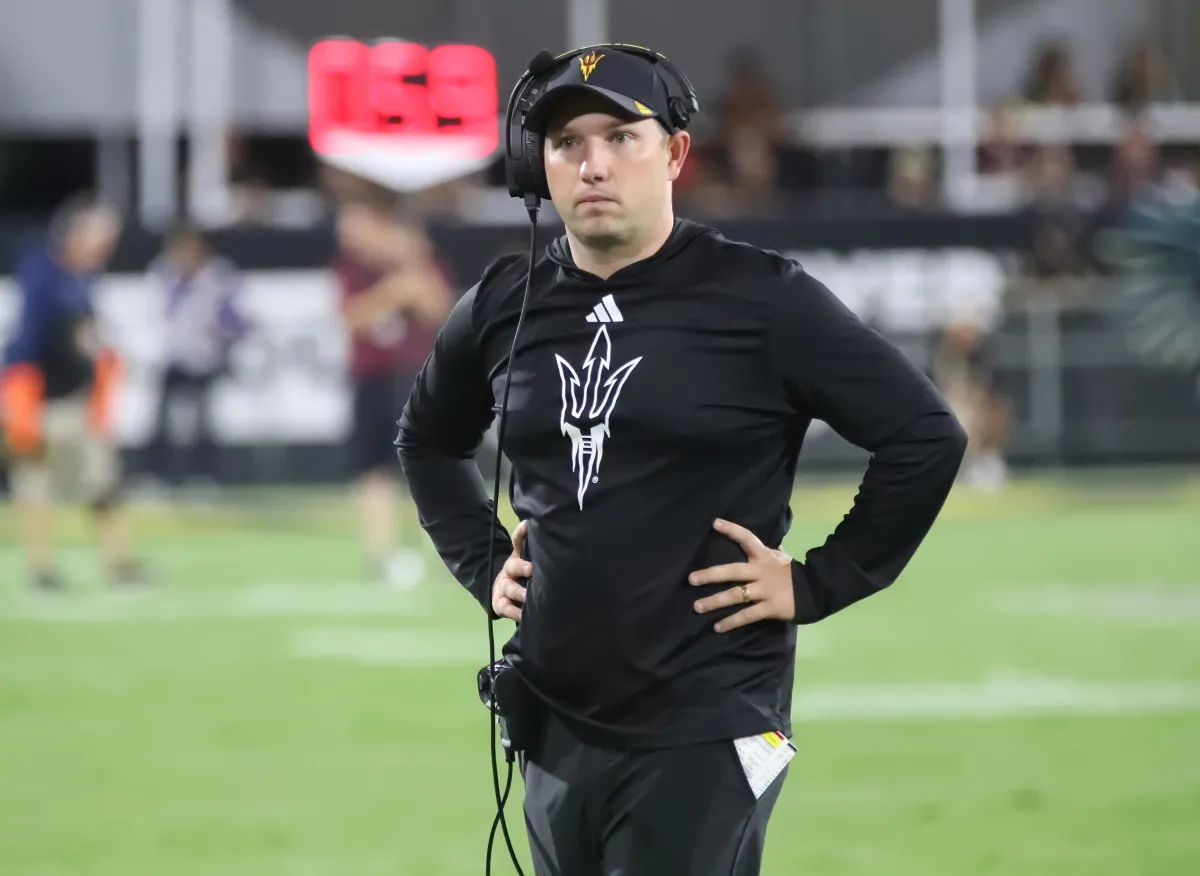
In the whirlwind of college football’s increasingly chaotic coaching carousel, Arizona State head coach Kenny Dillingham appears to be choosing loyalty over allure. According to a recent report from 247Sports’ Sun Devil Source, Dillingham and Arizona State are nearing an agreement that would keep him in Tempe, effectively turning down potential overtures from the Michigan Wolverines. This development comes as a surprise to many observers who saw Dillingham as a prime candidate to replace Sherrone Moore, who was recently fired from Michigan. For the past 48 hours, speculation had been building that the young coaching star might be headed to Ann Arbor, but now it seems the Sun Devils’ efforts to retain their promising leader are paying off.
The timing of these negotiations is particularly significant, as Arizona State and Dillingham have reportedly been discussing a contract extension for approximately two weeks, beginning immediately after the conclusion of the regular season. This proactive approach by the Sun Devils’ administration demonstrates their commitment to maintaining continuity in their program after Dillingham led them to an impressive College Football Playoff appearance in 2024. While Michigan’s historic program certainly offers its own prestige and opportunities, Arizona State’s determination to keep Dillingham suggests they view him as an integral part of their long-term vision, someone worth fighting to retain despite interest from one of college football’s traditional powerhouses.
The financial details of the potential agreement reveal interesting insights into both Dillingham’s value and the evolving economics of college football coaching. Currently, Dillingham’s contract includes performance incentives, with a $200,000 raise for the 2025 season contingent on the team winning eight games, which would elevate his annual salary to $6 million. However, reports indicate that one of Dillingham’s priorities in these negotiations is securing compensation increases without having to meet such performance benchmarks. This negotiating stance reflects the growing leverage that successful coaches possess in an era where retaining top coaching talent has become increasingly difficult for programs outside the traditional elite.
If Arizona State succeeds in keeping Dillingham, it would represent a significant victory for the Sun Devils’ program, particularly as they face other challenges to their competitive outlook. Most notably, star quarterback Sam Leavitt is projected to enter the transfer portal when it opens in January, potentially leaving a major void in the team’s offense. Dillingham’s presence could prove crucial in navigating this transition, whether by persuading Leavitt to reconsider or by effectively recruiting a replacement. The coach’s reputation as an innovative offensive mind and developer of quarterback talent makes him especially valuable in addressing such situations, underscoring why Arizona State is working so diligently to secure his continued leadership.
The immediate future still holds significant challenges for Dillingham and the Sun Devils, regardless of his contract status. The team is scheduled to face ACC champion Duke in the Sun Bowl on December 31, 2025, giving them an opportunity to cap off their successful season with another statement victory. This matchup will test Dillingham’s ability to prepare his team amid the distractions of his own contract negotiations and the broader upheaval in college football’s coaching landscape. How the team performs in this bowl game could either validate Arizona State’s investment in Dillingham or raise questions about whether the program is truly on an upward trajectory.
Dillingham’s apparent decision to remain at Arizona State rather than pursue the Michigan opportunity represents a fascinating inflection point in college football’s evolving power dynamics. In previous eras, the pull of a program like Michigan might have been irresistible to a rising coach at a historically less prestigious program. However, conference realignment, the transfer portal, and new NIL opportunities have reshaped the competitive landscape, potentially making it possible to build a championship-caliber program at schools previously considered stepping stones. If Dillingham stays and continues to build on his early success, his choice could be viewed as emblematic of this new reality in college football, where program hierarchy is more fluid and coaches can achieve their ambitions without following traditional career paths through blue-blood programs.