





Justin Herbert’s Playoff Struggles Continue as Chargers Fall to Patriots
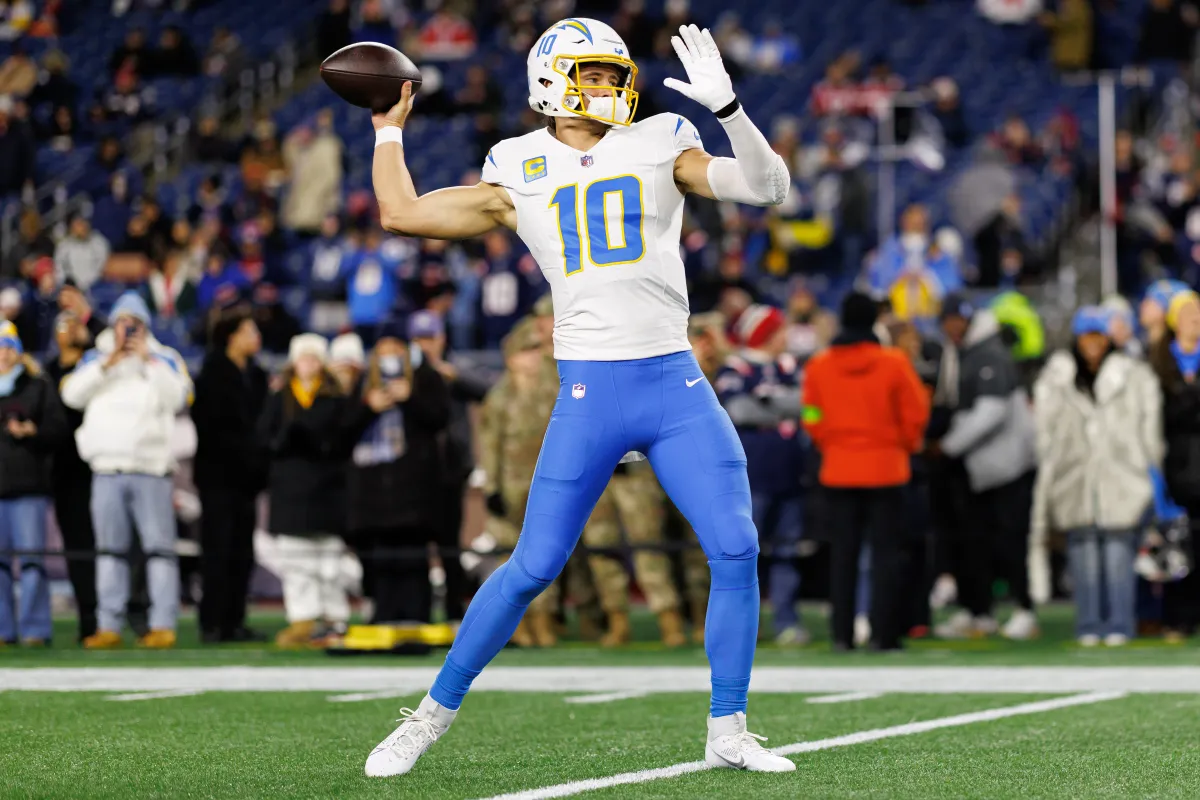
In a disappointing end to their season, Justin Herbert and the Los Angeles Chargers suffered another playoff heartbreak on Sunday night, losing 16-3 to the New England Patriots in the wild card round. The defeat marks Herbert’s third consecutive postseason loss since becoming the Chargers’ starting quarterback in 2020, leaving the talented signal-caller still searching for his first playoff victory. The game exposed offensive struggles that have haunted the team in critical moments, with Herbert completing just 19 of 31 passes for a mere 159 yards while enduring six punishing sacks behind an injury-depleted offensive line. Despite a golden opportunity early in the game when the Chargers’ defense intercepted Patriots rookie quarterback Drake Maye and gave Herbert’s offense excellent field position, they failed to capitalize, turning the ball over on downs at New England’s two-yard line in what would become a theme throughout the night.
Herbert, displaying the leadership qualities that have endeared him to fans and teammates alike, placed the blame squarely on his own shoulders during the postgame press conference. “I didn’t play well enough and didn’t make any plays,” he admitted with characteristic candor. “When it mattered most we didn’t score any points.” This accountability speaks volumes about Herbert’s character, but it doesn’t ease the sting of another playoff disappointment. His postseason statistics tell a troubling story – across three playoff appearances, Herbert has thrown for 674 yards with just two touchdowns against four interceptions while completing only 54.7% of his passes. These numbers stand in stark contrast to his regular-season performances, raising questions about what changes might be needed for Herbert to translate his considerable talents into postseason success.
When pressed about his playoff struggles, Herbert seemed as perplexed as anyone. “Yeah, I don’t know,” he reflected. “I haven’t figured it out yet. Hasn’t happened, so we’ll have to reevaluate and see what happens.” This honest admission reveals the frustration of a quarterback who has shown so much promise but continues to face roadblocks in the games that matter most. Context matters, however, and the 2025 season presented Herbert with significant challenges beyond his control. He played much of the year with a broken bone in his non-throwing hand, displaying the toughness that has become one of his hallmarks. More significantly, the Chargers’ offensive line was decimated by injuries, with both starting tackles – Rashawn Slater and Joe Alt – missing substantial time. Despite these obstacles, Herbert managed to earn his second Pro Bowl selection, throwing for 3,727 yards with 26 touchdowns and 13 interceptions while completing 66.4% of his passes.
The contrast between Herbert’s regular-season achievements and playoff disappointments reflects a broader pattern for the Chargers franchise, which has historically struggled to capitalize on talented rosters in the postseason. Sunday’s loss to the Patriots followed a familiar script – a strong defensive effort undermined by an offense that couldn’t find its rhythm when it mattered most. The six sacks Herbert endured highlighted the protection issues that have plagued the team, but even when he had time, the typically precise quarterback couldn’t connect with his receivers consistently. The turning point came early, with the failed fourth-down attempt deep in Patriots territory setting a tone of missed opportunities that persisted throughout the contest. As the game progressed and the Patriots gradually built their lead, the Chargers’ offense seemed to grow more tentative rather than more aggressive.
Looking beyond Herbert’s individual performance, questions will inevitably arise about the supporting cast and coaching decisions. While injuries to key offensive linemen provided ready-made excuses, the team’s inability to adapt its game plan to these limitations will face scrutiny in the offseason analysis. The Chargers’ running game never established itself, putting excessive pressure on Herbert to create plays through the air against a Patriots defense that could focus on rushing the passer. The coaching staff’s decision to go for it on fourth down early rather than taking the guaranteed points from a field goal will also be second-guessed, though such aggressive calls have become standard in the modern NFL. What’s clear is that despite Herbert’s tremendous talent and regular-season success, the Chargers haven’t yet found the formula to translate those qualities into playoff victories.
As Herbert and the Chargers turn their attention to the 2026 season, there’s reason for both concern and optimism. At just 28 years old, Herbert remains one of the NFL’s most gifted quarterbacks with plenty of time to rewrite his playoff narrative. The return of key injured players should strengthen an offensive line that was clearly overmatched against New England’s pass rush. Yet fundamental questions persist about what Herbert and the Chargers need to change to overcome their postseason hurdles. Will they seek additional weapons in the offseason? Might a new offensive philosophy help Herbert break through his playoff ceiling? Or is it simply a matter of execution in key moments? As Herbert himself acknowledged, the team must reevaluate everything. For a quarterback who has checked nearly every box except postseason success, figuring out the playoff puzzle remains the most important challenge of his career – one that will define his legacy with the Chargers and in the broader NFL landscape.