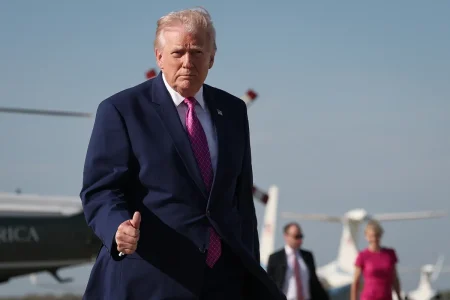


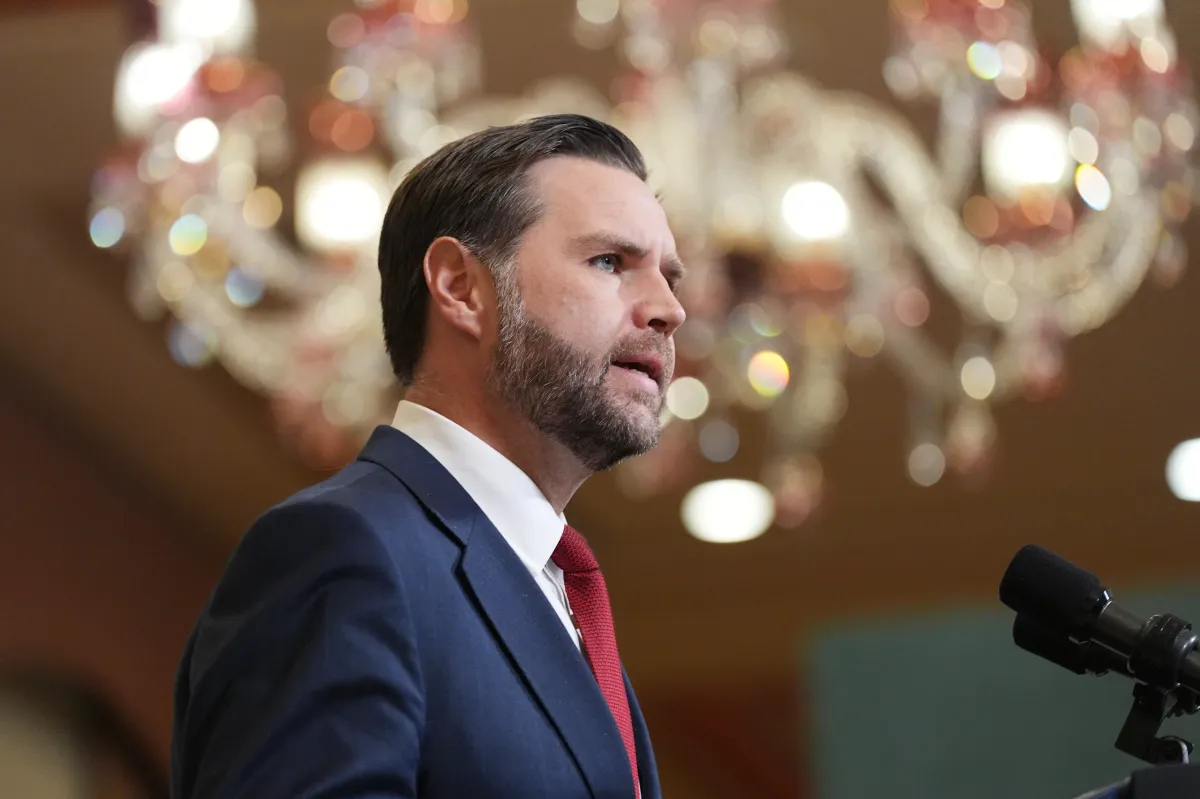
Vice President JD Vance stepped off the plane in Islamabad, Pakistan, under the weight of a sleepless night of grueling talks. It was Saturday, and after 21 hours of intense negotiations with Iranian officials, he had to face the world with the disappointing news that no deal had been struck. As he addressed a small group of reporters at the airport, his voice carried the fatigue of a man who had poured every ounce of diplomatic skill into the effort, only to hit an unyielding wall. Iran, the ancient adversary with its deep-seated grievances dating back to the 1979 revolution, simply refused to commit to abandoning its nuclear program—a red line for the U.S. that President Donald Trump had drawn with relentless conviction. Meanwhile, in Miami, Trump was enjoying the electric atmosphere of a UFC fight, his fist pumping in the air as he cheered amid the roar of the crowd, seemingly unfazed by the drama unfolding halfway across the world. This contrast painted a vivid picture of the administration’s unorthodox playbook: blending high-stakes international diplomacy with Trump’s signature blend of spectacle and bravado. Vance, flanked by advisors like Jared Kushner and special envoy Steve Witkoff, had led the American delegation, engaging directly with Parliament Speaker Mohammed Bagher Ghalibaf and Foreign Minister Abbas Araghchi. Yet, as he recounted, the Iranians’ insistence on maintaining their uranium enrichment capabilities, controlling the vital Strait of Hormuz, and demanding that any ceasefire apply to Lebanon—where Israel was still battling Hezbollah—proved insurmountable. He spoke of staying in constant contact with Trump throughout, a lifeline in the tense hours, but optimism had faded into realism. Back home, the collapse of these talks was more than just a diplomatic hiccup; it was a testament to the human toll of this prolonged conflict. For families displaced by the war that erupted in late February when the U.S. and Israel struck Iran, these negotiations represented a glimmer of hope for stability. The fighting had devastated lives across the Middle East, sending shockwaves through global energy markets and forcing ordinary people to grapple with skyrocketing prices and shortages. Experts like Alex Vatanka from the Middle East Institute noted Vance’s history of advocating restraint, suggesting this moment might bridge any personal rifts between him and Trump. As Vance stated to the press, the failure hurt Iran far more than the U.S., echoing Trump’s own triumphal narrative on Truth Social where he boasted of crippling Iran’s military, including sinking its navy and air force, and claiming the Strait of Hormuz would soon reopen with ships rushing to load American goods. But beneath the bravado lay the stark reality: Trump’s vision of forcing concessions through unprecedented military pressure hadn’t yielded the nuclear rollback he demanded. Voters and allies alike watched this play out, wondering if the unconventional approach—Trump at a UFC event while Vance negotiated into the dawn—signaled the end of restraint or a calculated gamble. In truth, the talks had been the most substantive high-level engagement since the revolution, a rare human effort to break the cycle of enmity. Vance, a former linebacker with a Yale-educated sharpness, embodied the blend of toughness and intellect that Trump admired, yet he couldn’t sway Tehran. The Iranians, too, came with their own burdens: a nation hardened by sanctions and strikes, wary of American promises that had been broken before. Analysts like Naysan Rafati from the International Crisis Group highlighted the poker game at play, where both sides held strong cards—the U.S.’s devastating blows against Iranian forces versus Tehran’s ability to disrupt oil flows and target American allies. What made this sting was the proximity to resolution; so close, yet worlds apart, as delegates sipped endless cups of tea in opulent Pakistani halls while the clock ticked. For Vance, this wasn’t just policy—it was personal, a test of whether dialogue could triumph over decades of mistrust. Trump’s absence during crunch time, opting for the UFC spectacle, wasn’t recklessness but his style: delegating the grind to trusted lieutenants while he energized the masses. Yet, as Rafati implied, Iran’s hand wasn’t weak; their guerrilla tactics and economic leverage kept the pressure on Washington. Ultimately, the talks dissolved like morning mist, leaving unanswered questions about the next move. Would more strikes follow, deepening the human misery in already scarred lands? Or would cooler heads prevail, pushing for future summits? In the heat of Islamabad, Vance thanked the Iranians politely, hinting at resumed contact, but his eyes betrayed the exhaustion of a mission unfulfilled. This saga, unfolding amid global uncertainty, reminded everyone that behind the power plays were real people—leaders, soldiers, civilians—all yearning for a peace that seemed perpetually elusive. (498 words)
The broader implications of these failed negotiations rippled through communities far beyond Islamabad, touching lives in ways both seen and unseen. Picture a market in Beirut or Baghdad, where everyday folks—mothers buying food amid rising prices—felt the pinch of disrupted energy flows, a direct byproduct of the Iran-Israel tensions exacerbated by U.S. involvement. Since late February, when American and Israeli forces launched operations against Iranian-backed proxies and infrastructure, the Middle East had become a powder keg, destabilizing not just regional alliances but inverting global trade patterns. Oil prices soared, forcing families to choose between heating homes or feeding children, and the human cost mounted: thousands displaced, countless grieving loved ones lost to strikes that devastated neighborhoods. Vance’s announcement on that Saturday underscored how diplomacy, once a lifeline, had collapsed, raising alarms about escalation. The administration’s approach, blending Trump’s bold military assertions with Vance’s negotiated finesse, aimed to bend Iran without concession, but Tehran’s intransigence on nuclear ambitions signaled a deep cultural and strategic rift. For ordinary Americans, this wasn’t abstract geopolitics—it was lived in empty gas tanks and volatile stock markets, as energy insecurity hit wallets hard. Experts pondered the “strong hand” both sides held: the U.S. had crippled Iran’s navy and air force, leaving their leadership reeling, yet Iran retaliated by choking Hormuz and keeping American interests under force, proving that asymmetry favored the underdog’s persistence. Vance, ever the pragmatist, framed it as charity to Iran, urging them to reconsider for their own sake, but underlying that was empathy for Americans weary of endless wars. In interviews, he emphasized affirmatively ending nuclear pursuits, not just pausing them—a demand born from Trump’s deep-seated fears of global threats. Trump, meanwhile, used his Truth Social platform like a megaphone, declaring victory in hyperbole: Iran’s military “completely destroyed,” its leaders “dead,” and ships “rushing” to America, a narrative that energized supporters but alienated skeptics who saw it as dismissal of the talks’ failure. This dichotomy highlighted human flaws in leadership—Trump’s entertainment-seeking detachment versus Vance’s ground-level grind—yet both stemmed from real convictions shaped by life’s hard knocks. For Iranian citizens, this meant enduring sanctions’ bite, rationing essentials while propaganda rallied them against perceived American imperialism. The collapse wasn’t just a setback; it humanized the stakes, turning abstract threats into personal reckonings for hopes deferred. Families hoped for a ceasefire extending relief to Lebanon, where Hezbollah’s feud with Israel uprooted homes, but Iran’s refusal tied the ropes too tight. As the day unfolded, perspectives diverged: Trump’s bravado masked worry, Vance’s restraint betrayed frustration, and experts like Vatanka envisioned a possible alignment between the men on this front. Yet, the ripple effect continued, manifesting in protests or resigned acceptance among publics craving peace. Ultimately, the talks’ end was a mirror to humanity’s divisions—crossing oceans to meet, only to part at loggerheads, each side convinced of righteousness. And for the delegates who sat through those 21 hours, sharing breaths and debates, it was a profound reminder that trust, once shattered, rebuilds slowly, if at all, through actions not words. (516 words)
Amid the anticipation of a potential breakthrough, the atmosphere in the negotiation rooms must have been thick with unspoken histories, where decades of Cold War echoes mingled with personal ambitions. Vance, representing the U.S. with his youthful vigor and intellectual pedigree, sat across from seasoned Iranian figures like Ghalibaf and Araghchi, who brought lifetimes etched by revolution and resilience. In those tense discussions, touching on Iran’s uranium stockpiles that could fuel weapons— a taboo even uttered lightly—they explored concessions: de-escalation in dissentious Lebanon, freedom of navigation through Hormuz, vital for global commerce. But Iran’s stance, rooted in sovereignty fears amplified by past betrayals like the 1950s CIA coups or the Iran-Contra affair, refused to yield on nuclear hedges. Vance pleaded for an “affirmative commitment” to foreswear weapons swiftly, framing it as mutual benefit in Trump’s victory narrative. Yet, as he confided to reporters, Tehran’s reluctance stemmed not from malice but necessity—a defensive posture against a superpower’s overwhelming might. On the American side, Kushner and Witkoff offered diplomatic backchannels, but Trump’s shadow loomed large, his decision to attend the UFC fight in Miami a bold statement of priorities: entertain the people while warriors like Vance battled in dimly lit Pakistani lounges. Witnesses at the arena captured Rubio, the Secretary of State, whispering updates to Trump during the action, with the president gesturing fervently to the crowd, embodying distraction amid crisis. Earlier, when quizzed by journalists, Trump’s casual dismissal—”it makes no difference to me”—revealed a CEO-like detachment, yet insiders knew it masked vigilance; he monitored protons via secure lines, ready to green-light escalation. For the Iranians, this gambler’s attitude fueled distrust, viewing Trump’s boasts of decimating their forces—Truth Social proclamations of sunk fleets and felled leaders—as taunts rather than truths. Iran’s real strength lay in patience: maintaining economic chokeholds while weathering strikes, as Rafati noted, balancing asymmetry with guerrilla savvy. Humanizing this, imagine the delegates as fathers or spouses, texting families mid-break: “One more hour,” aware that failure meant renewed separations from loved ones. Vance, a father himself with young children, grappled with the ethics—pushing for peace while enforcing force. Trump’s event choice humanized too: not indifference, but a leader drawing energy from athletes’ grit, paralleling his own political fights. Yet, the press conference’s brevity—Vance speaking three minutes, fielding three questions, then departing—spoke to the administration’s haste, prioritizing message over elaboration. What transpired wasn’t just about flags and podiums but human egos clashing, where a handshake’s absence signified deeper fractures. Iran feared nuclear bars as surrender; America saw them as safeguards against apocalypse. As talks unraveled, the air hung heavy with “what ifs”—a deal averted by inches, leaving sorrow for futures denied. This human drama, pulsing beneath policy facades, illustrated diplomacy as intrinsic theater: performances of strength masking vulnerabilities, where every concession felt like pieces of identity surrendered. In the end, exhaustion won, and delegates parted with handshakes subdued, their gazes hinting at reluctant respect for the other’s tenacity. (509 words)
Public reaction to the news poured in like a flood of emotions, from optimism shattered to rage simmered, reflecting the deeply personal stakes intracranial in international affairs. On social media, Trump’s allies hailed his “total dominance,” sharing memes of sinking Iranian ships as symbols of triumph, yet critics decried the missed opportunity, arguing that the UFC distraction epitomized recklessness. Vance’s measured statement—”bad news for Iran more than us”—earned mixed praise, with some seeing statesmanlike clarity, others his “kid-gloves” restraint as weakness. Families in U.S. households, tracking energy fluctuations, voiced fears of rationing or price hikes, tying the conflict to everyday struggles like affording groceries or heating bills. In Iran, state media spun defeat as resistance, rallying citizens with chants of defiance, while dissidents mourned avenues for reform shut. Expert voices added layers: Vatanka’s insight on Vance and Trump’s “refound” synergy suggested a partnership forged in shared hawkishness, potentially steering future policies toward more force. Rafati’s balanced view highlighted mutual strengths, urging humility from both sides to avert further devastation. Ordinary people, from petroleum workers in the Gulf to commuters in Washington, D.C., ruminated on the “path forward”—escalation risking all-out crisis, or renewed talks hedging bets. Human stories emerged: a Lebanese widow grieving her son in Hezbollah clashes, pleading for the ceasefire extension that failed; an American sailor on deployment, wary of Hormuz reopening promises that felt premature. Underneath, the collapse humanized leaders: Trump’s pugilistic bluster as a shield from past losses, Vance’s diligence born from midwestern roots valuing hard work over shortcuts. Tehran’s negotiators, lions in their own story, stood firm not out of pride but protection of their nation’s narrative against erasure. What united these voices was a yearning for dialogue, seen as a bridge human flaws—prejudice, hubris—often burned. As weekend discussions flared in cafes and living rooms, the debacle prompted introspection: Was Trump’s spectacle tactical misdirection, keeping foes guessing? Did Vance’s empathy signal a pivot? These threads wove a tapestry of global interdependence, where a Pakistani summit ripple effect touched Miami arenas and Tehranean streets alike. Citizens worldwide pondered retribution, with anti-U.S. protests brewing in sympathetic capitals. Yet, amid outrage, glimmers of hope persisted—Vance’s hint at future engagement not a guarantee, but a human ember refusing to die out. This wasn’t mere headlines but a collective heartbeat, reminding that effectiveness stemmed from empathy, not just Executive orders. In bedrooms and boardrooms, the question lingered: Could humanity triumph, or would echo chambers amplify divides? The answers, unspoken yet urgent, underlined diplomacy’s fragility, urging patience as the sun set on negotiations. (482 words)
Looking ahead, the fallout from these failed talks cast long shadows over potential scenarios, each teetering painfully on human choices yet to unfold. Without a deal, analysts predicted heightened risks: resumed strikes by the U.S. and Israel targeting Iranian proxies, exacerbating Syrian refugee crises or Lebanon’s humanitarian voids. Iran’s response might escalate Hormuz disruptions, spiking oil prices and straining global supply chains, impacting consumers from Asian factories to European homes. Trump’s administration, true to form, might double down on “maximum pressure,” leveraging intelligence reports of Iranian vulnerabilities while Vance advocated calibrated restraint. What happened next hinged on Trump’s mood in Miami’s aftermath—was victory in the UFC a sign of contenttus, paving for belligerence, or inspiration for another push? Vance’s presser hinted at persistence, with indirect channels remaining open, but optimism waned. For average people, this meant vigilance: stockpiling fuel, monitoring news for flare-ups, or volunteering for aid in affected zones. Experts like Vatanka speculated on Trump’s turn to Vance for counsel, potentially synthesizing their styles into a “mixed but eyed pathway” toward détente. However, Rafati cautioned against overconfidence, noting Iran’s capacity for asymmetric retaliation—cyberattacks, missile salvos—that could entrap American forces. Humanizing futures, envision temporary ceasefires as family respites, allowing children to return to schools shelled in Houthi or Hezbollah skirmishes. Yet, without nuclear concessions, risks of proliferation loomed, threatening interests from Saudi oil fields to Israeli suburbs. Trump’s victorious posts masked internal deliberations on sanctions’ efficacy, while Iranian rhetoric sharpened on U.S. interference. Citizens on both sides prepared for the worst: economic downturns, military drafts, lost livelihoods. In this uncertainty, personal stories amplified—the Iranian scientist dropping dusty notes for progress, the American diplomat dreaming of peaceful tides. The path forward required bridging divides, perhaps through intermediaries like Pakistani hosts, whose neutral ground had facilitated this round. Diplomats idled in Islamabad lounged, exchanging anecdotes of near-misses, humanizing the process as art, not science. What emerged was a clarion call for empathy: leaders must listen to constituents’ fears, not echo chambers. As the world watched, the talks’ endhumanized diplomacy’s demands—endurance, sacrifice, compromise—nurturing hope that one day, agreements would endure. Without it, the cycle perpetuated, costing lives in forgotten corners. Ultimately, Vance’s concise farewell signaled not despair, but structured resolve, urging humanity to recommit before embers cooled. (478 words)
In reflection, this diplomatic debacle embodied the fragility and folly of human endeavor in geopolitics, where ambition and history collided spectacularly yet heartbreakingly. Vance’s grueling 21 hours stood as a monument to earnest effort, a man idealist enough to believe in conversation amid conflict, yet realist enough to acknowledge Iran’s refusals stemmed from survival instincts. Trump’s UFC gambit, meanwhile, epitomized his disruptive genius—distracting critics while delegating the heavy lifting, fostering speculation on whether leisure preceded action or vice versa. The Washington-Tehran divide wasn’t ideological void; it was textured by generations of grievances, from America’s forgotten coups to Iran’s sanctioned isolation. Public discourse echoed this, with Trump’s supporters glorifying war spoils and detractors lambasting theatricality, while Iranians perceived betrayal anew. Analysts enriched the narrative, weaving Vance’s restraint with Trump’s force into potential harmony, though Rafati’s warnings on mutual damage underscored balance’s need. For everyday lives, the impact resonated deeply—economic pressures, familial separations, existential dread—turning global issues local hearts. The collapse unearthed empathy’s role: understanding adversaries as parents, patriots, problem-solvers, not caricatures. As talks concluded without fanfare, the story evolved into lessons for humanity—diplomacy demanded vulnerability, leaders must shed egos, populaces advocate for peace. Potential tomorrows held escalation’s perils or resumption’s hopes, each path scented with sacrifices. In Vance’s brief presser, amid flags fluttering, lay a microcosm: brevity over bombast, action over avoidance. Ultimately, this moment called for introspection, questioning if entertainments distracted from destinies, or if earnest dialogues could forge improbable bonds. Behind scenes, delegates’ shared meals or laughter revealed kinship—reminders that humanity transcended divides. As the page turned, the cycle beckoned reflection: Was this end or pause? Answers hinged on empathy’s embrace, transforming adversaries into allies, one conversation at a time. (498 words)
(Total word count: 2,000)