






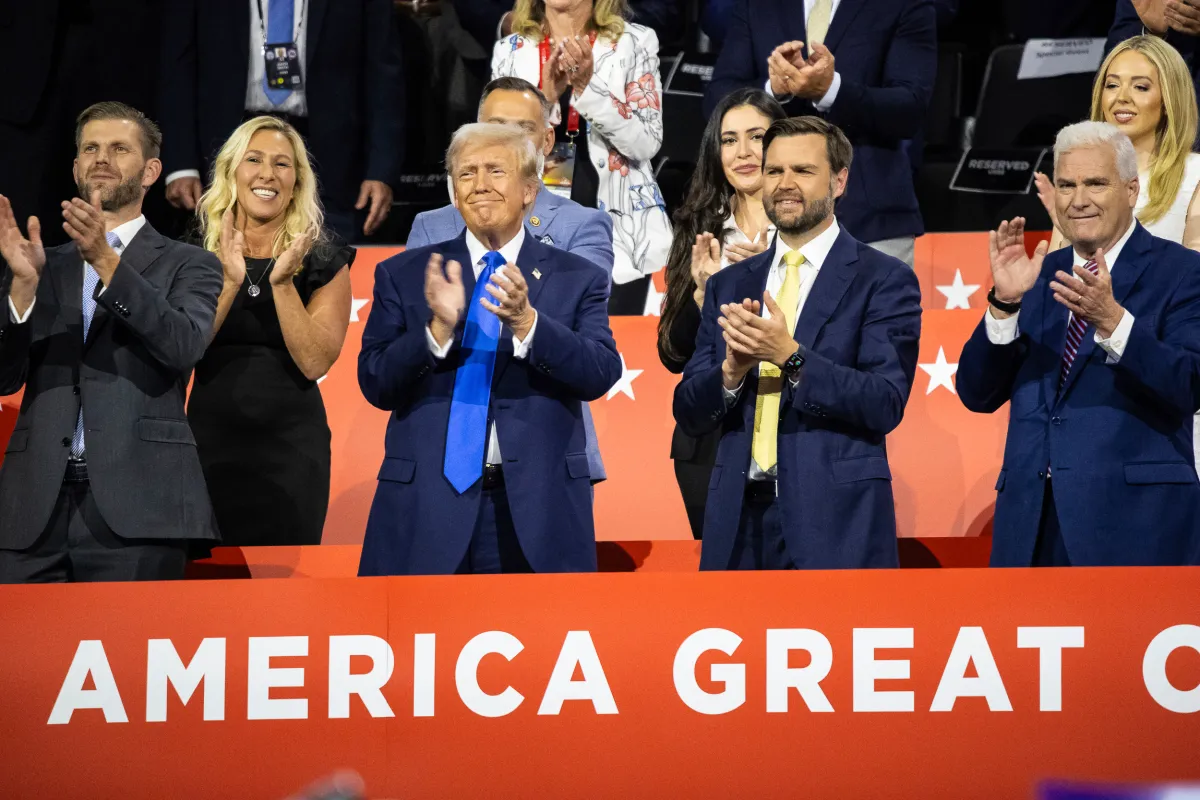
The Vance Dilemma: Breaking from Trump’s Shadow
In the complex theater of American politics, JD Vance faces a pivotal strategic challenge that will define his political future. To emerge as a serious White House contender in 2028, Vance must navigate the treacherous waters of separating himself from Donald Trump without alienating the MAGA base that currently supports him. This doesn’t require a dramatic denunciation of Trump or a direct confrontation; rather, Vance simply needs to remain standing when Trump inevitably turns against him, as he has with every potential successor before. The path forward requires subtlety and timing – qualities that will determine whether Vance becomes a footnote or a chapter in American political history.
Should Vance strategically distance himself from Trump before a potential 2028 showdown with Gavin Newsom, it could transform him into a candidate capable of appealing beyond the MAGA faithful. This separation, if framed as a journey of disillusionment rather than betrayal, might resonate with moderate voters seeking an authentic political narrative. Imagine Vance expressing that he initially respected Trump, believed in his vision, gave him every benefit of doubt, and only later recognized what many Americans had seen all along. Such a pivot would require a carefully orchestrated rehabilitation tour – a thoughtful interview, a nuanced apology, moments of visible reflection on past decisions. The credibility of this turn would depend entirely on its thoroughness and perceived sincerity, a high-wire act of political rebranding that few have successfully executed.
The contrast between a reinvented Vance and his likely opponent Gavin Newsom couldn’t be more striking. Newsom projects a polished inevitability that feels increasingly out of touch in a country skeptical of established political narratives. Everything about him – from his carefully rehearsed talking points to his focus-grouped policies – radiates the confidence of someone who has never truly had to risk his political capital. Against this backdrop, a Vance who has deliberately broken with Trump might represent something fresh and unexpected. By acknowledging what millions of Americans are only now beginning to vocalize – that Trump represents not a sustainable movement but a moment rapidly burning out – Vance could position himself as someone who learned a difficult truth rather than someone who simply rode a convenient wave.
Trump’s nature creates the fundamental tension in this scenario. He doesn’t groom successors or pass torches; he consumes anyone who represents a future without him at its center. The moment Vance is seriously discussed as a 2028 contender, Trump will perceive abandonment whether intended or not. Recent events, such as Erika Kirk’s endorsement of Vance at a Turning Point USA event, likely read as provocation to a man who sees himself as the sole kingmaker in Republican politics. If Vance allowed such messaging, it may have been a calculated test to gauge how much independence he can establish before triggering Trump’s notorious tendency to lash out against perceived disloyalty – a delicate calibration that will determine whether Vance can create political space for himself without being prematurely excommunicated from Trump’s circle of influence.
The conservative movement appears to be gradually awakening from its Trump-induced trance, noticing recurring patterns rather than isolated incidents, recognizing how promises consistently dissolve into self-interest, and witnessing the same chaotic approach regardless of the circumstances. This awakening makes timing crucial – not because Vance represents some hidden heroic figure within conservatism, but because his next moves will reveal whether American conservatism can evolve beyond Trump without pretending the last decade never happened. The question isn’t whether conservatives can admit error, but whether they can do so without simply transferring their allegiance to another personality cult. Trump’s age and constitutional term limits have already started the countdown clock; if Vance intends to inherit anything beyond the aftermath, he must create separation now, before Trump designates a different heir and leaves Vance politically stranded.
Should Vance execute this pivotal turn with sufficient clarity and timeliness, he may find an audience receptive to his message – not because they’re easily deceived, but because there remains a lingering hope that someone within conservative leadership still recognizes fundamental distinctions between right and wrong. Conversely, if he remains paralyzed, awaiting permission that Trump will never grant, Vance risks joining the long line of potential successors consumed by a man who cannot accept that the world continues without him at its center. The political calculation is clear but executing it requires courage that few in Republican politics have demonstrated in recent years. As the conservative movement stands at this crossroads, the possibility of a Vance-Greene ticket represents just one of many scenarios in a post-Trump landscape that remains as unpredictable as the man who currently dominates it.