






Russian Military Activity Prompts Japanese Response over the Sea of Japan
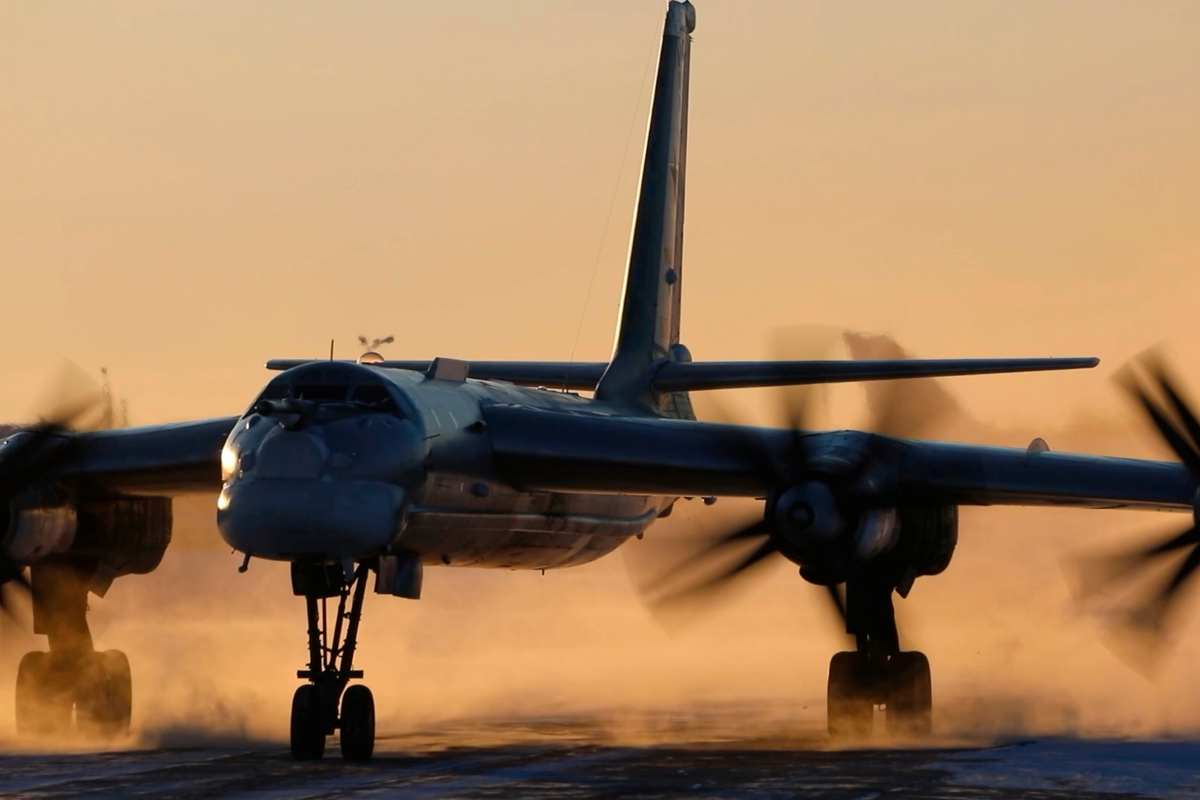
In a significant display of ongoing regional tensions, Japanese fighter jets recently scrambled to intercept multiple Russian military aircraft approaching Japan’s airspace. The incident, which occurred over the Sea of Japan, involved nuclear-capable Tu-95MS strategic bombers escorted by Russian fighter jets. While Russia’s Defense Ministry characterized the flight as a routine planned mission over neutral waters conducted in accordance with international rules, Japan’s Defense Ministry expressed concern, pledging to maintain vigilance and take all necessary measures to protect its airspace. This interception underscores the complex geopolitical dynamics in the region, with Japan, a key U.S. ally, regularly monitoring Russian military movements near its territorial boundaries.
The recent interception highlights Russia’s continued military presence in its Far East region despite being engaged in conflict with Ukraine thousands of miles away. According to official reports, the Russian mission lasted more than 11 hours over the Sea of Japan, with Japanese defense officials identifying three distinct groups of Russian aircraft. Each group included at least two Tu-95MS bombers, with two of the groups accompanied by fighter escorts. The Japanese Air Self-Defense Force responded promptly to the potential threat, though it confirmed that no Russian aircraft violated Japan’s sovereign airspace, which extends approximately 13.8 miles from its coastline. This precision in acknowledging territorial boundaries while demonstrating military capability reflects the delicate balance of power projection without triggering direct confrontation.
The underlying tensions between Moscow and Tokyo run deeper than occasional aerial encounters. Territorial disputes remain unresolved, particularly regarding four islands of the Kuril archipelago northeast of Japan’s Hokkaido, which are currently under Russian administration but claimed by Japan. This longstanding disagreement continues to complicate bilateral relations. Furthermore, Russia’s military deployments in the Pacific region appear strategically calculated to counter the U.S.-Japan alliance, which includes approximately 60,000 U.S. troops stationed in Japan alongside advanced missile systems. The Russian bomber flights can therefore be interpreted as a response to what Moscow perceives as encirclement by Western military assets, creating a cycle of demonstration and counter-demonstration that maintains regional tension without escalating to direct conflict.
Japanese Defense Minister Shinjiro Koizumi took to social media to express his concerns, highlighting the nuclear capability of the Russian bombers and linking this incident to previous joint Russia-China air patrols near Japan in December. “This cannot be seen as anything but a show of force against our country,” Koizumi stated, emphasizing that Russia’s military movements, especially in coordination with China, have raised “strong defense concerns” throughout Japan and the broader Indo-Pacific region. The minister’s public acknowledgment of these concerns signals Japan’s increasing unease with the evolving security environment. According to nuclear security experts, each Tu-95MS bomber can carry between six and fourteen nuclear-armed cruise missiles, and Russia has deployed this aircraft type to launch conventional strikes in Ukraine, demonstrating its operational significance in modern Russian military strategy.
The Japanese response to the Russian mission was both professional and resolute. Defense Minister Koizumi publicly thanked the Air Self-Defense Force members who “professionally protect our country’s airspace day and night,” while the Joint Staff Office pledged to “continue to maintain the utmost readiness 24 hours a day, 365 days a year, to protect our country’s territory and the peaceful daily lives of our citizens.” These statements reflect Japan’s determination to project confidence in its defensive capabilities while maintaining a measured tone that avoids unnecessary escalation. The interception itself represented standard procedure within Japan’s air defense identification zone rather than an exceptional event, highlighting the normalization of these security measures in response to regular Russian activity near Japanese airspace.
Looking ahead, military analysts expect Russia to continue such activities as part of its broader strategy to maintain a visible presence in the Asia-Pacific region, particularly as it seeks to counterbalance Western influence. For Japan, these incidents reinforce the importance of its security alliance with the United States and may accelerate ongoing efforts to strengthen its defensive posture. The country has already announced plans to significantly increase defense spending over the coming years, partly in response to the evolving security environment involving both Russia and China. As these regional dynamics continue to evolve, the international community will be watching closely to see how the balance between assertiveness and restraint is maintained by all parties involved, particularly as broader geopolitical tensions continue to shape security relationships throughout the Indo-Pacific region.