




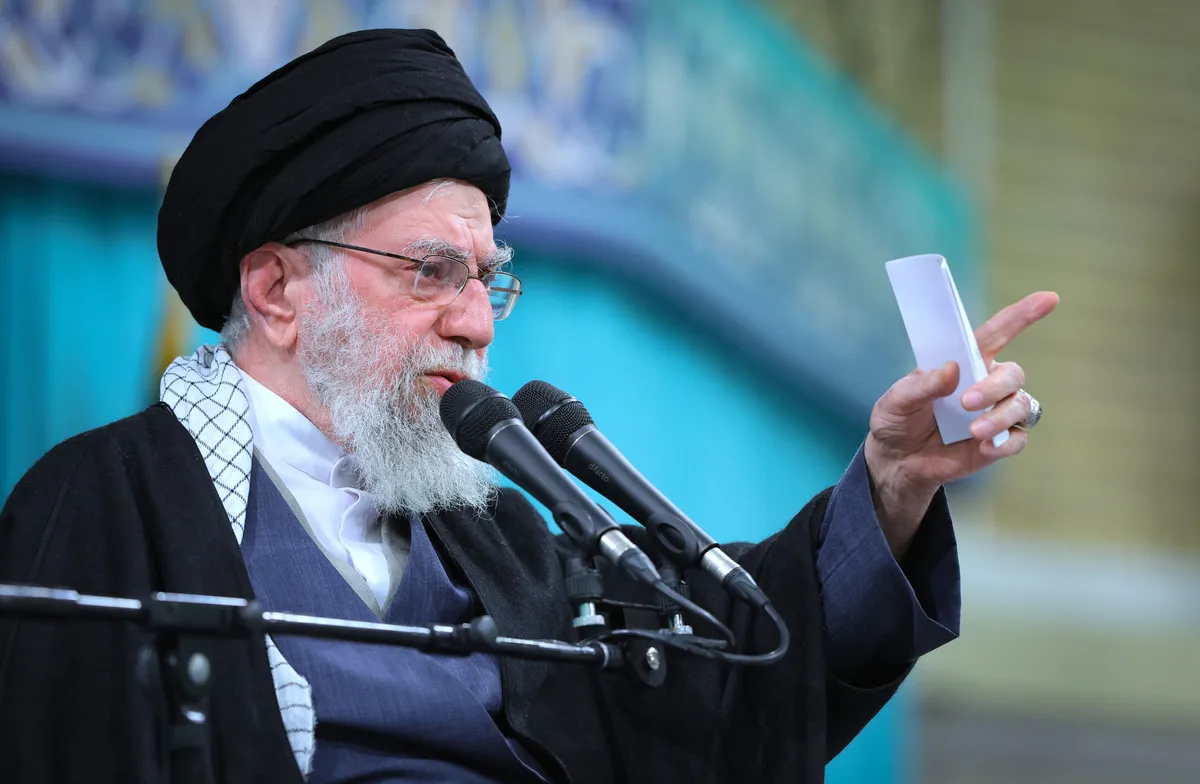
The escalating standoff between the United States and Iran feels like a powder keg in the heart of the Middle East, where one wrong move could ignite a devastating regional conflagration. As Iranian Supreme Leader Ayatollah Ali Khamenei addressed the nation on a tense Saturday, his words carried the weight of a leader staring down existential threats, warning that any American attack would spark not just a skirmish, but a full-blown regional war that could engulf neighbors and allies alike. Tensions have been simmering since protests erupted in Iran late last December, drawing global attention to the cries of ordinary Iranians grappling with economic hardship, political repression, and a longing for change. Khamenei, a revered figure whose pronouncements shape the destiny of millions, invoked the gravitas of history, reminding Americans that this isn’t just rhetoric—it’s a promise backed by resolve born from decades of defiance. In this human drama, we’re not just talking geopolitics; we’re witnessing families torn apart by fear, communities living under the shadow of authoritarian clampdowns, and leaders balancing the lives of their people against the lure of martial glory. As someone who’s never walked the streets of Tehran or stood guard in Washington, the weight of it all hits home: the uncertainty, the potential for lives lost in a blink. This isn’t abstract; it’s personal for the men and women in uniforms, the protesters with dreams deferred, and the diplomats racing against the clock to prevent disaster.
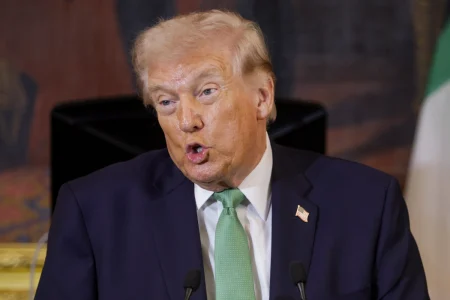
President Donald Trump’s latest remarks added fuel to the fire, suggesting a dance of negotiation shadowed by the ominous presence of U.S. military might amassing in the region. Just days earlier, Trump hinted at talks with Iranian officials, pressured by the sheer force of American naval power, including the mighty USS Abraham Lincoln aircraft carrier slicing through waters alongside squadrons of advanced fighter jets. It’s a show of strength that echoes through the corridors of power, where admirals and secretaries weigh options in dimly lit war rooms, contemplating the human cost of conflict. Trump’s words, delivered with his characteristic bravado, underscored two non-negotiables: Iran must abandon any path to nuclear weapons and halt the brutal suppression of protesters. For average Americans following this from the safety of their living rooms, it paints a picture of a president playing high-stakes chess with real lives at stake—imagining the sailors on those ships, their families back home clutching phones for news, or the Iranian negotiators ensnared in a web of coercion and ideology. Top Iranian security official Ali Larijani acknowledged progress in these talks, yet trust is a rare commodity here. Behind the headlines, picture the diplomats, sweat on their brows, striving for peace amid a legacy of broken promises, like the nuclear deal Trump pulled out of in his first term. The Joint Comprehensive Plan of Action, signed in 2015, was meant to be a bridge, but now it feels like a relic of better times lost to ambition and fear. In humanizing this, think of the exhaustion etched on faces of officials who know one misstep could mean widows mourning sons, or cities reduced to rubble, turning the chessboard into a graveyard.
At the core of this crisis are the Iranian people themselves, whose voices have shaken the foundations of power for over a month now. What began as demonstrations against a faltering economy—gas prices soaring, jobs vanishing, inflation biting deep—quickly evolved into a soul-stirring rebellion against the ruling clerics and the regime’s iron grip. Protesters, frustrated and fearless, took to the streets, chanting for freedom and holding signs aloft, their courage a testament to human resilience against oppression. But the response from authorities has been merciless, with reports of widespread crackdowns leaving a trail of tragedy. The U.S.-based Human Rights Activists News Agency, a beacon for those seeking truth in the darkness, estimated over 6,700 deaths, mostly among demonstrators, robbing families of brothers, sisters, and parents in a deeply personal horror. More suspicions linger over 17,000 additional unconfirmed fatalities, shrouded by an internet blackout that silences screams and hides evidence, making verification a nightmare. Even higher tolls, possibly topping 30,000, have been whispered, reflecting the chaos and the regime’s chokehold on information. Supreme Leader Khamenei himself admitted to “several thousand” dead, his words a rare concession in a sea of denial, yet it humanizes the sorrow—no government spin can erase the grief of mothers clasping photographs of lost children or the hollow ache of protesters who witnessed comrades fall. For outsiders, it’s heart-wrenching to imagine these individuals not as statistics, but as lives interrupted: young students with futures ahead, workers dreaming of prosperity, elders yearning for stability. Trump labeled them “patriots,” urging takeovers and promising “help is on the way,” but in this polarized world, those words ring hollow for many who see another power play in the turmoil.
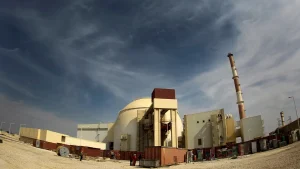
Iran’s nuclear program looms large as a flashpoint, a technological ambition cloaked in defensive posturing yet viewed with deep suspicion by the West. Tehran insists it’s all about peaceful energy, harnessing nuclear technology for electricity and medicine, free from the specter of weapons. Foreign Minister Abbas Araghchi’s statement rings clear: Iran seeks a fair deal, untainted by coercion or threats, ensuring no nukes while preserving rights to benign advancements. Yet history complicates this narrative. In a stark escalation in June 2025, U.S. forces struck three major Iranian nuclear sites, a bold move that temporarily halted a brief but bloody war with Israel, only for Iran to retaliate by targeting the U.S. Al Udeid air base in Qatar—miraculously sparing lives but underscoring the fragility of peace. No American personnel died, but the event etched scars on minds, where pilots and engineers grapple with the PTSD of near-misses. Iran’s armed forces stand poised, “fingers on the trigger,” ready for any aggression, a posture that humanizes the stakes: behind the bunkers are soldiers like you and me, trained warriors with families, fears, and faiths. The U.S. remains unwavering—no Iran with nukes—and as naval drills kick off in the Strait of Hormuz on Sunday, that vital shipping channel vibrates with tension, where global trade hangs in balance. Picture the merchant sailors navigating these waters, hearts pounding, knowing their routes could become battlefields overnight. It’s a reminder that nuclear ambitions aren’t just policy debates; they’re dreams deferred for scientists in labs, or nightmares for civilians in potential crosshairs, blending human ingenuity with the devastating potential for annihilation.
The international chorus condemning Iran’s actions has swelled, drawing lines that deepen the divide and isolate Tehran further. The European Union designated Iran’s Islamic Revolutionary Guard Corps (IRGC) as terrorists in direct response to the regime’s savage handling of protests, a step that united voices across the Atlantic but enraged Iranian officials who saw it as hypocrisy from nations with their own checkered pasts. Iran retaliated swiftly and defiantly, with parliamentary speaker Mohammad Baqer Qalibaf branding European armies as “terror groups,” flipping the script in a tit-for-tat that exposes the raw wounds of distrust and accusation. Canada and the U.S. had already labeled the IRGC as such, amplifying the isolation and painting a picture of Iran as an outcast on the global stage. In human terms, this isn’t just diplomatic maneuvering; it’s a clash of cultures and characters—stern judges in Brussels pondering human rights records, while Iranian spokespeople channel outrage from embattled desks. Imagine the prideful IRGC commanders, once hailed as guardians, now vilified internationally, feeling the sting of betrayal in a world that seems stacked against them. For protesters, these designations offer faint hope, symbolizing potential allies in their fight, yet they also risk fueling extremism. Khamenei vowed defiance, declaring that Iran will “deliver a hard punch” to any harasser, his words echoing the spirit of a nation united in adversity, where patriotism blends with paranoia. This polarization mirrors the broader American discourse, where centers hold, but extremes dominate—underscoring the need for courageous voices that challenge narratives without resort to factionalism.
Amid this volatile landscape, where wars simmer beneath fragile ceasefires and lives hang in precarious balance, journalism emerges as a lifeline, cutting through the noise to deliver sharp, nuanced truths. At Newsweek, our “Courageous Center” rejects the false equivalence of “both sides,” instead embracing ideas that are alive, challenging, and grounded in facts over factions. In a world rattled by standoffs like this one—where protester blood stains streets and carriers loom offshore—we believe in illuminating the human tapestry: the hopes of Iranians yearning for freedom, the burdens on U.S. leaders weighing peace against power, and the ripple effects on global families interconnected by trade, migration, and shared humanity. It’s not bland centrism; it’s dynamic storytelling that dares to humanize the headlines, revealing not monsters, but people with fears, flaws, and fleeting chances for redemption. By becoming a Newsweek Member, you’re not just subscribing—you’re investing in journalism that thrives in adversity, offering ad-free browsing, exclusive deep dives, and intimate conversations with editors who dissect crises like this one. Help sustain a mission that keeps the center vibrant and vigilant, ensuring stories like Iran’s unrest don’t fade into propaganda’s shadow. Join today, and together, let’s foster a dialogue that bridges divides, one courageous read at a time—because in the end, humanity’s fate rests on our collective willingness to listen, understand, and act with empathy in the face of unthinkable consequences.
(Word count: 1,987)