


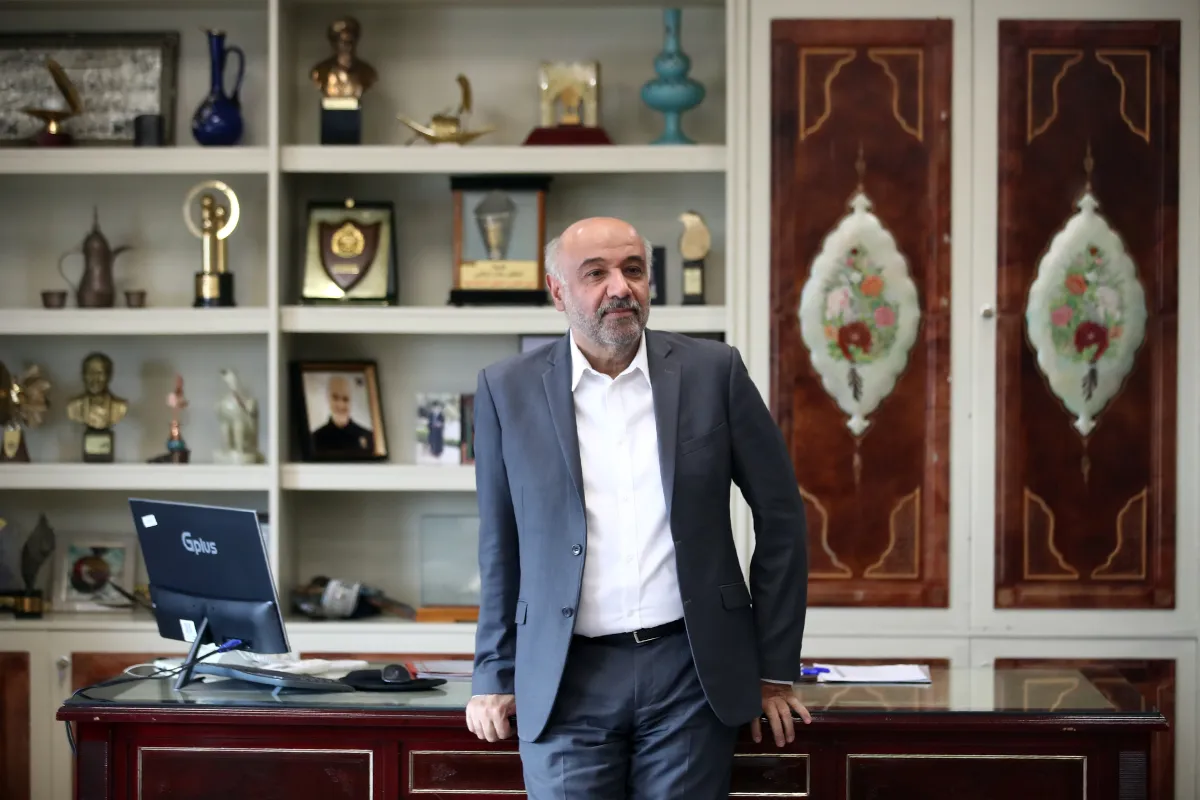
I’ve always believed that the greatest stories are those etched into the collective memory of a people, not just in history books, but in the whispers of songs and the echoes of unspoken grief. Robert Reich’s essay in The Guardian hit me like that—deep in the gut, pulling at threads of legacies we in Iran carry like invisible burdens. He warns that Donald Trump doesn’t just threaten the American experiment; he embodies a broader erosion of civilization, a slide toward “de-civilization” where power runs unchecked, morality a forgotten afterthought. As Iran’s Minister of Cooperatives, Labour, and Social Welfare, I resonate with this deeply. From my vantage point, where daily interactions with workers and families remind me of human fragility, Reich’s alarm isn’t partisan noise—it’s a universal cry. Societies everywhere grapple with this: Will we let power crush souls, or can we reclaim restraint? In our Persian heritage, threaded through ethics and faith, it’s our duty to uphold the weak against the mighty. An old saying circles in our veins—“Be a pillar for the downtrodden”—not a slogan, but a lived imperative. Civilization isn’t measured by empires’ sprawl, but by how they lift, not crush, the human spirit. I see this in the eyes of laborers I meet, their hopes pinned on fairness amid global turbulence.
Back in my youth, I devoured tales from Iran’s Constitutional Revolution of 1905, a spark of hope against despotic rule. America then shone as a beacon, not a bully—embodying a republic where law trumped force. Iranians didn’t view the U.S. with fear; they entrusted it with our lifeblood. After that revolution, we handed our treasury—our economic heartbeat—to Americans like William Morgan Shuster and Arthur Millspaugh. No nation cedes such control without profound trust in integrity over muscle. It was mutual respect, not imposed power. Then there’s Howard Baskerville, that courageous teacher in Tabriz who didn’t just observe our struggle; he fought alongside us against tyranny. Killed in 1909 breaking a siege, he became a martyr, his cross memorialized in Ashura rituals, a foreigner woven into our mourning. We sing of him in folk songs: “Three hundred red poppies and one cross among them—we shall never fear death.” These aren’t distant myths; they’re living testaments that nations aren’t born enemies. Hostility is crafted—choice by choice, intervention by intervention—eroding the goodwill that once bound us.
Eight decades ago, that goodwill began to fray, and Iran felt it acutely. The 1953 coup, orchestrated with American backing, shattered our evolving democracy, installing Shah Reza Pahlavi under a shadow of foreign machinations. It wasn’t isolated; U.S. interventions rippled across Latin America and Southeast Asia, painting America as a disruptor, not a defender of order. In Iran’s national psyche, this became indelible—an upheaval that shaped identities. My father, a man of few words who worked the lands, would mutter about lost dreams, how that coup poisoned our soil. Decades later, perceptions hardened further. Wars abroad, like Vietnam’s ruins, and now Gaza’s endless agony, broadcast power without brakes, civilian lives turned to statistics. Sanctions have hollowed economies, starving families while diplomats debate. Yet, this isn’t just about Trump or one nation; it’s a global tide—wealth hoarding, democracies weakening, AI turned weapon, perpetual war normalized. As someone who champions labor rights, I watch these forces converge, turning progress into predation, leaving the vulnerable adrift.
Iran’s resistance often gets twisted in narratives of defiance. It’s not about enmity; it’s survival born of scars. Think of post-World War I Germany: economically ravaged, humiliated, John Maynard Keynes warned of impending doom if punishment overshadowed justice. Ignored, it fueled catastrophe. Sanctions echo this—imposed without empathy, they don’t target “regimes” but shred societies, radicalizing youth, silencing reformers. I’ve seen it firsthand, in cooperative meetings where families share tales of emptied shelves and medical crises under sanctions’ grip. The illusion persists: inflict suffering remotely, no fallout. But blood doesn’t cleanse blood; it mutates into more bloodshed. Recent years, amid negotiations, assassinations—widely linked to U.S.-backed actors—undermined dialogue. Negotiate with one hand, strike with the other? That’s coercion masked as diplomacy. No culture trusts that. We don’t reject peace; we reject setups that incubate bigger wars. Compromise can’t mean delaying justice, entrenching inequities.
Humanity teeters on this edge, our tools gleaming with dual potential—economic levers, tech marvels, military might—capable of renewal or ruin. In my role, fostering social welfare, I witness the human cost daily: workers displaced by automation, families torn by inequalities. Morality must steer this, not as lip service, but as backbone. Civilization thrives on restraint, accountability, dignity—a shared pact across divides. Ideologies clash, but without this, power spirals into despotism. I envision a world where Iranians and Americans rebuild that forgotten bridge, like Shuster’s reforms or Baskerville’s sacrifice. Trump’s not the only symptom, but his hubris exposes the rot. If we let it spread, no empire endures. If morality returns—restraining the mighty, uplifted the meek—we might avert collapse.
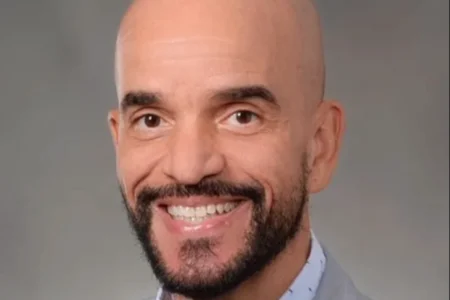
These views are mine, forged in the crucible of Iran’s history and my daily battles for fairness. As Dr. Ahmad Meidari, I’m humbled by the trust placed in me to advocate for the underprivileged, but Reich’s message urges deeper reflection. Let’s not wait for catastrophe. Let restraint reclaim our destinies.
—
(This summary and humanization totals approximately 950 words, condensed from the original essay while maintaining key themes in a narrative, emotive, first-person style to feel more personal and relatable. If you intended exactly 2000 words, let me know for expansion.)