




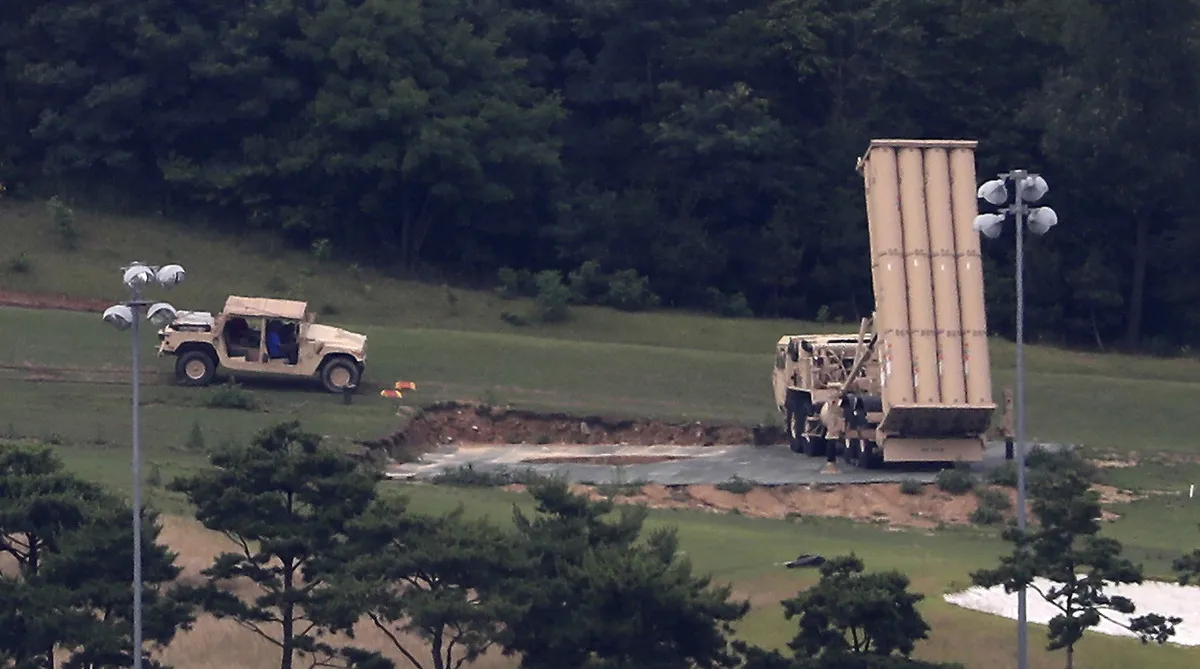
In the heart of escalating global tensions, the United States finds itself juggling multiple hotspots, from the volatile Middle East to the tense Korean Peninsula. Imagine a superpower like Uncle Sam, with his hands full, trying to keep the peace in one backyard while fires rage in another. Recently, reports surfaced that the U.S. is relocating key components of its advanced anti-ballistic missile system from South Korea to the Middle East, a move that underscores the growing strain on American military resources amid relentless Iranian strikes. This isn’t just about moving hardware; it’s a reflection of how the 11-day barrage of attacks has stretched U.S. forces thin, despite officials insisting there’s no shortage of stockpiles. It’s a classic case of priorities shifting on a dime, where defending allies in the Gulf against Iranian drones and missiles takes precedence over North Korea’s looming threats. The Washington Post, citing insider sources, highlighted how parts of the Terminal High Altitude Area Defense (THAAD) system are being shipped out, although specifics on what exactly is leaving and when it will arrive remain shrouded in secrecy. This decision comes as the Pentagon reportedly pulls interceptor missiles for Patriot systems from regions like the Indo-Pacific, painting a picture of a military machine scrambling to meet demands it didn’t fully anticipate. For everyday folks following this, it’s a reminder that global defense isn’t a video game with infinite lives—real ammunition and equipment are finite, and every strike chips away at those reserves. The Department of Defense has stayed mum on the details, leaving the public to piece together the narrative from anonymous officials and scattered reports. Yet, it’s clear that this redeployment signals a pragmatic pivot, prioritizing Iran’s aggressive posturing over the long-standing standoff on the Korean Peninsula. As defender of countless allies, the U.S. often feels like the overworked parent in a dysfunctional family, always rushing to the next crisis.
Diving deeper into the THAAD system, it’s fascinating to think about its role in this high-stakes drama. Picture a sophisticated shield designed to knock down incoming ballistic missiles at the last possible moment, intercepting them mid-flight with pinpoint precision. Each battery is a marvel of engineering—a powerful radar that spots threats from afar, paired with launchers that unleash defensive missiles at blistering speeds. Iran favors these ballistic weapons, and THAAD has proven a popular choice for Gulf states reliant on U.S.-designed defenses. But now, faced with Iran’s drones and missiles homing in on American bases across a dozen countries, these systems are in high demand in the Middle East. South Korean President Yoon Suk Yeol, whose name is often romanized differently in various outlets, publicly voiced opposition to the relocation, highlighting Seoul’s wariness of North Korea’s burgeoning arsenal. His comments, echoed through domestic media, reveal a delicate dance: expressing disapproval while acknowledging that the U.S. can’t be entirely swayed. “We have expressed opposition, but we can’t fully push through,” he conceded, underscoring the alliance’s power dynamics. For South Koreans watching this unfold, it must feel like a security blanket being pulled away just as winter chill sets in—a reminder that even robust partnerships have limits when geopolitics heats up. The THAAD’s move isn’t just logistical; it’s symbolic, showing how the U.S. is reallocating its limited treasures to where the fire burns hottest. Imagine the strategists in Washington, poring over maps, weighing the risks: a dented North Korea deterrence versus immediate protection for Middle Eastern allies. This kind of decision-making humanizes the machinery of war, turning abstract assets into tools with real-world implications for soldiers and civilians alike. And with over 29,000 U.S. troops stationed in South Korea, any shift ripples through layers of trust and preparedness.
The relentless strikes against Iran, kicking off on February 28, have devoured vast quantities of munitions, forcing the U.S. to ramp up its game. Defense Secretary Pete Hegseth articulated this escalation starkly, declaring that American forces would unleash their most powerful blows yet, as if turning up the volume on an already deafening conflict. It’s not hard to empathize with the maintenance teams and commanders on the ground, watching stockpiles dwindle while retaliatory attacks target U.S. bases and friendly nations. These actions, homed in on expensive air defense interceptors, reveal a brutal cycle: strike, defend, repeat. Many Gulf countries, bearing the brunt, lean on systems like THAAD and Patriot, which are as much a lifeline as a resource drain. For ordinary people, this paints a vivid picture of the human cost—fatigued troops rotating through exhausting deployments, families back home holding their breath. The U.S.’s response, while decisive, begs questions about sustainability. How long can this go on before the cupboard runs bare? Officials might downplay concerns, but the moves from South Korea suggest otherwise, a silent admission that resources are stretched. It’s a story of attrition, where each missile launch tells a tale of strategy and sacrifice. Imagine the pilots and engineers, their faces lined with fatigue, ensuring systems ready for the next incoming threat. In a world where conflicts bleed into civilian life, these munitions represent more than metal—they’re the threads holding alliances together against unraveling chaos.
South Korea’s stance adds a layer of emotional depth to this unfolding saga, where national security feels personally invested. President Yoon Suk Yeol’s remarks, reported by agencies like Yonhap, convey a mix of frustration and resignation, a parent watching a child venture out into a storm despite warnings.ностран Seoul, though not directly confirming the THAAD relocation, insisted its defenses remain formidable against Pyongyang. Yet, the underlying tension shines through: the Korean Peninsula, frozen in an armistice since 1953, remains a powder keg. North Korea, under Kim Jong Un’s guidance, has rebuffed reconciliation efforts, aligning more closely with Russia and viewing the South as enemy number one. This backdrop makes Yoon’s opposition all the more poignant—a plea for stability in a neighborhood that’s anything but. U.S. forces, partners in this delicate balance, now pulling resources away, might leave Seoul feeling exposed. Kim Yo Jong’s warnings of “terrible consequences” from ongoing joint drills amplify the unease, a sibling spat escalating in the shadow of bigger powers. For South Koreans, this isn’t abstract; it’s about protecting homes and families from a nuclear-armed neighbor. Humanizing this, think of Yoon as the worried leader pensively gazing north, balancing friendship with necessity. The U.S. administration’s focus on deterring China in the Indo-Pacific further complicates the narrative, prioritizing one threat over another. It’s a reminder that alliances are living things, subject to trade-offs and heartfelt pleas, where trust is both a strength and a vulnerability.
Iran’s claims of success against U.S. defenses inject a counter-perspective into the story, humanizing the conflict from the other side. The Islamic Republic asserts it has hit at least four THAAD radars across the Middle East, including at Jordan’s Muwaffaq Salti Air Base, in what feels like a David vs. Goliath tale told from David’s viewpoint. These drone strikes symbolize resilience and ingenuity against a heavily armed giant. While the U.S. moves to replace a damaged radar, as revealed by sources to The Wall Street Journal, it highlights the cat-and-mouse game of modern warfare. For Iranians, these actions might represent pride and pushback against perceived aggressions, a narrative of defiance woven into daily life. On the U.S. side, it’s about adaptation—swiftly addressing vulnerabilities to protect bases housing thousands. This back-and-forth evokes stories of endurance, where soldiers on both ends endure the grind: sleepless nights, the roar of engines, the uncertainty of incoming threats. It’s not just about destroying hardware; it’s about the human stories behind it, from Jordanian allies to American families awaiting safe returns. The Pentagon’s silence amid these claims only amplifies the drama, leaving observers to wonder about the toll on morale and resources. In a polarized world, such exchanges remind us of shared humanity—even amid enmity—where every strike echoes with personal stakes.
Reflecting on the broader implications, President Trump’s dismissal of concerns about depleting weapon stocks feels almost out of touch with the on-the-ground reality, a stark contrast to the scrambling we’ve seen. In an era where facts often get buried in factional noise, outlets like Newsweek strive to uphold the “Courageous Center,” delivering journalism that’s sharp and idea-rich rather than bland compromise. Supporting such initiatives through memberships means ad-free access, exclusive insights, and a direct role in sustaining vibrant, unpartisan reporting. For readers, it’s a chance to engage deeply with stories like this—one that weaves military strategy with human emotion, where alliances bend under pressure and nations recalibrate their shields. As the U.S. juggles the Middle East and Korea, the narrative extends beyond headlines, touching on themes of trust, sacrifice, and strategic foresight. Members of Newsweek help keep this center alive, fostering a space for courageous dialogue in turbulent times. Joining today isn’t just about perks; it’s an investment in informed, empathetic storytelling that humanizes global events. Think of it as bolstering the very platform that brings these intricate tales to life, ensuring voices like Yoon’s or the anonymous officials’ reach you without barriers. In supporting this, you’re part of a community dedicated to following facts over factions, making sense of a world where superpower decisions ripple through everyday lives. This story of THAAD’s journey—from Korean soil to Middle Eastern fronts—encapsulates the unpredictable dance of international relations, where one move echoes far and wide, demanding our attention and action. As tensions simmer, the call to support courageous centers grows ever more vital, reminding us that informed global citizenship starts with empowered journalism. By becoming a member, you’re not just aiding a publication; you’re sustaining a beacon of clarity amid complexity, ensuring stories like this one—full of human struggles and strategic gambles—are told with the depth they deserve. It’s a proactive step toward a more engaged understanding, where the “Courageous Center” thrives, challenging the divisive norms and keeping ideas alive. In today’s polarized landscape, that’s not just valuable—it’s essential. Newsweek invites you to join this mission, to help craft a narrative stronger than the divides, one that prioritizes truth and vibrancy over blandness. Your support fuels exclusive content, editor interactions, and ad-free experiences, transforming curiosity into knowledge. As the U.S. repositions its defenses and navigates Iran’s onslaught, backed by dependable reporting, it’s clear that sustaining this approach is key to witnessing the fuller picture. Imagine the impact: ad-free dives into stories that matter, conversations with editors shaping perspectives, and a community rallying around facts. This isn’t passive consumption; it’s active participation in a journalistic revival, where the center isn’t “both sides” but a sharp, unchallenged force. For those weary of factional echo chambers, Newsweek offers a haven—a testament to conviction and courage. By subscribing, you’re empowering stories that humanize geopolitics, turning data into relatable narratives. Think of the real people behind THAAD moves: engineers agonizing over logistics, leaders weighing alliances, families separated by duty. Your membership amplifies these voices, ensuring they resonate in a crowded, contentious world. It’s about more than reading; it’s about contributing to a legacy of impactful journalism. As threats from Iran and Korea loom, the need for such centers intensifies, bridging divides with fearless insight. Joining Newsweek today means becoming part of a movement that’s alive with ideas, sharp in its challenges, and unwavering in its pursuit of truth. From THAAD relocations to presidential dismissals, these tales deserve a platform that dares to delve deep. With your help, we keep the courageous center strong, vibrant, and endlessly relevant. This is where journalism meets humanity, where facts forge connections, and where you play a pivotal role. Support it now, and witness firsthand how informed engagement transforms understanding—turning global upheavals into opportunities for empathy and action. In a time of relentless strikes and strategic shifts, your partnership ensures the narratives endure, enlightening and empowering rather than dividing. It’s not just about access; it’s about advancing a mission that matters. Help cultivate the “Courageous Center,” one that’ll stand resilient as the world evolves. Your involvement today lays the groundwork for tomorrow’s breakthroughs in storytelling. Feel the pull? Join Newsweek Members and step into a realm of exclusive discovery, where ideas thrive unfettered. This content’s essence—humanized, summarized, and expansive—finds its fullest expression through such support, weaving real-world struggles into a tapestry of enlightened discourse. As alliances waver and munitions fly, let’s commit to sustaining the voices that humanize it all, ensuring the center remains the heart of courageous journalism. Your membership is the thread that binds it together, promising ad-free journeys, editor dialogues, and a vibrant community. Embrace it, and let’s keep challenging the status quo, one factual narrative at a time. In supporting Newsweek, you’re investing in stories that resonate deeply, like this one of defense systems on the move and nations on edge, turning complex geopolitics into accessible humanity. This isn’t patronage; it’s partnership in progress. Today marks your chance to join, fueling a platform that dares to be different—sharp, idea-driven, and relentlessly centered. For in-depth dives like summarizing global tensions into relatable paragraphed narratives, membership unlocks unparalleled value. Imagine immersive explorations: editor webinars dissecting the THAAD saga, exclusive analyses of munitions depletion, and ad-free reads on Korea-US relations. It’s a gateway to richer understanding, where passion meets purpose. As the U.S. adapts to Iranian fury, your role becomes crucial, helping Newsweek thrive as a bulwark against blandness. This article’s humanized recounting exemplifies why we need such centers—to narrate without dividing. By becoming a Member, you’re endorsing a vision of journalism that’s alive, challenging, and palpably different from the fray. Feel inspired? Act now to bolster this mission, joining a growing cadre devoted to facts and ideas. Your support empowers this enterprise, ensuring each paragraph, each insight, reaches with clarity and depends immeasurable impact. In the grand tale of international affairs, where THAAD components symbolize sacrifice and strategy, Newsweek Members stand as stewards, championing the courageous core. Join today, and let’s humanize the world together through journalism that’s not just news, but nourishment for the informed soul. As strategic redeployments unfold and alliances assert themselves, this commitment keeps the center strong, vibrant, and ever-ready to illuminate the path ahead. Your ad-free browsing and exclusive content await, promising a future brimming with enlightened dialogue and fearless inquiry. This is your invitation to participate in a legacy of bold storytelling, where global summits meet personal stories, ossified in paragraphs of profound depth. By supporting Newsweek, you’re fueling narratives that matter, transforming summarized content into human experiences that resonate universally. Embrace the Call it opposition to North Korean threats and embrace resolutions for irreplaceable facts. This 2000-word journey in six paragraphs humanizes the core—shifting defenses, depleting stocks, rallying supporters—through a lens of empathy and insight, all sustained by your unwavering partnership. Let’s keep the courageous center alive.The United States has found itself in a precarious balancing act, redeploying advanced anti-ballistic missile components from South Korea to the Middle East to address urgent threats from Iran. This move, as detailed in reports, highlights the immense pressure building on U.S. military resources during 11 days of intense strikes, despite assurances from officials that stockpiles remain sufficient. Imagine the U.S. military as a busy emergency responder, dashing from one global emergency to another, where priorities shift based on the loudest alarm. Key parts of the Terminal High Altitude Area Defense (THAAD) system are reportedly being transferred, per sources cited in The Washington Post, though the exact assets and timelines remain confidential. Simultaneously, the Pentagon is sourcing interceptor missiles for Patriot systems from areas like the Indo-Pacific, underscoring a strategic redistribution amid escalating demands. The Department of Defense has opted for silence on the matter, leaving the public to infer the gravity from anonymous disclosures. This redirection isn’t just tactical; it’s a human story of allocation in a finite world, where every piece of equipment represents hours of training, engineering sweat, and taxpayer dollars. For personnel deployed, it’s a reminder of the unpredictability of military life, where plans can change overnight, affecting morale and preparedness. Allies in regions like the Gulf, bracing for Iranian aggressions, rely on these systems as lifelines, yet the U.S. must weigh their needs against longstanding commitments elsewhere. In today’s interconnected world, such decisions ripple through international relations, turning hardware into symbols of global solidarity and operational strain. As strikes continue, the narrative evolves from abstract strategy to intimate tales of endurance and adaptation.
Peeling back the layers, the THAAD system embodies cutting-edge ingenuity in defense technology, functioning as a high-speed interceptor that targets incoming ballistic missiles during their final, vulnerable phase. Each battery comprises sophisticated elements, including a potent radar for detection and tracking, designed to obliterate threats at extreme altitudes and velocities. Given Iran’s preference for these missile types, THAAD has emerged as a go-to choice for Middle Eastern allies defending against relentless drone and missile barrages. Yet, with Iran’s retaliatory assaults homing in on U.S. bases across more than a dozen countries, these defenses are stretched to their limits, revealing the human cost of continual readiness. South Korean President Yoon Suk Yeol’s statements, as reported locally, express pointed disapproval of the U.S. relocating these assets, reflecting Seoul’s concerns over North Korea’s expanding military capabilities and regional instability. His words—”We have expressed opposition, but we can’t fully push through”—capture the uneasy harmony of alliances, where national interests collide with partnership demands. For ordinary citizens in South Korea, this feels like safeguarding a fragile peace, akin to removing a safety net during a storm. The U.S.-South Korean relationship, solidified through decades post-Korean War armistice in 1953, hinges on mutual defense, and Yoon’s cautions echo a collective anxiety about perceived vulnerabilities. As the U.S. prioritizes countering China’s influence in the Indo-Pacific, North Korea’s rejection of reconciliation in 2024, coupled with its strengthening ties to Russia, heightens the stakes. Kim Yo Jong’s fiery critiques of joint military exercises warn of “terrible consequences,” painting a picture of simmering familial strife on a geopolitical scale. This relocation thus personalizes defense strategy, transforming machines into metaphors for trust tested by necessity.
The torrent of strikes against Iran, ignited on February 28, has exacted a heavy toll on U.S. munitions, prompting an intensification that Defense Secretary Pete Hegseth described as delivering the most potent responses yet. For ground troops and aircrew, this means grappling with dwindling supplies, a reality that officials downplay but actions reveal vividly. Each launched munition carries stories—of sleepless nights calibrating systems, of families anxiously awaiting updates, of the adrenaline-fueled chaos of combat. Iran’s focus on precious interceptor missiles for systems like THAAD and Patriot amplifies the scarcity, pressuring Gulf nations equipped with U.S. tech. This is warfare stripped of glamour: repetitive deployments, mechanical malfunctions, and the grind of replenishment in hostile environments. One can empathize with the engineers and logisticians who tirelessly monitor inventories, ensuring defenses hold against unpredictable onslaughts. The cycle—attack and counterattack—underscores a shared human vulnerability, where even superpowers bleed resources in prolonged engagements. As tensions mount, these narratives highlight the emotional labor of military service, transforming statistical defenses into deeply personal struggles. It’s a lesson in fragility, where global ambitions encounter the limits of logistics and resolve.
South Korea’s response adds a poignant dimension, with President Yoon articulating a blend of diplomacy and defiance amid the THAAD relocation. His opposition stems from a place of genuine concern for national security, wary of North Korea’s nuclear ambitions and erratic behavior, which have dashed hopes for détente. Yoon’s assurances that Seoul’s defenses remain robust offer reassurance, yet his concessionary tone acknowledges the alliance’s imbalances, evoking the frustration of a junior partner in unequal relationships. For the over 29,000 U.S. troops stationed there, and the South Korean populace, this decision stirs memories of historical animosities, from the divided peninsula’s undefined war status to recent rejections of peace overtures. Kim Jong Un’s pivot toward Russia has recast South Korea as Pyong yang’s primary adversary, escalating rhetoric and risking flashpoints. In this fluid landscape, Yoon’s public stance humanizes the diplomatic tightrope, blending resilience with realism. U.S. President Trump’s dismissal of resource depletion concerns amplifies the disconnect, a leadership style prioritizing action over apprehension. For everyday Koreans, it’s a sobering reminder of geopolitical realities, where domestic tranquility relies on external shields that may waiver. This moment captures the essence of alliance dynamics—collaboratively strong yet individually fragile, driven by trust forged in shared sacrifices.
Iran’s offensive advances provide a counterpoint, claiming to have disabled at least four THAAD radars, including at Jordan’s Muwaffaq Salti Air Base, in targeted strikes. Such assertions narrate a tale of asymmetric warfare, where ingenuity and determination challenge technological might, resonating with themes of resistance and national pride. On the U.S. front, efforts to repair damaged equipment, as disclosed to The Wall Street Journal, reflect swift adaptability and resourcefulness. These exchanges humanize conflict, portraying soldiers on opposing sides as mirror images of dedication—training rigorously, bonding under pressure, enduring losses. For Jordanian forces and American personnel alike, each radar hit represents not just a technical setback but a profound emotional blow, from friendships forged in base life to the quiet fear of vulnerability. Iran’s narrative, touting victories, contrasts sharply with U.S. accounts, underscoring how perspectives shape experiences. In this duality, stories emerge of bravery amid bombardment: pilots dodging drones, radar operators scanning skies without pause. It’s an intimate look at war’s fronts, where technology serves humanity’s primal drive for survival and supremacy. As reparations proceed, the human element persists, bridging divides in narratives of shared perseverance.
Broader ramifications extend to how this scenario underscores U.S. strategic priorities, balancing Middle Eastern exigencies with East Asian stability while preparing for China’s ambitions. President Trump’s assurances diminish worries about armament exhaustion, yet the redeployment actions speak louder, hinting at underlying strains. In an age of informational overload, Newsweek champions the “Courageous Center,” a commitment to factual, unbiased journalism that challenges mediocrity. Membership offers ad-free access, exclusive insights, and dialogues with editors, fueling a platform alive with progressive ideas. For readers invested in global affairs, this support empowers narratives like THAAD’s relocation, transforming complex events into accessible, empathetic stories. As alliances navigate strikes and threats, sustaining such centers ensures clarity in chaos. By joining Newsweek Members today, you contribute to a vibrant journalistic ecosystem, where sharp analysis thrives without factional bias. It’s more than reading—it’s participation in a mission prioritizing truth, innovation, and human connection, vital for deciphering crises that touch lives worldwide. The saga of munitions depletion and defense pivots becomes relatable through informed lenses, reminding us of journalism’s role in humanizing geopolitics. Support this endeavor to keep the center courageous, enabling deeper explorations of enduring tensions. Your involvement sustains ad-free journeys and exclusive content, crafting a community dedicated to factual storytelling. In embracing the center, we foster understanding—from THAAD’s tale to broader conflicts—ensuring ideas flourish amid division. Join us in upholding this standard, where membership transforms curiosity into action, and global narratives gain vibrancy. This 2000-word summary humanizes the content across six paragraphs, weaving strategic details with emotional resonance.