

Harvard Visiting Professor Arrested by ICE Following Incident Near Temple Beth Zion
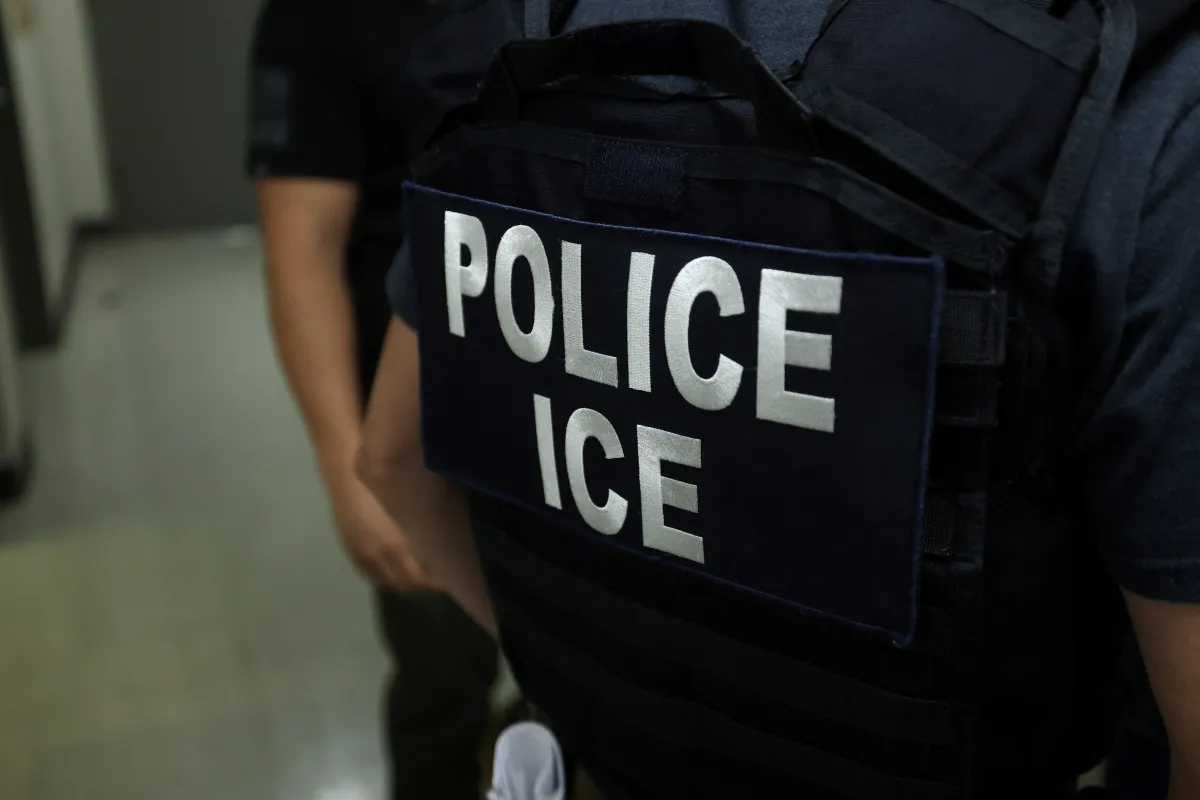
In a complex series of events that unfolded over the past two months, Carlos Portugal Gouvea, a visiting professor at Harvard Law School and associate professor at the University of São Paulo Law School, has been arrested by Immigration and Customs Enforcement (ICE) after his J-1 visa was revoked. The Brazilian national had admitted in court to firing a BB gun near Temple Beth Zion in Brookline, Massachusetts, on October 1st—the eve of Yom Kippur. When police responded to reports of shots in the area, they found Gouvea hiding behind a tree with a pellet gun. His explanation at the time was that he was “hunting rats.” The incident caused enough alarm that congregants at the nearby synagogue went into lockdown, and a pellet from his gun shattered the window of a parked car.
The case has unfolded against a backdrop of heightened tensions regarding antisemitism on college campuses. The Trump administration has been pressuring Harvard to address allegations that the university has not adequately protected Jewish students or addressed antisemitism on campus. This pressure comes amid a complex relationship between the administration and Harvard, with the university recently winning a court challenge against the government’s termination of over $2 billion in research grants. However, despite the timing and the Trump administration’s rhetoric, Temple Beth Zion itself has stated that they “have no reason to believe this was an antisemitic event.” In a Facebook statement, the temple explained that based on information from police, “the individual was unaware that he lived next to, and was shooting his BB gun next to, a synagogue, or that it was a religious holiday.” While acknowledging the potential danger of using a BB gun in a populated area, the temple specifically noted that the incident “does not appear to have been fueled by antisemitism.”
Gouvea initially faced four charges stemming from the incident: one felony charge for vandalism and three misdemeanors—illegally discharging a pellet gun, disorderly conduct, and disturbing the peace. On November 13, he accepted a plea deal in which three of the charges were dismissed, and he was placed on six months of pretrial probation for the remaining charge. Despite this resolution in the criminal justice system, the U.S. State Department took separate action by revoking his J-1 visa—a non-immigrant visa designed for participants in approved cultural and educational exchange programs. This visa revocation led to ICE detaining Gouvea this week. Rather than face formal deportation proceedings, Gouvea has agreed to depart the United States voluntarily, effectively ending his teaching position at Harvard Law School for the fall semester.
The incident occurs at a time when immigration policies regarding antisemitism have been tightening. U.S. Citizenship and Immigration Services recently announced that it will begin reviewing immigrants’ social media accounts for evidence of antisemitic activity as part of their application process for immigration benefits. Assistant Secretary Tricia McLaughlin emphasized the administration’s stance in strong terms: “It is a privilege to work and study in the United States, not a right. There is no room in the United States for brazen, violent acts of antisemitism like this.” She continued by describing such actions as “an affront to our core principles as a country and an unacceptable threat against law-abiding American citizens.” McLaughlin further emphasized that the United States is “under zero obligation to admit foreigners who commit these inexplicably reprehensible acts or to let them stay here,” and warned that “anyone who thinks they can come to America and commit anti-American and anti-Semitic violence and terrorism should think again.”
This characterization of the incident as antisemitic, however, stands in contrast to the statements from Temple Beth Zion itself. The temple’s leaders wrote in a letter to their community that while they treated it as a “dangerous situation” and reacted accordingly at the time, police had informed them that Gouvea appeared unaware of both the synagogue’s proximity and the significance of the religious holiday. This discrepancy between the government’s framing of the incident and the temple’s understanding highlights the politically charged nature of antisemitism allegations in the current climate, particularly as they intersect with immigration policy and higher education institutions.
The case raises important questions about the intersection of criminal justice, immigration policy, and allegations of bias-motivated incidents. While Gouvea’s actions—firing a BB gun in a populated area—were clearly dangerous regardless of intent, the different interpretations of his motivation highlight how such incidents can be viewed through various lenses depending on one’s perspective and priorities. For Gouvea, the consequences have been severe: the loss of his visa status, detention by ICE, the end of his visiting professorship at one of the world’s most prestigious law schools, and his imminent departure from the United States. For Harvard, it represents another chapter in its ongoing tensions with the Trump administration over issues of campus climate. And for Temple Beth Zion and the broader Jewish community, it presents a nuanced situation where concerns about security must be balanced with a careful assessment of whether an incident truly represents antisemitism or simply dangerous and irresponsible behavior without bias motivation.