



Immigration Raid Raises Constitutional Concerns
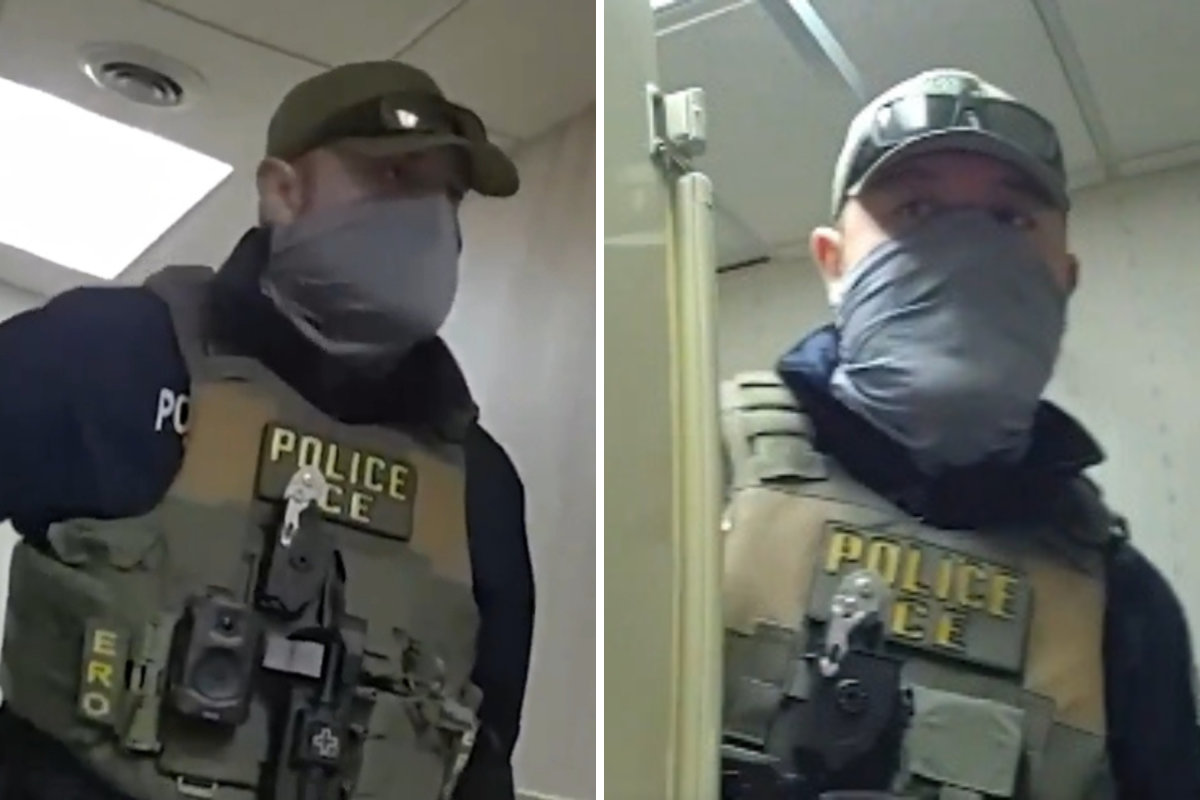
In a troubling incident that highlights ongoing tensions around immigration enforcement tactics, federal agents conducted a controversial workplace raid at Nutrition Bar Confectioners in Cato, New York on September 4. The operation, which resulted in 57 detentions, has drawn significant scrutiny after body-camera footage revealed agents forcing their way into a women’s bathroom and ordering an occupant to “pull up your pants and come out.” This incident represents a concerning example of how immigration enforcement methods can potentially violate constitutional protections, even for non-citizens.
The raid began when agents from Homeland Security Investigations (HSI), alongside IRS Syracuse, Oswego Border Patrol, and Enforcement and Removal Operations, entered the nutrition bar manufacturing plant. According to government documents, authorities had received information alleging the employment of individuals without legal authorization and the use of fraudulent immigration documents. Internal financial irregularities had also raised concerns. However, what started as a document inspection quickly escalated into a full-scale detention operation. Video footage shows agents moving through the facility, directing employees into hallways, and in one particularly disturbing moment, forcing entry into a locked women’s restroom. This aggressive approach has raised serious questions about whether the agents exceeded the scope of their legal authority.
The case of Argentina Juarez-Lopez, one of the detained workers, illuminates the potential constitutional violations that occurred. Her attorney, Paul Tuck, provided body-camera footage to U.S. District Judge Brenda Sannes and filed a motion arguing that the raid violated Fourth Amendment protections against unreasonable searches and seizures. Juarez-Lopez described how agents armed with weapons blocked exits from the break room for approximately an hour. She was questioned for merely nine seconds, requested legal representation, and was subsequently handcuffed and transported to the Oswego Border Patrol facility. Agents later documented that she was from Guatemala and unlawfully present in the United States. Tuck contended that seizing his client without probable cause or reasonable suspicion constituted a clear violation of her constitutional rights—a position that would ultimately be vindicated by the court.
In a significant legal development, Judge Sannes ruled in Juarez-Lopez’s favor, finding that immigration agents had indeed violated her Fourth Amendment rights when entering the Cato facility. This ruling underscores a crucial legal principle: Fourth Amendment protections against unreasonable searches and seizures apply to everyone in the United States, regardless of citizenship status. The judge’s decision represents a meaningful check on enforcement tactics that may have overstepped constitutional boundaries. While Acting U.S. Attorney John Sarcone III maintained that all 57 individuals detained during the raid were unlawfully present in the United States—with 52 already deported by September 9, 2025—the legal challenges to the methods employed during the operation raise important questions about due process and proper procedure in immigration enforcement.
Legal experts and immigration advocates have voiced strong concerns about the tactics used during this raid. Tuck pointedly wrote in court documents that “The Fourth Amendment does not permit such a ‘shoot first, ask questions later’ approach,” highlighting how agents detained individuals first and established their immigration status afterward. Perry Grossman, an ACLU attorney in New York, noted that “The aggressive tactics used on Sept. 4 are incongruous with the limits courts to date have placed on the execution of administrative search warrants and raise serious concerns about the representations made to the magistrate judge in applying for the warrants.” David Bier, Director of Immigration Studies at the Cato Institute, emphasized that “The agents only had a warrant to review employer documents. They didn’t have a warrant to search for, detain, or arrest anyone there.” These critiques reflect broader concerns about whether immigration enforcement operations respect constitutional boundaries.
This incident at Nutrition Bar Confectioners comes during a period of intensified immigration enforcement under the Trump administration, with ICE and CBP leading a mass deportation strategy that has generated significant controversy. The agencies have faced mounting criticism over their methods, with allegations of misconduct and violations of due process becoming increasingly common. What makes this case particularly troubling are reports that workers with varying immigration statuses were among those detained, including at least one individual with a valid work permit who was reportedly deported despite having authorization to work in the United States. While the government maintains that the raid was lawful and part of routine immigration enforcement, the judge’s ruling in Juarez-Lopez’s case suggests that at least some aspects of the operation crossed constitutional lines. As immigration remains a divisive political issue, this case serves as an important reminder that enforcement tactics must still operate within the bounds of constitutional protections that extend to all persons on American soil.