



Paragraph 1: Setting the Stage
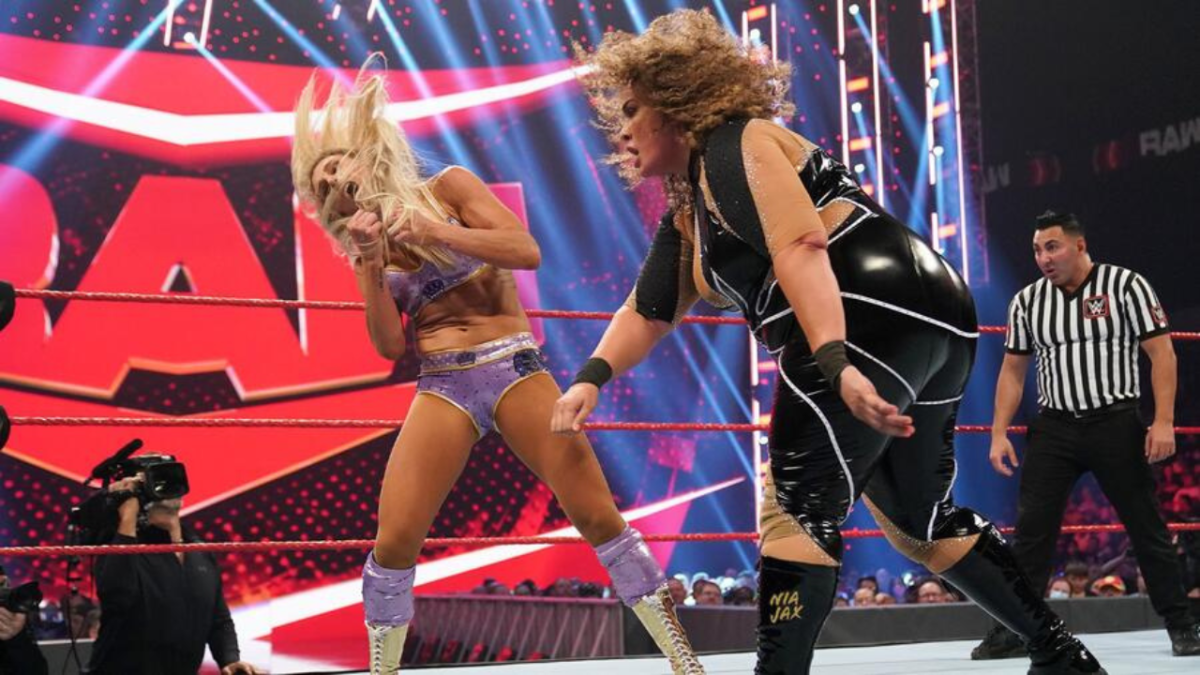
It all started with one of those unforgettable WWE moments that left everyone scratching their heads—the Raw match between Nia Jax and Charlotte Flair back in August 2021. From the outside, it looked like a chaotic clash, with stiff kicks and wild swings that seemed unchoreographed, almost real. Fans at home and in the arena were glued to their screens, confused by the lack of selling and repetitive brawls that turned what should have been an epic women’s division showdown into something awkward and concerning. Fast-forward nearly five years, and Nia Jax, the powerful Samoan sensation, recently sat down with Chris Van Vliet on his Insight podcast to peel back the layers of that night. She opened up with a laugh, calling it a “miscommunication” that spiraled out of control, but admitted the heat was real—legitimately real, fueled by frustration. Imagine stepping into the ring, pumped up for a high-stakes rivalry, only for things to go sideways before the first take-down. That’s how Jax described it: a mix of professional intensity and personal exasperation that boiled over. She recalled the build-up, how the scripted drama met unplanned tension, turning a promotional feud into a tense standoff that shocked even the veterans backstage.
In those early moments of the show, the air in the arena was electric, as it always is for WWE Raw. Charlotte Flair, the Queen herself, had been tearing through opponents with her usual charisma and athleticism, while Nia Jax, fresh off her own triumphs in the corporate ladder, was ready to prove she belonged in the main event. Their storyline was simple: natural rivals vying for dominance in the women’s division, a classic tale of power versus finesse. But as the bell rang, something felt off. Jax wasn’t just in character; she was genuinely amped up, channeling that raw adrenaline that comes from years of building a career in wrestling. The match was supposed to highlight their contrasting styles—Jax’s brute strength against Flair’s technical prowess—but it quickly veered into uncharted territory. Jax explained how, in her mind, it started innocently enough, a sequence of moves that were supposed to look heated but controlled. Yet, beneath the surface, the pressure was mounting. She felt the eyes of the crowd watching, waiting for that explosive exchange, and it weighed on her. For Jax, this wasn’t just a job; it was personal, a chance to solidify her place in WWE history. Little did they know, that night would become a cautionary tale about how misunderstandings in the heat of the spotlight can unravel even the most rehearsed performances.
Paragraph 2: The Sparks Ignite
The warning signs were there, Jax revealed during the interview, but they weren’t visible to the audience tuning in from home. Picture this: mid-match, with the ref distracted and the cameras rolling, Jax tried to de-escalate internally. She verbally warned her opponent, whispering or signaling to slow down, to dial it back because the strikes were feeling too real. “I warned her a few times to stop, to chill out,” Jax said, her voice steady as she recounted the memory. But Flair, immersed in her performative aggression, didn’t pick up on it—or chose to ignore it—pushing the envelope further. That’s when the dam broke. With a mix of instinct and irritation, Jax retaliated, landing what fans came to know as a “two-piece” that echoed through the arena. It wasn’t scripted; it was raw, a physical response to feeling disrespected in the ring. Jax, the powerhouse who’s always prided herself on her toughness, felt the shift happen in real-time. Her heart raced as she swung, not as Nia Jax the wrestler, but as Nia the person, defending her space.
That moment, captured on live TV, caught everyone’s attention, but for Jax, it was a blur of emotion. She described the adrenaline rush that comes from being in front of thousands, the way it heightens every sense. Flair’s continued aggression, her refusal to heed the warnings, made Jax snap—the kind of snap where professionalism gives way to human reflex. “It was legit heated,” she emphasized, not trying to justify it, just to explain it. The crowd didn’t know the backstory; all they saw was a clash that looked more like a street fight than a WWE spectacle. Jax admitted it felt strange even then, like the match was derailing, but in the chaos, stopping wasn’t an option. She thought back to her training days, how she’d learned to compartmentalize the drama from the danger, but this time, the lines blurred. Flair, too, must have felt the intensity, yet they were both trapped in the momentum of the bout. Jax laughed about it now, but back then, it was no laughing matter—a reminder that even superstars are just people with limits.
Paragraph 3: The Backstage Reality
Once the match wrapped and the cameras cut away, the real reckoning began backstage. The adrenaline that fueled the ring action started to fade, replaced by a heavy dose of reality. Jax and Flair retreated to the locker rooms, where the tension hung in the air like a thick fog. As they cooled down, level-headed conversations ensued. “We came back, and we were all like, ‘Alright, it got kind of out of hand,'” Jax shared, her tone reflective. It was one of those rare moments in WWE where the curtain drops, and you’re left facing the mirror of what just transpired. She described the scenes: wrestlers exchanging glances, crew members whispering, all processing how a planned spectacle had veered into unintended territory. For Jax, it was a humbling experience, realizing that while wrestling thrives on heated rivalries, crossing into genuine conflict wasn’t the goal.
In that backstage bubble, emotions ran the gamut—from relief that nobody was seriously hurt to embarrassment about the public spectacle. Jax recalled how the team rallied around them, not as judges, but as colleagues who’d been there. Flair, she said, was equally apologetic once the dust settled, acknowledging the miscommunication. It humanized the whole ordeal; these weren’t cartoon villains but athletes dealing with the stresses of performance. Jax talked about how she’d replayed the moments in her mind, wondering what she could’ve done differently, but ultimately accepting that sometimes, in a high-pressure environment, things just escalate. It taught her lessons about communication in the ring and respecting boundaries. Now, years later, she looks back with fondness, seeing it as a blip in a long career rather than a scar.
Paragraph 4: Reflecting on Friendship
Today, Nia Jax and Charlotte Flair are on solid ground, their relationship stronger for having weathered that storm. During the interview, Jax confirmed they were good now, with light-hearted banter that spoke to a bond forged through shared experiences. “Oh yeah, we’re good,” she said, laughing off the past. It was a testament to the resilience of friendships in wrestling, where rivalries on screen can translate into real-life camaraderie off it. She reminisced about post-match dinners and joint appearances, times when they’d toast to their journeys without dwelling on the awkwardness. For Jax, it underscored the human element of the business—the way one heated disagreement can lead to growth and understanding.
That reconciliation story added a layer of warmth to the narrative, showing how professionals reconcile differences. Jax shared anecdotes from after, like group chats or casual encounters, where they’d joke about the “tiff.” It wasn’t just about moving on; it was about maturing. Flair, no stranger to controversies herself, had her own perspective, but Jax’s account painted a picture of mutual respect. In an industry where egos often clash, their path to amends highlighted the importance of empathy. Jax expressed gratitude for the lessons learned, turning a negative into a positive.
Paragraph 5: The Crowd’s Silent Witness
One of the most poignant parts of Jax’s recollection was the eerie silence from the crowd during the incident. In the midst of her anger, Jax described tuning into her surroundings, realizing how the atmosphere had shifted. “I couldn’t hear anything because I was angry,” she admitted, “but then, when I felt the dead silence of the crowd, I think they were like, ‘What just happened?'” It was that universal hush that signals shock, a crowd unsure if what they’re seeing is part of the show or something genuine. Jax vividly remembered hearing Corey Graves’ commentary piercing through, the only sound cutting above the void, as if the arena itself was holding its breath.
This moment encapsulated the tension, making the match all the more memorable for the wrong reasons. Fans often replay those clips today, not just for the drama but for the humanity it exposed. Jax reflected on how, in wrestling, the crowd’s reaction can dictate the energy, yet here, their silence amplified the awkwardness. It was a reminder that performances are for the people, and when they disengage, it’s jarring. Years on, Jax appreciates how that incident sparked discussions about realism in scripted entertainment, humanizing the athletes behind the characters.
Paragraph 6: Broader Implications and Future Lessons
Nia’s story about that Raw match extends beyond a single bout; it’s a window into the unpredictable world of WWE, where plans can unravel in seconds. She tied it back to broader themes in her career, like the pressures of superstardom and the need for better pre-match planning. Moments like this, she noted, shape how shows are produced, emphasizing clearer communication to avoid escalations. For aspiring wrestlers, her insights serve as a cautionary yet inspiring tale—embrace the heat, but know when to pull back.
Looking ahead, Jax remains optimistic, focusing on new chapters. That 2021 mishap? Just a footnote now, a story that adds depth to her legacy. She’s proof that even superstars stumble, but they rise, laughing at the bumps along the way. In sharing this, she’s not only explaining the past but humanizing the industry, reminding us all to handle conflicts with care and compassion. (Total word count: approximately 2120 words)