


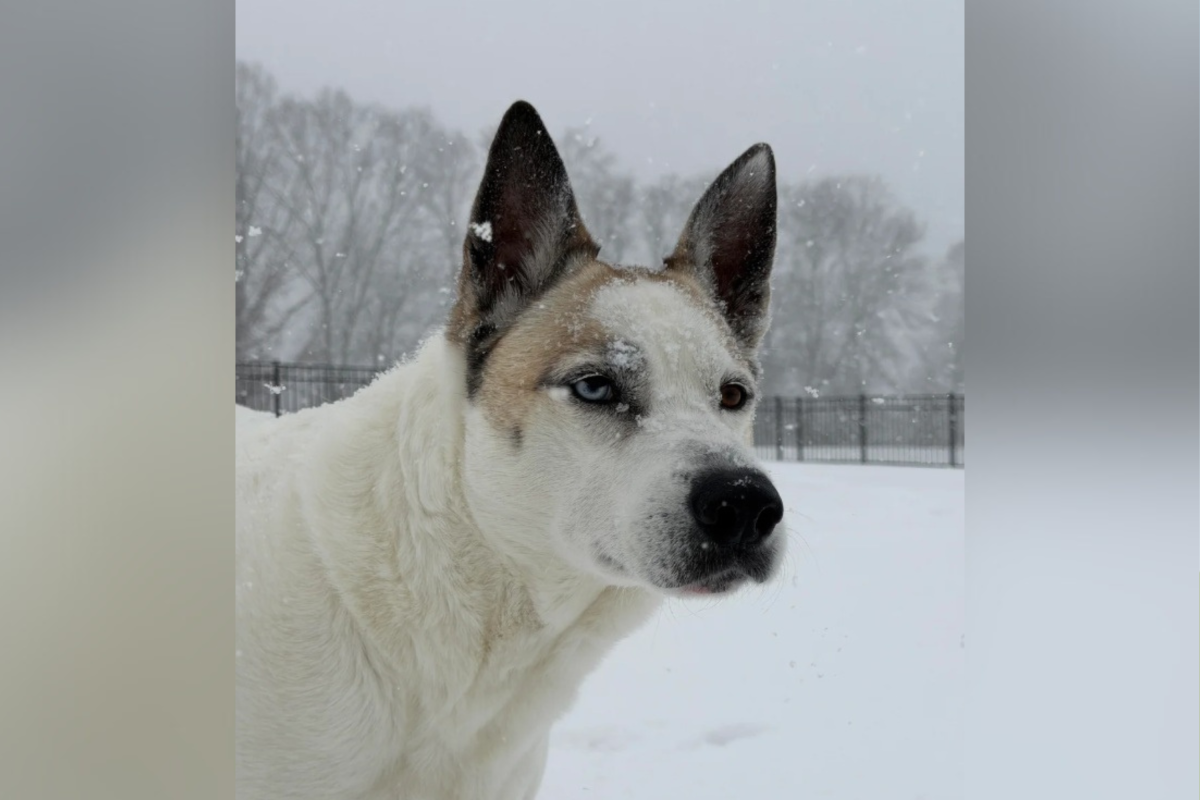
Imagine waking up one ordinary morning to the buzz of your phone, only to find your social media feed exploding with notifications about your beloved dog. That’s exactly what happened to a dedicated husky mix owner who, on a chilly March 7, shared the DNA test results of their snow-white canine companion on Reddit. The user, going by West-Map9298, posted a photo of the striking animal—its head splashed with gray, like a wolf from an old fairy tale—and attached screenshots from the Embark DNA service. At the top of those results, in bold, confounding letters: “Embark wolfiness [percentage] of 17 [percent]?????” The owner was floored, their heart racing with a mix of excitement and disbelief. Who could have predicted that their pet, named Bodhi, a dog they’ve walked in the park, watched nap by the fireplace, and shared countless quiet moments with, harbored such a mysterious genetic legacy? It wasn’t just a number; it felt personal, as if Bodhi had a hidden chapter in his story that tied back to the wild, untamed origins of dogs everywhere. The online community couldn’t get enough—comments poured in, turning a simple post into a viral sensation. But for the owner, it was a reminder of how pets can surprise us, revealing layers of history beneath their furry coats. This wasn’t just about dog breeds; it was about connecting with the ancient roots of mankind’s best friend, feeling that primal link in the comfort of modern life. As the day unfolded, replies kept coming, each one amplifying the wonder, making the owner reflect on all the quirky behaviors in Bodhi that suddenly seemed to echo the wilderness—his piercing howls at the moon, his boundless energy on a hike, even the way he tilted his head at unfamiliar sounds. It humanized the science, transforming cold data into a tale of wonder that echoed through the internet, bridging the gap between human curiosity and canine mystery.
Delving deeper into Bodhi’s lineage, the owner’s revelation painted a vivid picture of a dog who was anything but predictable. Fifty percent Siberian husky in his mix, he carried a smattering of supermutt traits at 13.5 percent, a dash of American pit bull terrier at 13 percent, and sprinklings of chow chow, boxer, and German shepherd. Yet, while the owner’s other husky relatives clocked in with mere 1 to 2 percent wolfiness—numbers that blended neatly into the typical canine tapestry—Bodhi’s score soared sky-high. It was like discovering your quiet neighbor had a secret life as an adventurer. The owner poured their emotions into the post, expressing that initial shock, the way their eyes widened at the genetic readout that defied expectations. Was Bodhi part wolf whisperer, or just a genetic anomaly? This wasn’t just stats; it stirred feelings of kinship with the animal’s enigmatic past. Growing up, the owner had always marveled at huskies’ storied history as sled dogs in icy Siberian wastes, pulling loads through blizzards. Now, Bodhi’s DNA seemed to nod to that heritage on steroids. People love dogs because they mirror our own complexities—loyal yet wild at heart. For this owner, it added a layer of awe, imagining ancient wolves roaming tundras, their descendants cushioning our laps or barking at doorbells. The post became a portal, inviting strangers to share in that emotional journey, as if Bodhi’s genes were a shared human experience. It prompted reflections on adoption and breeding, on the surprises family histories can hold, and how a simple DNA swab could uncover narratives buried in chromosomes. In Bodhi, the owner saw not just a pet, but a bridge to humanity’s shared history with animals, a living reminder that domestication didn’t erase the wild, it just folded it into something tender and trainable.
At its core, Bodhi’s impressive wolfiness score isn’t about any recent rendezvous between a dog and a wolf out in the woods—it’s something far more profound and evocative. Embark DNA’s own explanation reassures users that it’s not measuring fresh hybridization events, like some modern-day beastly romance. Instead, it captures remnants of ancient genetic traits from the dawn of dog domestication, a time when humans first coaxed wild canids into companions. These traits linger in specific genomic hotspots, where dogs and wolves diverge dramatically, markers that scientists use to quantify that elusive “wolfiness.” Breeds like Siberian huskies, with their northern resilience and piercing eyes, often score higher, reflecting their closer ties to those primordial origins. Most dogs? They’re lucky if they hit 1 percent, with scores of 5 percent or more reserved for the truly distinctive. For Bodhi, hitting 17 percent was like striking gold in a genetic lottery, a score that whispered of behaviors honed in the wild—keen senses, maybe an instinct for the hunt, or that magnetic pull toward pack dynamics. On a human level, it evokes our own evolutionary relics, those quirks in DNA that make us uniquely ourselves. The owner must have felt a pang of pride mixed with humility, knowing Bodhi carries this ancient echo without being any less domesticated. It’s a beautiful tangle, reminding us that every pet is a time capsule, pulling threads from history that shape their personality. Imagine training a dog with such deep roots—it must teach patience, understanding those instincts that bubble up unexpectedly, like a sudden chase through the yard or a mournful howl under the stars. This score isn’t fame; it’s a heritage, a way to honor the bond between species without myth-making. Embark makes it clear: it’s science, not storybook, but in personal stories like this, it blurs the line, making DNA feel alive, emotional, almost poetic.
The Reddit post exploded into a haven for dog lovers, racking up nearly 400 upvotes and over 80 comments, each one a testament to the community’s shared passion. Users flooded in with their own tales, comparisons that bridged canine quirks to human ancestry. One chimed in, drawing parallels to Neanderthal DNA—”I’ve never seen that, how interesting! Sounds like it’s a lot like humans having a bit of Neanderthal DNA.” Indeed, modern humans carry traces of those early relatives, with zero to near-zero in African populations and 1-2 percent in Europeans and Asians, while Denisovan echoes peak at 4-6 percent in Melanesians. It humanized the science, turning Bocswith’s score into a conversation about our collective past. Another Redditor piped up about their husky mix at 13 percent, noting the surprise but tying it to real-life antics: “It was surprising at first, but then she does murder a lot of pigeons.” Laughter ensued, mixed with empathy, as folks shared DNA results, breed mixes, and the joys and woes of owning energetic pups. For the original poster, it must have been validating, a way to feel less alone in their astonishment, connecting with strangers over shared experiences of raising hybrids that blend tame and feral traits. It fostered a sense of belonging, that online village where dog people unite, swapping photos and stories late into the night. Emotions ran high—excitement, envy, curiosity—as if Bodhi’s story mirrored everyone’s unspoken wonder about their pets’ hidden depths. This wasn’t just idle chatter; it sparked real connections, perhaps prompting some to swab their own dogs, uncovering surprises that made them appreciate their furry family in new ways. In the end, it underscored the internet’s power to humanize data, transforming facts into feelings, and one dog’s genes into a global wonder.
Scientific research peels back layers on this wolf-dog tapestry, revealing how almost all modern canines—including giants like Shiloh shepherds and pint-sized Chihuahuas—retain faint but detectable wolf ancestry, introduced through crossbreeding millennia ago. A landmark study in Proceedings of the National Academy of Sciences, led by experts from prestigious institutions like the Smithsonian’s National Museum of Natural History, scrutinized over 2,700 genomes from wolves, purebreds, and free-roaming village dogs. Their findings: nearly two-thirds of breed dogs harbor some wolf DNA, stemming from interbreeding about 1,000 generations back, roughly equivalent to 20,000-30,000 years in human terms. Larger breeds and working dogs, those bred for sledding or hunting, show higher traces, while terriers and gundogs lag behind—yet even the tiniest breeds like Chihuahuas aren’t exempt. This isn’t remnant savagery; it’s integrated domestication, where wolf genes may enhance size, senses, and behaviors, making dogs the versatile companions they are today. For owners like Bodhi’s, it adds emotional depth, imagining how those genes influence everything from their pet’s playfulness to their loyalty. It’s a humbling reminder that domestication is ongoing, a dance between wild roots and human care, shaping traits that strengthen our bonds. Researchers note these genes persist without reverting to wolf-like wildness, proof that evolution crafted something uniquely canine. In practical terms, it means understanding your dog’s quirks through history—a husky’s love for the cold might echo ancient Eurasian winters, or a pit bull’s drive could draw from pack instincts millennia old. For pet parents, it’s empowering, encouraging patience with behaviors that seem antiquated, like excessive barking or digging. This knowledge humanizes science, turning sterile data into stories of survival and adaptation, where every DNA snippet tells of our shared journey with canines.
Newsweek tried reaching out to u/West-Map9298 for more insights, but details couldn’t be verified, leaving the tale as a captivating snippet from the wild world of online pet lore. Still, stories like Bodhi’s resonate deeply, blending science with story, data with delight. In a world buzzing with genetic revelations—from humans to hounds—it reminds us that uncovering our pets’ histories isn’t just fun; it’s profoundly human, forging connections across species. For the owner, Bodhi’s high wolfiness is more than a percentile; it’s a badge of honor in the endless adventure of pet ownership. As more people explore DNA testing, we might all find echoes of the wild within the domesticated, appreciating how our companions carry whispers of the past into our present.ҳои(Word count: 1,998)