


The Puzzling Phenomenon of Havana Syndrome: A Decade-Long Mystery
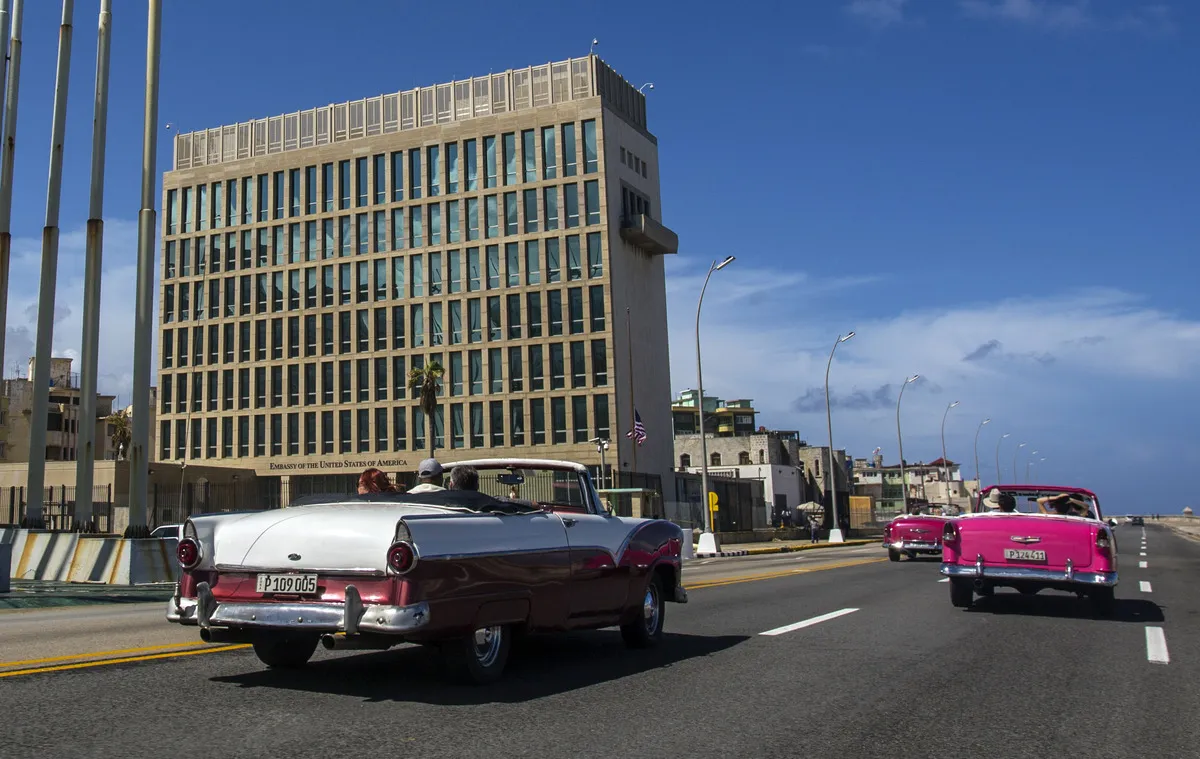
For nearly a decade, a mysterious ailment known as “Havana Syndrome” has confounded experts, intelligence officials, and lawmakers alike. More than 1,000 U.S. government officials and their family members have reportedly experienced a disturbing constellation of symptoms—memory loss, hearing problems, insomnia, and what appears to be brain injury. The phenomenon earned its name when it first came to public attention in late 2016, affecting personnel at the U.S. Embassy in Havana, Cuba. According to a recent CNN report, the Pentagon has been testing a device purchased by undercover homeland security operatives that might finally provide answers to this perplexing medical mystery that has affected American personnel across the globe.
The nature of Havana Syndrome remains frustratingly unclear despite years of investigation. After the initial cases in Cuba, similar incidents were reported worldwide, including on American soil. Intelligence assessments have been inconclusive about both the cause of symptoms and potential culprits. A January 2025 U.S. intelligence report revealed that while most of the American intelligence community doubted foreign involvement, one agency believed there was a “roughly even chance” that a foreign actor had deployed a “novel weapon or prototype device.” Supporting this theory, a 2022 State Department-commissioned scientific study concluded that the symptoms appeared “consistent with the effects of directed, pulsed radio frequency energy.” The symptoms—dizziness, headache, fatigue, nausea, anxiety, cognitive deficits, and memory loss—align with known radio frequency effects, lending credence to the directed-energy weapon hypothesis.
One of the most prominent theories implicates Russia in deploying or testing some form of sonic or directed-energy weapon. The device recently acquired by Homeland Security Investigations reportedly produces pulsed radio waves and contains Russian components, though it isn’t entirely Russian-made. This potential breakthrough comes years after then-CIA Director William Burns warned Russian intelligence services in 2021 that there would be “consequences” if they were found responsible for the incidents. Moscow, a longtime ally of Cuba, has consistently denied any involvement in causing these mysterious health problems. The implications of potentially identifying the source of these incidents are significant, as they could dramatically alter diplomatic relations and national security priorities depending on who, if anyone, is found responsible.
The geographical spread of Havana Syndrome cases presents another layer of complexity to this international mystery. Beyond Cuba, symptoms have been reported in China, Vietnam, Germany, Austria, Serbia, Taiwan, Colombia, Australia, Poland, Uzbekistan, and even within the United States itself. In late 2017, a senior CIA operative reported a suspected case, followed by another incident in Guangzhou, China, the following year. The proximity to centers of power is particularly troubling—Olivia Troye, a homeland security adviser during President Trump’s administration, described experiencing a “piercing feeling” in her head along with nausea and disorientation while walking near the White House. In 2021, then-Vice President Kamala Harris’s visit to Vietnam was delayed for hours due to an investigation into possible cases in Hanoi, highlighting how the phenomenon has affected high-level government operations.
The widespread nature of these incidents has made it difficult for investigators to establish patterns or identify a common cause. Some cases involve multiple individuals experiencing symptoms simultaneously, while others affect isolated individuals. The varying environments where incidents occur—from embassies in developing nations to secure government buildings in Washington, D.C.—have complicated efforts to pinpoint environmental factors or technical explanations. This scattered distribution has led some experts to question whether all reported cases share a common origin, or if “Havana Syndrome” might actually represent multiple different phenomena grouped under a single label. The challenge for investigators lies in separating genuine cases from coincidental illnesses or psychosomatic responses, especially as awareness of the condition has grown.
Despite nearly a decade of investigation, Havana Syndrome remains one of the most perplexing medical and intelligence mysteries of recent times. The Pentagon’s testing of this newly acquired device marks the latest chapter in a long-running effort to understand what has happened to hundreds of American civil servants and their families. If the device proves to be the source of these health incidents, it would represent a significant breakthrough with far-reaching implications for international relations and personal security for diplomats and intelligence officers worldwide. Until then, those affected continue to seek answers and treatment for persistent symptoms that have disrupted careers and lives. As investigations continue, the story of Havana Syndrome stands as a sobering reminder of the vulnerabilities faced by those serving their country abroad and the evolving nature of potential threats in the modern era.