





Guatemala Declares State of Siege Following Deadly Gang Violence
In a dramatic escalation of Guatemala’s fight against powerful criminal organizations, President Bernardo Arévalo declared a 30-day state of siege on Sunday after coordinated gang attacks left seven police officers dead in and around the capital. The violence erupted in response to authorities storming three maximum security prisons to free 43 guards who had been taken hostage during synchronized riots that began the previous day. This declaration represents the most significant confrontation between Guatemala’s government and the country’s entrenched criminal organizations, particularly the Barrio 18 and Mara Salvatrucha gangs that operate throughout Central America. “They rioted in the prisons and took hostages with the intention of making the state accept their demands, which for decades were granted,” President Arévalo explained, framing the violence as “an attempt to terrorize security forces and the population so that the government relents in its head-on fight against the gangs.”
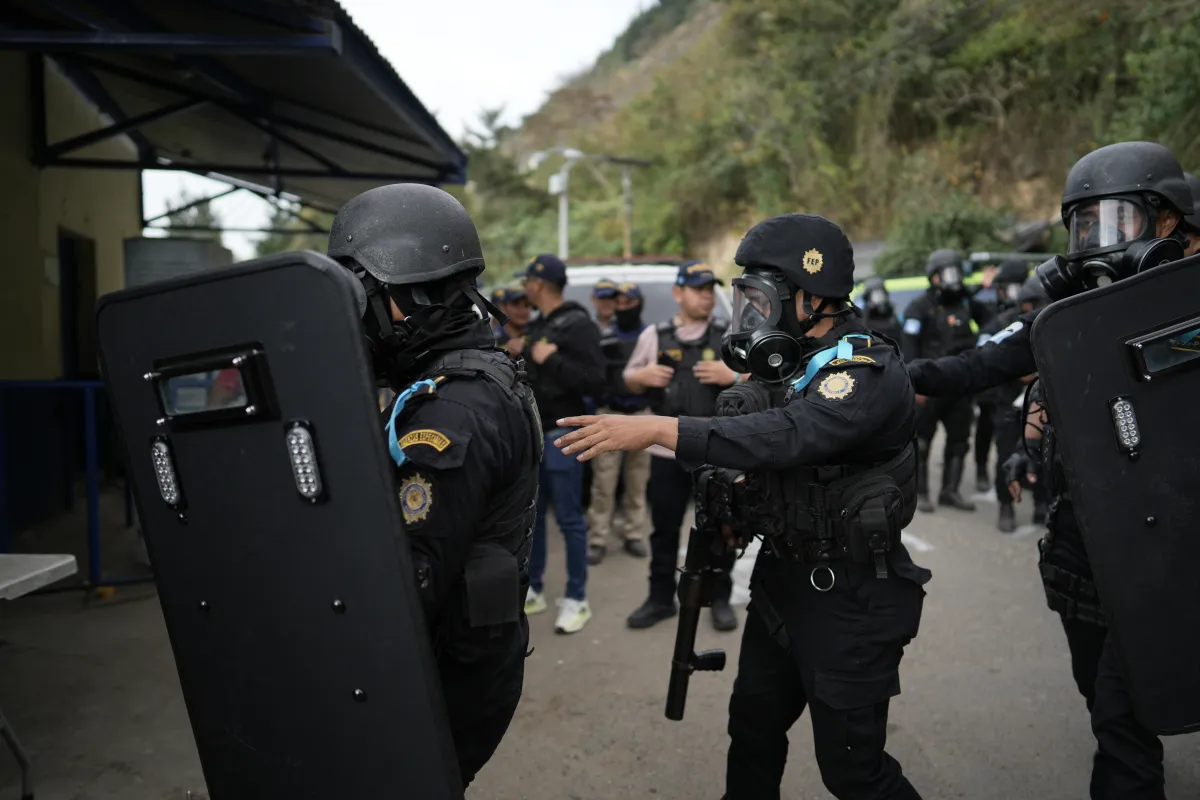
The crisis unfolded over a tense weekend as inmates across three facilities simultaneously rebelled against prison administrators’ decision to strip privileges from incarcerated gang leaders – a move that challenged decades of informal arrangements between criminal organizations and the state. The government response began at Renovación prison in Escuintla, about 47 miles southwest of Guatemala City, where anti-riot police successfully freed nine guards who appeared unharmed. Throughout Sunday, authorities methodically regained control of two additional prisons in Guatemala City, liberating six guards at one facility and 28 at another. The hostage situation represented a direct challenge to state authority, with Interior Minister Marco Antonio Villeda defiantly declaring that “the state will not kneel before these criminals,” while attributing the successful police response to “not negotiating with criminals.” The coordinated nature of both the prison riots and subsequent attacks on police officers demonstrates the sophisticated command structures that gang leaders maintain even while incarcerated.
The attacks on police officers, believed to be retaliation ordered by jailed gang leaders, highlight the complex security challenges facing Guatemala. Ten additional officers were wounded in the clashes, while one gang member was killed during the government’s response operations. Authorities have arrested seven gang members and confiscated weapons and vehicles used in the attacks. This pattern of violence directed from behind prison walls illustrates how incarcerated gang leadership can leverage outside members to exert pressure on the state when their interests are threatened. The state of siege declaration, which still requires congressional approval but takes immediate effect, allows the government to limit constitutional rights including freedoms of movement, gathering, and protest – providing authorities with expanded powers to confront what they characterize as an extraordinary threat to public safety and state authority.
This crisis places Guatemala’s response to gang violence in a regional context, particularly in comparison to El Salvador’s controversial approach under President Nayib Bukele, who declared a state of emergency in March 2022 that has resulted in over 90,000 arrests. Central American governments face increasing pressure to adopt aggressive tactics against entrenched criminal organizations that have terrorized communities for generations. For President Arévalo, who took office promising to tackle corruption and improve security, this confrontation represents both a significant challenge and an opportunity to demonstrate his administration’s commitment to dismantling criminal power structures. Rather than viewing the violence as a failure of his security policies, Arévalo has framed it as evidence that his crackdown is working, forcing criminal organizations to respond with increasingly desperate measures as they lose their traditional influence over the prison system.
The immediate government response extended beyond the security operations at the prisons. Following the violence, the Ministry of Education suspended classes nationwide for Monday to prioritize student and teacher safety. Police have reinforced guards at multiple prisons and increased joint patrols with military forces throughout the country, particularly in areas with known gang presence. Guatemala’s constitution specifically permits state of siege declarations in cases of serious violence, insurrection, or organized criminal activity that exceeds civilian authorities’ capacity to respond. This measure enables the government to deploy all available resources against criminal organizations, centralizing security operations under direct presidential authority. While human rights organizations often express concern about potential abuses during such emergency measures, the government maintains that extraordinary circumstances require extraordinary powers to protect public safety.
As Guatemala moves forward under the state of siege, the government faces the difficult task of dismantling criminal networks while respecting human rights and addressing the root causes of gang membership. The state of siege declaration awaits congressional approval, though it remains in effect during the legislative process. The Arévalo administration has indicated it will maintain heightened security measures and continue its crackdown on organized crime operations both inside and outside prison facilities. This moment represents a pivotal juncture in Guatemala’s longstanding struggle with criminal organizations that have infiltrated state institutions and established territorial control in many communities. For ordinary Guatemalans, the outcome of this confrontation will determine whether their government can finally break the cycle of violence and impunity that has plagued the country for decades, or whether criminal organizations will once again adapt and preserve their influence over Guatemalan society.