





A Young Girl’s Brave Battle: 4-Year-Old Alice Takes on Leukemia
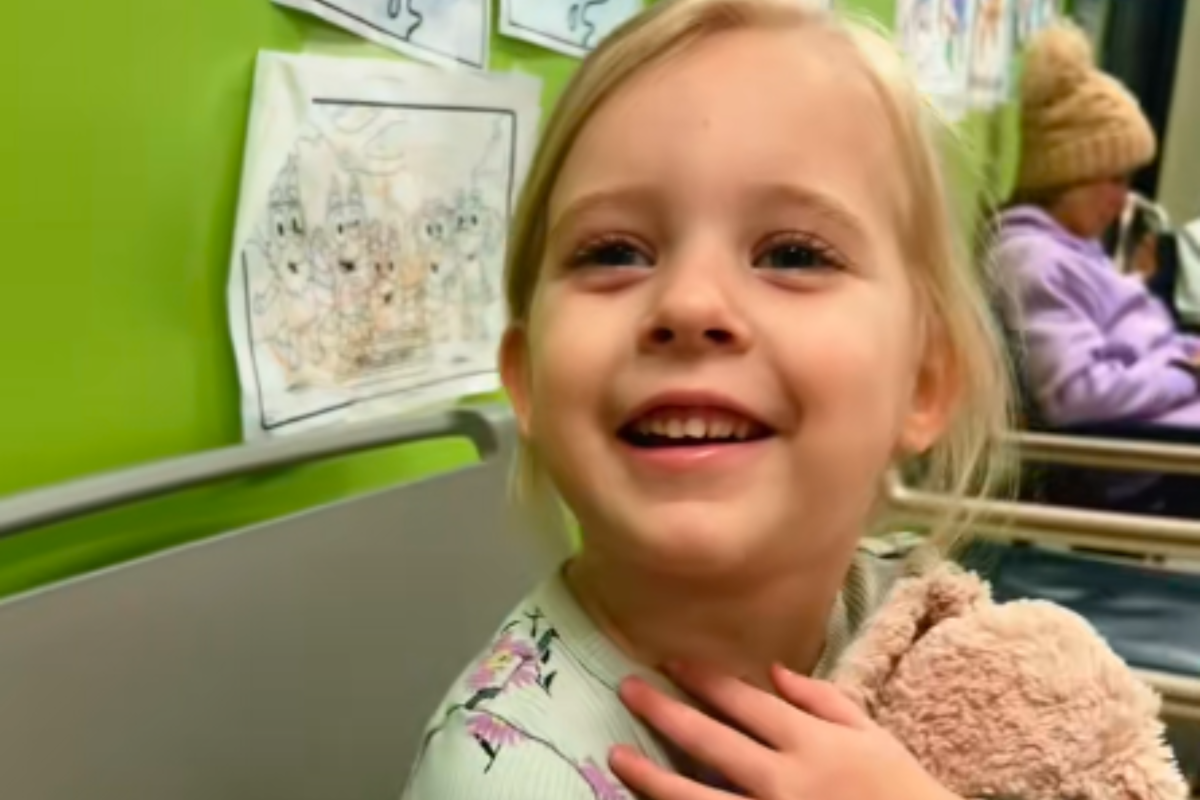
In the quiet aftermath of an ordinary bath time in September 2025, South Australian mother Elle Rugari heard words that would soon turn her family’s world upside down. “My foot hurts,” said 4-year-old Alice, a seemingly minor complaint that parents hear countless times throughout childhood. Elle and her partner Cody did what most parents would do—they monitored it, offered comfort, and planned to see how things progressed. Neither could have imagined that this simple complaint would lead to emergency rooms, oncology wards, and a diagnosis that would test their little girl’s strength in ways no child should have to endure. That night, Alice woke up screaming in pain. A dose of Panadol and a warm wheat bag seemed to soothe her enough to return to sleep, but in the following days, the pattern continued. Alice would be fine one moment, then limping and crying the next. While a doctor’s appointment was scheduled, Alice’s behavior suddenly changed in a way that alarmed her mother—the child who typically avoided medicine and doctors was now specifically asking for both.
When Elle took Alice to the emergency department on September 30, the medical investigation began with a standard foot X-ray that revealed nothing unusual. However, a nurse’s observant eye caught something concerning: tiny, pinprick bruises scattered along Alice’s legs. As they waited for blood test results, Elle noticed swollen lumps along her daughter’s neck and pointed them out to the medical staff. The doctor described the blood test results as “a bit spicy” and informed Elle they would be transferred to the women’s and children’s hospital. When Elle directly asked if leukemia was suspected, the doctor confirmed her fears. By the next day, an oncologist had delivered the formal diagnosis—Alice, the vibrant 4-year-old who loved to sing and dance, had leukemia. For Elle and Cody, who are also parents to 15-year-old Layla and 6-year-old Leo, the news was devastating, but they quickly channeled their shock into determination to help their daughter fight.
What has emerged in the three months since that diagnosis is a portrait of extraordinary resilience in an extraordinarily small package. Alice has been placed on a high-risk treatment pathway, meaning her journey includes longer hospital stays and more intense therapy than standard protocols. The family has just completed the consolidation phase—a particularly demanding period of heavy chemotherapy that takes a toll on even the strongest adult patients, let alone a child who hasn’t even started kindergarten. Currently, Alice is enjoying a brief, month-long respite from chemotherapy while undergoing an immunotherapy block. Despite the aggressive treatments that would leave many adults bedridden, Alice continues to find joy in the small pleasures of childhood, singing and dancing to Taylor Swift songs daily, even when her body is clearly exhausted from treatment.
Alice’s mother shared glimpses of their journey on TikTok (@elle94x), proudly documenting how her daughter is fighting “with all her might.” The post resonated deeply with other parents who recognized the pattern—many commented about their own children’s seemingly innocent leg and arm pains that ultimately led to similar leukemia diagnoses. These shared experiences highlight how childhood leukemia can initially present in subtle, easily dismissed ways, with bone and joint pain often preceding more obvious symptoms. The community that has formed around Alice’s story serves as both support network and cautionary tale, reminding parents to trust their instincts when something seems off with their child, even when the complaints might seem minor or typical.
Perhaps most remarkable in this difficult journey is Alice’s spirit. At an age when many children barely understand what being sick means, Alice has developed an impressive self-awareness and advocacy. She speaks openly about her leukemia with everyone she meets, wears her treatment-induced baldness with pride, and has become fiercely attuned to her own body’s needs. “She lets everyone around her know that she has leukemia and that she’s going to get rid of it,” Elle shared, her pride evident despite the circumstances. While Alice faces a three-year treatment plan, her attitude suggests she’s approaching it not as a victim, but as a tiny warrior determined to emerge victorious. The family takes each day as it comes, celebrating small victories and finding strength in Alice’s unwavering optimism.
Alice’s journey represents the painful reality that cancer doesn’t discriminate by age or innocence, but it also exemplifies the remarkable capacity of the human spirit to adapt and persevere through unimaginable challenges. While her parents navigate the practical and emotional complexities of having a child with cancer—balancing hospital stays with the needs of their other children, managing work responsibilities, and processing their own grief—Alice simply focuses on being Alice: singing, dancing, and letting everyone know that yes, she has leukemia, but it doesn’t have her. “She’s honestly the most amazing child,” Elle said, a sentiment that seems less like parental bias and more like an objective assessment of a little girl showing extraordinary courage in extraordinary circumstances. As Alice continues her three-year treatment journey, her story serves as both heartbreak and inspiration—a reminder of life’s fragility and the surprising strength that can emerge from even the smallest among us.