




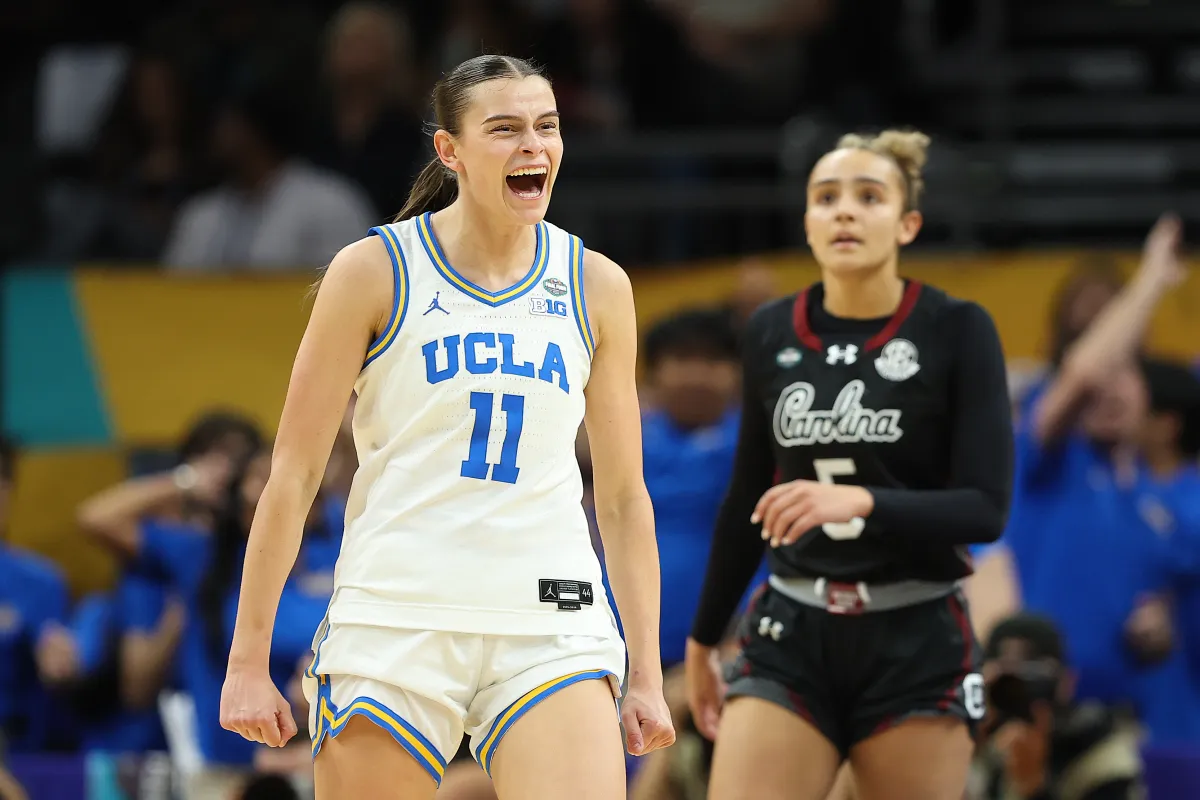
The Thrilling Victory and a First-Ever Crown
Imagine a sunny Sunday afternoon in the heart of the NCAA Women’s Basketball Tournament, where the air buzzed with anticipation and the crowd roared like a thunderstorm. There stood the No. 1 UCLA Bruins, dominating the field with a fierceness that turned the national championship game into something unforgettable. They faced off against another powerhouse, the No. 1 South Carolina Gamecocks, and from the opening tip, it was clear: UCLA was in control. They led wire-to-wire, pouring on the pressure and ultimately clinching an emphatic 79-51 victory. For the Bruins, this wasn’t just any win—it marked their first NCAA national title in the women’s basketball program history. It’s the kind of moment that athletes dream about, a culmination of endless practices, sweat-soaked drills, and a season of pure determination. Gabriela Jaquez, that star senior guard, couldn’t hide her pride, stepping into the spotlight on Jimmy Kimmel Live just a couple days later. The victory felt monumental, like the Bruins had filed their claim on basketball immortality, echoing through the halls of UCLA’s athletic legacy.
The stage was set during the final buzzer at the championship, but the story continued into the living rooms of millions as the Bruins made their appearance on Kimmel. Host Jimmy Kimmel, ever the cheeky interviewer, decided to poke a little fun at the team’s media coverage. He asked the group—head coach Cori Close, Jaquez, Most Outstanding Player Lauren Betts, Kiki Rice, and Angela Dugalic—if, at any point, they felt even a twinge of sympathy for thrashing opponents mercilessly. Specifically, he brought up their first-round drubbing of No. 16 California Baptist by a whopping 96-43. Betts shot back with unapologetic conviction: “Not when your season’s on the line, no.” She wasn’t alone; her teammates shook their heads, eyes sharp with the fire of champions who knew mercy has no place in the playoffs. Competition is the name of the game, and in that moment, it was all about survival and glory, not apologies.
Kimmel didn’t stop there; he pivoted to the epic showdown against South Carolina. “On Sunday, you destroyed them. It wasn’t even close,” he said, grinning at the obvious understatement. The room held a breath of awkward silence for a second, followed by nervous giggles from Betts. Then Jaquez, ever the poised leader, stepped in with grace and honesty. “We’re just happy that we won,” she explained, her voice warm and reflective. “We are so proud as a team, and we’re all competitors.” It was a beautiful encapsulation of their journey—a reminder that while the scores screamed dominance, the real victory lay in the bonds forged through the grind. Those Bruins weren’t reveling in destruction; they were celebrating the hard-earned unity that propelled them to the top. It made you root for them even harder, picturing the underdog stories they overcame just to stand there, unapologetic champions.
Diving into the game’s nuts and bolts, it was a clinic in skill and teamwork. All five of UCLA’s starters lit up the scoreboard with double-digit points, proof of their unstoppable synergy. Jaquez herself led the charge with 21 points, weaving through defenses like a seasoned pro in her final collegiate act. It wasn’t just about individual stars, though; the Bruins’ powerhouse senior class took center stage in the most critical moments. They accounted for every single point scored by UCLA in the Final Four against top-seed Texas and again in the championship against South Carolina. These veterans had carried the load, drawing from years of experience and resilience. Imagine the weight of that responsibility—senior guards and forwards stepping up when the lights shone brightest, turning potential pressure into pure excitement. It’s these intimate details that humanize the game, showing not robots on the court, but real people with stories, families, and futures at stake.
Reflecting on the wider journey, UCLA’s path to this title was nothing short of magical, peppered with its share of grit. Their last loss? Way back on November 26, 2025, to that mighty Texas team—a humbling reminder that even elites face setbacks. From there, though, the Bruins embarked on an incredible run: a 31-game winning streak that carried them to a stunning 37-1 overall record. That’s the kind of streak that makes you do a double-take, trapping opponents in a vortex of relentless defense and fluid offense. Picture the daily grind behind it—early-morning practices, film sessions that dragged into the night, and the quiet moments of doubt turned into roaring confidence. It wasn’t just about winning; it was about becoming unstoppable, a force that redefined what dominance looks like in women’s basketball. Fans everywhere could feel the energy shift, watching athletes transform from hopefuls into legends.
As the dust began to settle, the Bruins shared glimpses of the joy that followed their triumphs. Back on campus, celebrations erupted in a whirlwind of confetti, hugs, and cheers from teammates and fans who had traveled the road with them. On Kimmel, they talked honestly about that euphoria—the late-night parties, the shared stories, and the sense of accomplishment that washed over them like a warm wave. They even hinted at the future, those eyes gleaming at the thought of facing each other again in the WNBA. “We’re all competitors,” Jaquez had said, and that motto extended beyond the court, into dreams of professional rivalries where old friendships could spark new battles. It’s this human side—the laughter, the quiet reflections, the forward glances—that makes sports stories stick. UCLA’s victory isn’t just a stat on a scoreboard; it’s a tapestry of perseverance, pride, and the unbreakable spirit of a team that rose to forever change their program’s narrative. Their legacy now inspires the next generation, proving that in the game of competition, triumphs like this aren’t forgotten—they echo on.