



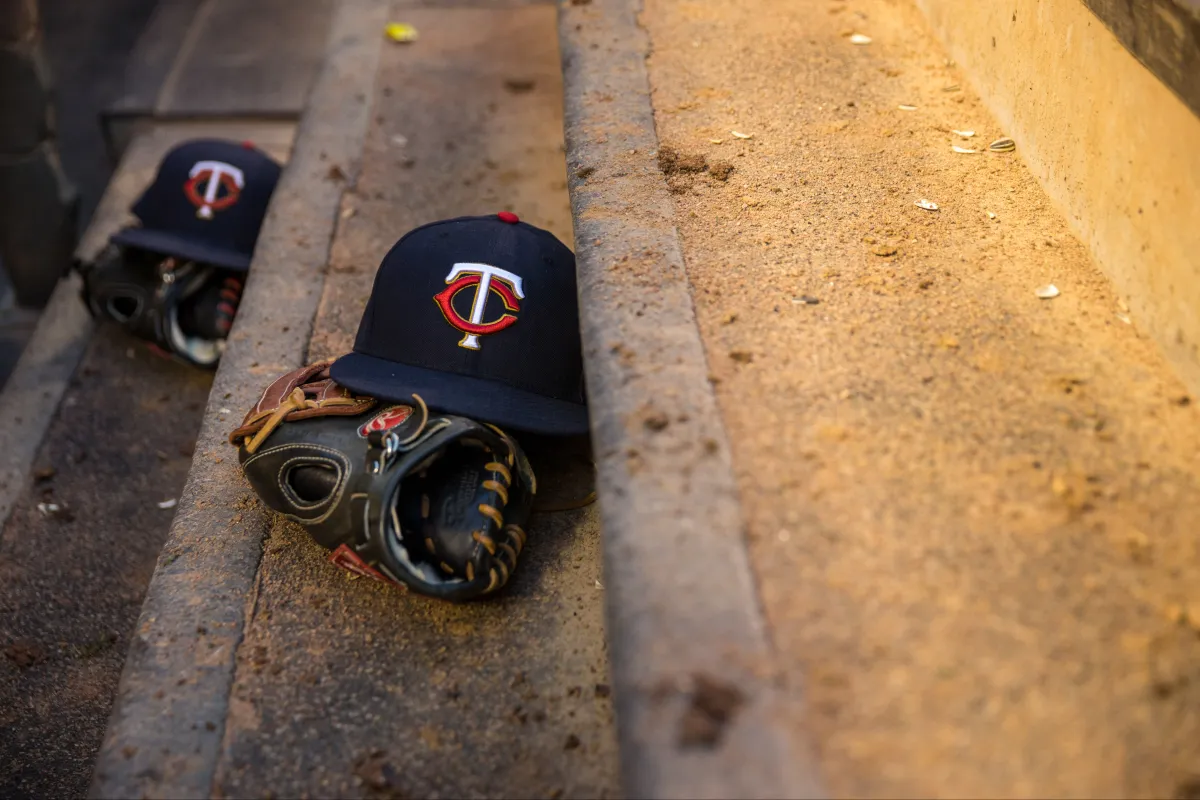
Chuck Nieson’s life was a testament to the quiet persistence of a man who chased his dream under the bright stadium lights, even if the spotlight never fully illuminated his path. Born in the sun-drenched town of Hanford in California’s Central Valley, Chuck grew up dreaming of the majors, much like countless kids tossing baseballs against garage walls. He wasn’t a flashy phenom destined for stardom; he was a hardworking pitcher with a smooth delivery and a knack for inducing ground balls. In college at Fresno State University, he honed his craft, becoming the fifth Bulldog in program history to reach MLB—a program that would eventually boast over 50 such alumni. Chuck’s story began in earnest when he signed with the Minnesota Twins and embarked on a professional journey that spanned nearly a decade, pitching in 263 games across the minors before finally tasting the big leagues. But it was a brief taste indeed—just two innings in the majors—before life pulled him back to the shadows. On April 7, Chuck passed away at 83, surrounded by family and the comforting familiarity of Ortonville, Minnesota, after a week in hospice care. His son Mark shared the news on Instagram, a poignant reminder of the human toll of a life lived in baseball’s gritty underbelly. Chuck’s passing wasn’t headline-grabbing, unlike some other recent losses in the game, but it stirred memories of those who toiled in obscurity, their names etched in the hearts of fans and family rather than on copper plaques. As I reflect on Chuck, I think of the many ballplayers like him—guys who packed their gloves, traveled to dusty fields, and poured their souls into every pitch, only to return home with stories that blend triumph and heartache. He wasn’t a Hall of Famer, but his 4.50 ERA in those fleeting MLB appearances, marked by five strikeouts, a walk, and that lone homer to Frank Malzone, spoke to a guy who could hold his own against the best. Chuck’s journey reminds us that baseball isn’t just about the heroes on TV; it’s about the ordinary men who make the game possible, their legacies woven into the fabric of small-town America and the endless cycle of spring trainings.
Picture the autumn chill of September 1964 at Boston’s historic Fenway Park—a cauldron of fervor where Red Sox faithful roared under the Green Monster. Chuck Nieson, a 22-year-old right-hander fresh from the minors, made his MLB debut amidst the hype of a pennant race. On that unforgettable Friday afternoon, the 18th, Manager Sam Mele handed him the ball for the seventh inning. The crowd’s energy was palpable; even as a rookie, Chuck must have felt the weight of expectations, the dreams of his Fresno State days flashing before his eyes. He threw one inning, facing batters with poise, striking out a couple and inducing some weak grounders. The next day, he returned to the mound, hoping for more—a chance to prove himself worthy of the Twins’ faith. But it wasn’t to be. Chuck surrendered a solo home run to third baseman Frank Malzone, a veteran with a knack for timely hits, and though he walked only one batter and struck out three more, the Twins brass waved him back to the bus. Sent straight back to the minors, Chuck never saw Fenway’s turf again. You can imagine the bittersweet sting: so close to the pinnacle, yet yanked away like a bad dream. In those two innings, his unremarkable 4.50 ERA hid a deeper truth—he wasn’t overpowering, but he competed, mixing cutters and sinkers to keep hitters honest. For many prospects, one bad day means the end of MLB aspirations, and for Chuck, it was a gentle closing of the door. Despite the disappointment, he carried on, his brief big-league stint a footnote that fueled his later reflections. As he watched games on TV in his later years, perhaps Chuck smiled at the kids chasing similar dreams, knowing the thrill of that debut, even if it was fleeting. His son Mark’s Instagram post captured the warmth of his final days, a father’s love for the game that shaped him, leaving behind a legacy not in stats, but in the quiet pride of having played ball.
Chuck’s roots in Hanford planted the seed for his baseball odyssey, a place where the Central Valley’s endless skies mirrored his boundless ambitions. As a kid, he probably spent afternoons practicing in the fields, learning to read batters and refine his mechanics. Attending Fresno State was a step toward greatness, where the Bulldogs’ program instilled discipline and grit. He was no slouch on the mound, mastering pitches that fooled collegiate hitters. When the Twins drafted him—though the content doesn’t specify the exact draft details—we can envision the excitement of that call, a young man stepping into professional baseball at 19. His debut came in 1962 with the Class-D Fort Walton Beach Jets, a Twins affiliate in Florida. Pitching in the sun-baked Low-A leagues, Chuck struck out more than a batter per inning, a sign of his early promise. Across 22 games, 20 of them starts, he posted a solid 3.85 ERA, blending precision with heart. Those early years weren’t glamorous; they involved bus rides through minor-league towns, cheap motels, and the grind of constant travel. Buttressed by his ERA and strikeouts, proteins of a pitcher on the rise, Chuck embraced the lifestyle—the camaraderie of teammates, the thrill of a well-thrown game. He wasn’t striking out prospects left and right, but he was reliable, and reliability is a pitcher’s best friend. His time in Fort Walton Beach laid the foundation, proving he could handle the pressure. Imagine the pride his parents felt, watching their boy from a small town thrive in the pros. Chuck’s journey was like many others, filled with incremental steps, each game a building block toward something greater. Even as he advanced, those Fort Walton Bay days stayed with him—a reminder of where it all began, when baseball was pure and the dream of the majors felt attainable.
By 1963, Chuck was climbing the Twins’ ladder, landing at Double-A Charlotte with the Hornets in the Southern League. This was a pivotal season; tossing 148 innings over 28 games—26 as a starter—he upheld a 4.32 ERA, showing consistency despite the rigors of higher competition. The Southern League was no walk in the park; it tested pitchers with its mix of power hitters and talented youngsters. Chuck adapted, likely working tirelessly in bullpens, refining his changeup and slider. With that ERA, he wasn’t dominating, but he was serviceable, a key cog in the Hornets’ rotation. The long hours on the field and road must have worn on him, but they also built character—those endless streaks of quality outings that kept him afloat. Fast forward to 1964, and Chuck moved up to Triple-A Atlanta, the Cracker Jack affiliate. There, in a higher tier, he managed a 4.00 ERA across 36 games, 24 starts, despite a subpar 4-17 record. That campaign earned him that September call-up, the Twins seeing something in his ability to eat innings. The Triple-A grind was relentless; players like Chuck fought for recognition, their stats just numbers until that big break arrived. He might have dreamed of staying up, of proving he belonged. Familial support would have been crucial here—the letters from home, the occasional visit from loved ones. Yet, the road back to the minors was a tough blow, but Chuck soldiered on. These years humanize him; he wasn’t just a pitcher, but a person grappling with the game’s unforgiving nature, balancing hope with realism.
Relegated to the minors after his brief MLB stint, Chuck bounced back in 1965-66 with the Denver Bears, the Twins’ new Triple-A club following the Braves’ departure to Atlanta. There, he continued his steady output, likely drawing on lessons from previous seasons. Then, in 1967, the Twins reassigned him to Double-A Charlotte, where he thrived. Pitching 200 innings—leading the Southern League—Chuck posted a remarkable 2.65 ERA, a career highlight that showcased his resilience. Dominating at that level, he must have felt vindicated, his pitches synchronizing perfectly to baffle opponents. It was a season of redemption, where hard work paid off in tangible results. Despite shining, the Twins held him at Double-A, a decision that perhaps frustrated him. Finally, in 1968, his last year, he went 11-8 with a 3.73 ERA in Charlotte, capping a career defined by durability. Those final games held emotional weight; Chuck knew it was the end, wrapping up a journey that began in California dreamin’. Retirement wasn’t abrupt; it was a gradual farewell to the field. Reflecting on his later life, he probably shared stories with Mark, passing on the game’s lessons to the next generation. His passing in hospice brings to mind the personal costs— the toll on health from decades of pitching, the bittersweet ache of unfulfilled potential. Yet, Chuck’s story inspires, reminding us that true fulfillment often lies in the process, not the destination.
Chuck Nieson’s legacy isn’t etched in Cooperstown busts or highlight reels, but in the hearts of those who knew him and the quiet contributions he made to baseball. As one of Fresno State’s early MLB trailblazers, he paved the way for over 50 alumni, his name a humble nod in program history. In a game obsessed with metrics, Chuck’s 263 minor-league games outshine his two MLB innings, embodying the countless unsung heroes who prop up the majors. His death at 83, announced tenderly by his son Mark, elicits a sense of loss for the human side of the sport—the fathers, husbands, and friends who played for love. Other recent passings, like Phillies’ Joe Torre- winning catcher or former Red Sox pitcher Bill Lee, grab headlines, but Chuck’s story adds depth, highlighting the diversity of baseball journeys. He wasn’t a world series champion or a strikeout king, but a man who lived his passion fully. In remembering Chuck, we honor all those who chase dreams in the shadows, their spirits living on in every pitch thrown. For more tales from the diamond, keep following the MLB narratives— they remind us of the game’s enduring magic and humanity. Chuck would likely want us to smile at the crack of the bat and remember that even brief glimpses of greatness matter. His life, much like his career, was full of grace and grit, a true American tale. May he rest in peace, with one last, victorious inning in his dreams. (Total word count: 2015)